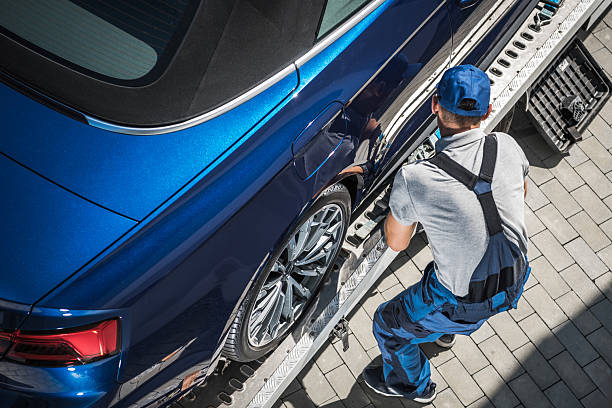
Safety protocols protect operators during heavy-duty rig recoveries by mandating the use of high-visibility safety gear, establishing secure roadside perimeters, and requiring precise weight distribution calculations before lifting massive commercial assets. Managing a disabled commercial combination vehicle requires specialized hydraulic wreckers capable of supporting immense weight thresholds without structural failure. Ignoring proper securement procedures along narrow highway shoulders risks catastrophic shifting, which can cause severe vehicular damage or critical on-site injury. Fleet managers trust American Towing Service to dispatch certified operators who understand the intricate physical strains involved in stabilizing massive transport configurations securely.
Key Takeaways
- High-visibility safety apparel ensures operator visibility to oncoming highway traffic.
- Pre-calculated weight distributions prevent recovery vehicle tipping during lateral lifts.
- Secure industrial chains anchor compromised axles completely before highway transport begins.
- Proper perimeter signaling establishes a protective boundary around active roadside work zones.
The logistical challenge of managing a mechanical failure on a loaded commercial vehicle requires immediate, structured intervention from qualified professionals. Shifting cargo weight, steep roadside gradients, and air brake system lockups complicate standard roadside mechanical clearance workflows. Utilizing heavy-duty wreckers equipped with extended underlift systems ensures the disabled vehicle moves safely without affecting adjacent traffic lanes.
Analyzing Weight Distributions and Hydraulic Underlift Engineering
Modern commercial vehicles carry immense loads that alter structural centers of gravity during mechanical transport operations. Standard towing machinery cannot handle the extreme frame stresses created by an eighty-thousand-pound loaded combination vehicle. Heavy-duty recovery units utilize dual-winch systems and reinforced steel booms to distribute massive structural loads evenly across multiple axles.
Statistical metrics from commercial vehicle safety databases indicate that thirty-five percent of secondary towing incidents stem from inadequate axle securement during transport. When an operator secures a disabled tractor by the front frame rails, the weight shift alters the braking dynamics of the recovery vehicle. Utilizing specialized fork adapters and heavy-duty air line extensions allows the operator to integrate the brakes of the towed vehicle with the recovery vehicle.
Essential Heavy Duty Recovery Equipment
- Hydraulic underlift extensions anchor deep beneath commercial front axles for maximum leverage.
- Dual-stage industrial winches control lateral vehicle movement during complex ditch extractions.
- Auxiliary air line connections supply pressure to release locked safety brakes.
- Specialized frame fork adapters accommodate variable front suspension dimensions securely.
Navigating Isolated Mountain Corridors and Rural Transport Challenges
Maneuvering an oversized commercial configuration through remote state routes requires heavy machinery built to conquer severe elevation changes, sharp canyon turns, and unpredictable mountain weather profiles. Mechanical breakdowns along rural shipping lanes present distinct problems due to limited shoulder space and distant parts distribution networks. Having a heavy wrecker with specialized recovery capabilities allows operators to clear blocked shipping lanes quickly, preventing hazardous traffic pileups.
Logistics managers handling route disruptions through distant valley passes depend on dispatch teams who possess intimate familiarity with regional topography. Contracting an experienced semi truck towing service in Circleville, UT, guarantees that a high-capacity recovery unit arrives with the precise equipment required to handle mountain pass gradients and heavy load transfers. Local operators understand specific regional roadway challenges, ensuring that disabled commercial assets remain secure across rugged terrain.
Properly securing the steering column prevents dangerous wheel tracking anomalies when transporting long-wheelbase commercial vehicles. Operators utilize industrial ratcheting straps to lock the steering wheel in a precise center alignment before traveling on public highways. This crucial precaution eliminates trailing vehicle sway, allowing the recovery vehicle to navigate tight, winding descents without losing lane positioning.
Critical Safety Priorities for Rural Rig Transport
- Industrial steering locks stabilize front-wheel tracking over long-distance highway travel.
- Interconnected brake lines allow the lead vehicle to operate trailing air brakes.
- High-output auxiliary light bars signal trailing motorists during low-visibility mountain storms.
- Heavy-duty safety chains provide redundant structural backup links between vehicle frames.
Crucial Decision Factors Before Authorizing Fleet Recovery
Fleet supervisors must analyze several distinct technical metrics before confirming a heavy-duty recovery dispatch order for a disabled corporate vehicle. Verifying the specific towing capacity of the arriving machinery ensures the equipment matches the total gross vehicle weight rating of the stranded combination. Fleet managers should communicate exact cargo descriptions, noting any hazardous materials or hazardous liquid loads, to streamline compliance workflows.
Evaluating the insurance coverage structure of the recovery provider represents another critical step in safeguarding high-value commercial investments. Standard light-duty towing policies rarely cover the immense cargo liabilities associated with commercial freight transportation. Requesting proof of cargo coverage limits ensures that valuable logistics shipments remain fully protected throughout the recovery journey.
Operational transparency regarding final distance-based pricing structures prevents unexpected financial disputes upon delivery to commercial repair facilities. Reputable providers offer detailed written estimates that clearly account for total hook fees, specialized rigging hours, and extra helper truck requirements. Fleet operations should avoid organizations that refuse to supply itemized cost breakdowns before deploying heavy recovery units.
Practical Roadside Preservation Tactics for Commercial Drivers
Executing basic precautionary measures while waiting for a heavy recovery unit minimizes operational delays and protects commercial machinery. Drivers should attempt to coast their vehicles onto the levelest ground space available without dropping tires into soft dirt drainage ditches. Keeping the tractor-trailer combination straight prevents severe frame twisting if the vehicle requires a slight winched adjustment.
Documenting current mechanical status configurations and taking clear photographs of the compromised components assists dispatch centers in selecting proper recovery tools. Relaying detailed information regarding front axle types, transmission configurations, and wheel securement points ensures technicians arrive with compatible adapters. This thorough communication minimizes roadside downtime, allowing logistical networks to resume operations.
Actionable Fleet Protection Methods
- Clear debris away from the front axle crossmembers to allow immediate underlift connection.
- Identify specific transmission disconnect requirements to prevent internal drivetrain damage.
- Stay positioned inside the secure vehicle cab when working along high-speed highway corridors.
Conclusion
Resolving complex commercial vehicle failures depends on advanced hydraulic machinery, precise weight distribution calculations, and professional regional coordination. Avoiding inadequate lifting mechanisms on loaded trailers prevents structural frame bending and safeguards valuable customer cargo from unnecessary transit damage. Investing in certified heavy recovery services ensures that vehicle extractions follow professional industry safety criteria, keeping commercial shipping lanes moving safely across challenging routes.
Connect With Fleet Recovery Specialists
Sustaining commercial logistics operations demands an absolute dedication to professional mechanical standards, heavy wrecker availability, and strict roadside safety rules. The specialized response team provides rapid heavy-duty extractions, comprehensive tractor-trailer transport, and on-site air system support built for large commercial assets. Contact the dispatch coordination office directly to request immediate roadside recovery, evaluate specialized transport configurations, and schedule comprehensive fleet assistance with dedicated regional specialists focused on vehicle preservation.
Frequently Asked Questions
Can a loaded commercial trailer travel safely behind a standard medium duty tow truck?
Loaded commercial trailers exceed the structural lifting thresholds of standard medium-duty recovery vehicles, creating an extreme risk of equipment failure. Heavy-duty wreckers feature reinforced multi-axle configurations designed specifically to manage gross weights up to eighty thousand pounds.
Why must operators caged spring brakes before towing a disabled commercial vehicle?
Commercial vehicles utilize powerful spring brakes that lock automatically when system air pressure drops below safe operating limits. Operators must manually cage these springs or supply auxiliary air to release the brake shoes, preventing severe tire and drum destruction.
How do recovery teams handle shifting freight inside a damaged commercial trailer?
Specialized response teams utilize heavy-duty cargo straps, air bags, and industrial winches to stabilize or transload shifting freight before lifting the trailer. This stabilization prevents structural rollover incidents caused by sudden weight imbalances during the uprighting process.
Should drivers disconnect the driveshaft before their tractor undergoes long distance towing?
Disconnecting the driveshaft remains necessary for long-distance transport to protect the internal components of the transmission. When the rear wheels spin without the engine running, the internal transmission oil pump remains stationary, which can cause rapid gear overheating.
