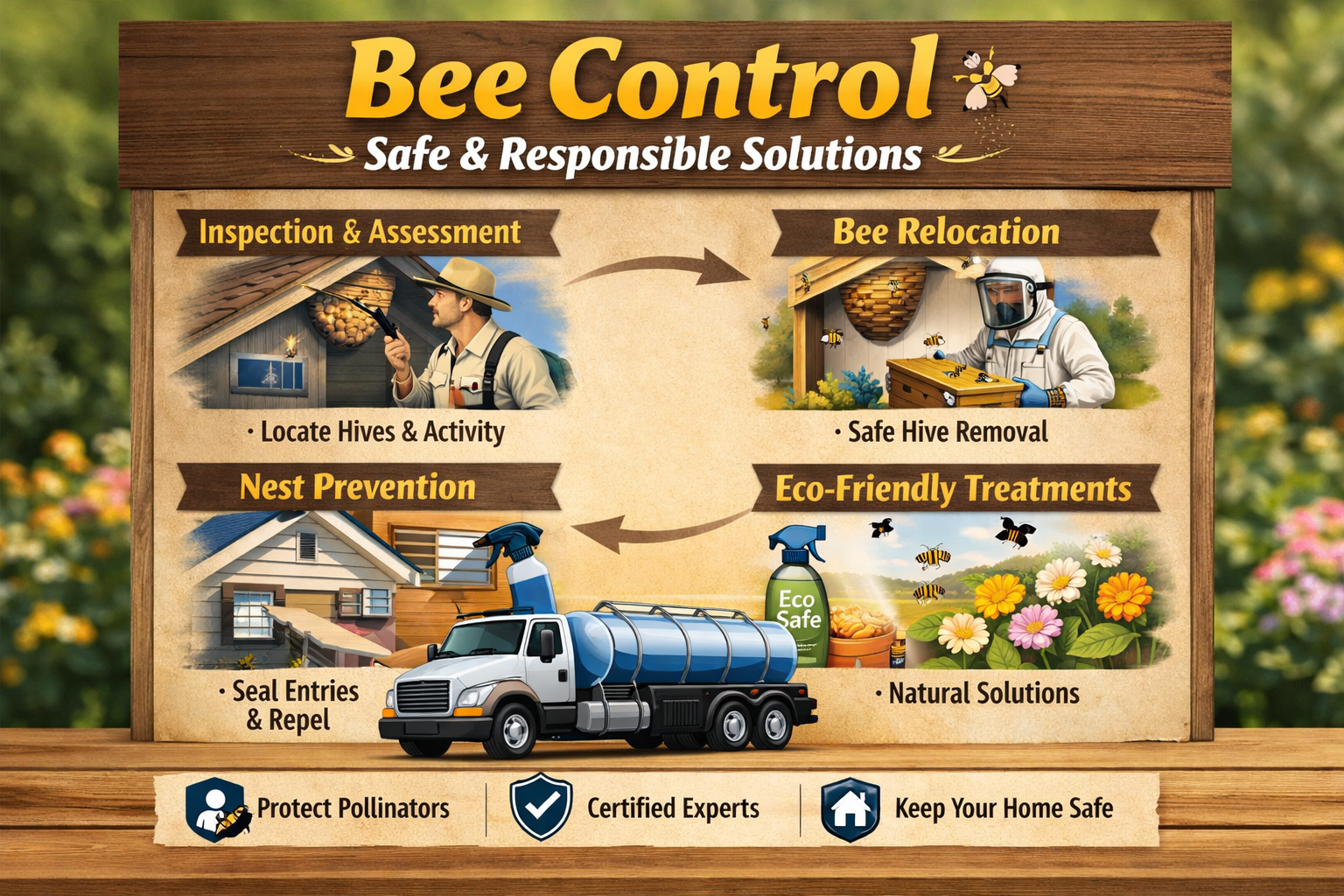
Bees play an essential role in pollination and maintaining ecological balance, but when they build hives too close to homes or workplaces, they can quickly become a safety concern. In many cases, homeowners panic or attempt unsafe removal methods that make the situation worse. Understanding how to handle these situations properly is the key to protecting both people and pollinators.
If you’re dealing with a growing hive near your property, learning about professional bee control services and safe management strategies can help you respond effectively without unnecessary risk. The goal is not to eliminate bees indiscriminately, but to manage their presence in a way that prioritizes safety, environmental responsibility, and long-term prevention.
Bee-related issues often begin subtly—a few insects near a garden, a small cluster near the roofline, or increased activity around wall cavities. However, these early signs can quickly develop into full colonies if ignored. That’s why timely identification and informed action matter.
Understanding Bee Behavior and Why Bee Control Matters
To manage bees effectively, it helps to understand their behavior. Bees are naturally drawn to sheltered, warm spaces where they can build hives safely. Roof eaves, attic voids, wall cavities, and sheds often provide ideal nesting environments. Once a colony establishes itself, it becomes protective of its space and may become defensive if disturbed.
Unlike many pests, bees are not aggressive by nature. However, they will sting when they perceive a threat to their hive. This is where bee control becomes necessary—not to harm bees, but to safely relocate them when their presence poses a risk to humans.
Bee activity near homes also increases the risk of accidental encounters, especially for children, pets, or individuals with allergies. Even a small hive can produce hundreds or thousands of bees, and unmanaged colonies may expand rapidly over time.
Responsible bee management focuses on safe removal or relocation, prevention of re-infestation, and maintaining a balanced coexistence with local ecosystems.
Step-by-Step Guide to Effective Bee Control
Managing a bee situation requires a careful, structured approach. Acting impulsively can lead to stings, structural damage, or incomplete hive removal.
1. Identify the Type and Location of Bee Activity
Start by observing where bees are entering and exiting. Common indicators include:
- Frequent flying patterns near a single point
- Buzzing sounds inside walls or ceilings
- Visible clusters around eaves or trees
Identifying Bees vs. Wasps
It is important to distinguish bees from wasps or hornets. Bees are generally rounder, fuzzier, and less aggressive when away from their hive. Wasps are slimmer, smoother, and more territorial. Misidentification can lead to improper handling.
Locating the Hive
Bees often build hidden hives inside structures. Careful observation during daylight hours can help trace their flight path. Avoid blocking entry points prematurely, as this may trap bees inside walls and worsen the problem.
2. Assess the Risk Level
Not all bee activity requires immediate intervention. A small swarm temporarily resting outdoors may move on within hours. However, established hives inside structures present a long-term risk.
Ask the following:
- Is the hive inside a high-traffic area?
- Are there allergic individuals nearby?
- Is the colony growing in size?
If the answer to any of these is yes, professional intervention is usually recommended.
3. Choose Safe Bee Management Options
There are generally three approaches to handling bee problems:
Relocation (Preferred Method)
Professional bee handlers often relocate colonies safely, preserving the bees and transferring them to controlled environments like apiaries.
Controlled Removal
In some cases, especially when structural damage is involved, partial removal may be necessary. This includes extracting the hive and sealing entry points.
Preventive Control
Once bees are removed, sealing cavities, repairing structural gaps, and applying deterrents can prevent reinfestation.
4. Call Professional Assistance When Needed
Bee removal is not a typical DIY task. Colonies can become defensive when disturbed, and improper handling can lead to multiple stings or structural damage. Professionals use protective equipment, smoke techniques, and specialized tools to manage hives safely.
They also ensure that the entire colony—including the queen—is removed, which is critical for preventing the bees from returning.
5. Prevent Future Infestations
Once a hive is removed, prevention becomes the priority. Key steps include:
- Sealing cracks in walls and roofing
- Installing mesh over vents and openings
- Regular property inspections during warmer months
- Removing food attractants like open sweet liquids or exposed garbage
Common Bee Control Mistakes and Challenges
Many property owners unintentionally make the situation worse by using unsafe or ineffective methods. Understanding these mistakes can help avoid unnecessary risks.
One common mistake is attempting to spray insecticides directly into a hive. This often scatters the colony, making bees more aggressive and harder to manage. It can also result in incomplete elimination, leaving the queen alive and allowing the hive to rebuild.
Another issue is sealing entry points too early. When bees are trapped inside walls, they may die and create odor or attract other pests. In some cases, surviving bees may find alternative exit routes into living spaces.
Misidentifying bees as other insects is also a frequent problem. Treating bees like wasps can lead to incorrect control methods that fail entirely.
Finally, delaying action often leads to colony expansion. A small hive can grow significantly in just a few weeks during peak seasons, making removal more complex and costly later.
Practical Tips for Safe and Effective Bee Control
Experienced pest management professionals often follow a few key principles that homeowners can also keep in mind.
First, always observe before acting. Sudden movement or disturbance near a hive increases the risk of defensive behavior. Slow, careful observation helps determine the best approach.
Second, timing matters. Bees are generally less active during early morning or late evening. This is often the safest time for inspection or professional removal.
Third, avoid sealing or blocking hive entrances without confirmation that the colony has been fully removed. Partial sealing can worsen the situation.
Fourth, prioritize relocation whenever possible. Bees are vital pollinators, and responsible management helps maintain ecological balance.
Finally, schedule regular inspections if your property is located near gardens, wooded areas, or water sources. These environments naturally attract bee activity.
Conclusion
Bee control is not simply about removing insects—it is about managing risk while respecting the important role bees play in the environment. Safe handling requires observation, correct identification, and often professional intervention to ensure complete and responsible resolution.
By understanding bee behavior, acting early, and avoiding common mistakes, property owners can protect their homes while still supporting ecological balance. The most effective approach combines prevention, careful assessment, and expert support when needed.
