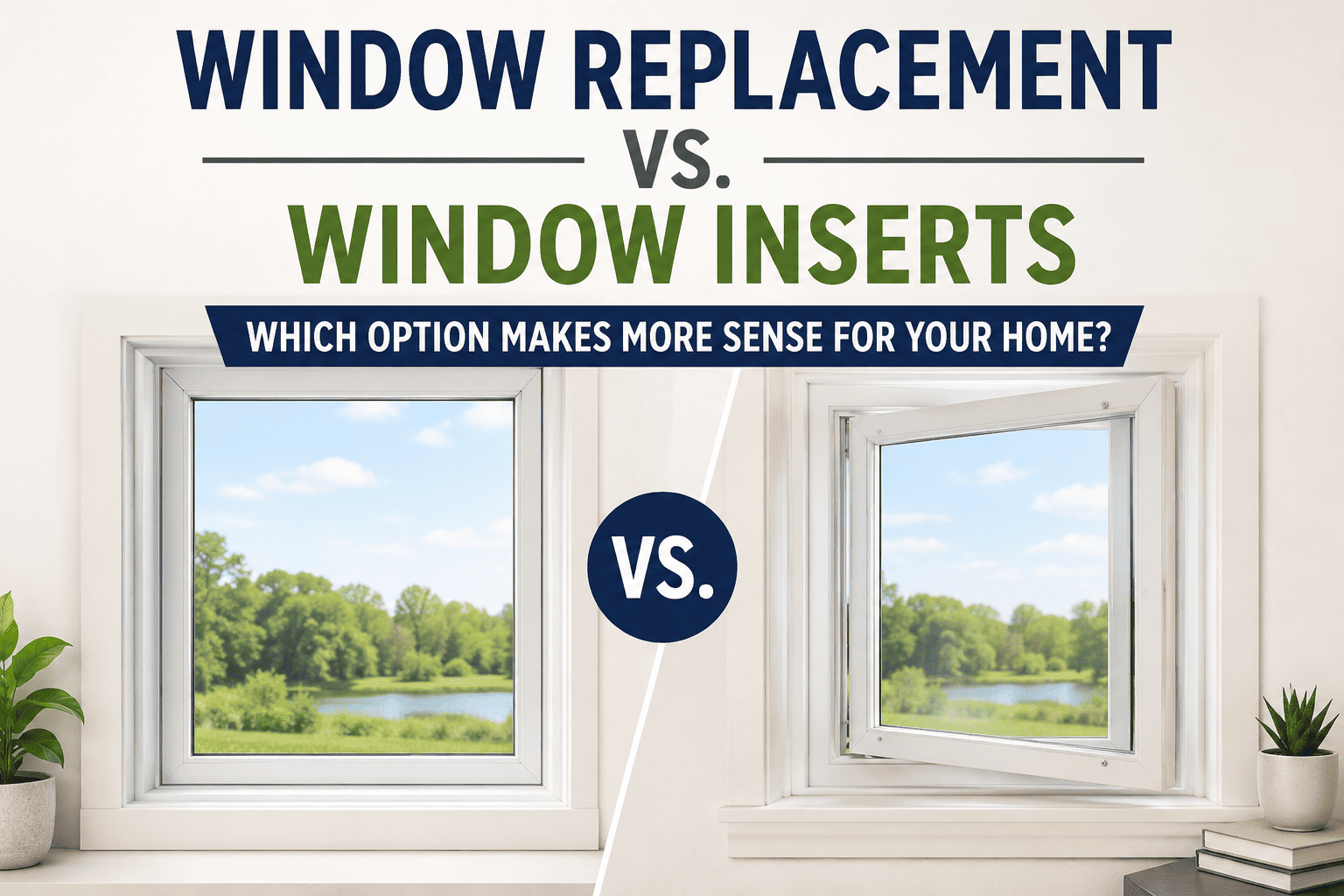
Windows affect far more than the way a home looks from the outside. They influence indoor comfort, heating and cooling costs, street noise, drafts, condensation, natural light, and even how peaceful a room feels at night. That is why many homeowners eventually face the same question: should they replace their windows completely or upgrade them with window inserts?
The answer is not always simple. Full window replacement can make sense when frames are damaged, glass is failing, or the homeowner wants a major design change. Window inserts, however, can be a smarter option when the existing windows are still structurally sound but no longer provide the level of comfort, insulation, or noise control the home needs.
This guide compares window replacement and window inserts from a practical homeowner’s point of view, covering cost, comfort, installation, aesthetics, energy efficiency, noise reduction, and long-term value.
What Is Full Window Replacement?
Full window replacement means removing the existing window unit and installing a new one. Depending on the project, this may include removing the sash, frame, trim, exterior casing, insulation around the opening, and sometimes parts of the surrounding wall finish.
This option is usually chosen when the existing windows have serious problems. Rotten wood frames, broken seals, cracked glass, warped frames, water damage, or poor operation can all point toward replacement. It can also be the right choice when a homeowner wants a different window style, larger opening, new frame material, or a full exterior renovation.
Replacement windows can improve performance, appearance, and property value. Modern windows may offer better glazing, stronger seals, improved frame materials, and a cleaner look. But replacement is also the more invasive option. It usually costs more, takes longer, creates more disruption, and can involve extra finishing work after installation.
For some homes, replacement is necessary. For others, it may solve problems that could have been addressed with a less disruptive upgrade.
What Are Window Inserts?
Window inserts are interior panels installed over existing windows. They are designed to create an additional layer between the room and the original glass. This added layer can improve insulation, reduce drafts, lower noise transfer, and support better indoor comfort without removing the existing window.
High-quality inserts are usually custom measured so they fit the existing window opening closely. When installed properly, they create a sealed air space between the original window and the insert. That sealed air space is one of the main reasons inserts can improve thermal and acoustic performance.
This is where solutions such as custom window inserts from Magnetite Canada are often considered by homeowners who want better comfort without a full renovation. Their systems are designed for residential, commercial, historic, and condominium settings where full replacement may not be practical or desirable.
Window inserts do not turn a damaged window into a new one. They work best when the original window is still in reasonable condition but underperforming because of drafts, sound transfer, poor insulation, or single-pane glass.
Cost: Replacement Usually Requires a Larger Budget
Cost is one of the biggest differences between full replacement and window inserts. Replacement windows often involve new units, labour, disposal, trim work, sealing, possible repairs, and finishing. If many windows need to be replaced, the total project cost can rise quickly.
Window inserts are typically less expensive because they use the existing window structure. There is no need to remove the original frame, disturb exterior finishes, or create a construction-heavy project. The upgrade is focused on improving performance from the inside.
This does not mean inserts are always the cheapest option in every case. Pricing depends on size, material, glazing type, number of windows, and the level of performance required. But for homeowners comparing comfort improvement against renovation cost, inserts often provide strong value.
For example, a homeowner dealing with cold drafts in a bedroom or street noise in a condo may not need to replace every window. An insert system may address the problem directly while keeping the existing windows in place.
Installation: Inserts Are Less Disruptive
Full window replacement can be messy. Installers may need access inside and outside the home. Old windows are removed, new units are fitted, gaps are sealed, and trim may need to be repaired or replaced. In some cases, paint, drywall, siding, stucco, or masonry work can become part of the project.
Window inserts are usually installed from the interior side. Because the existing window remains in place, the process is less invasive. There is less dust, less debris, and less disruption to daily routines.
This matters for families, condo owners, renters with permission from property managers, people working from home, and owners of older homes where original windows are part of the building’s character. It also matters in commercial spaces where downtime can affect operations.
A simpler installation does not mean the product should be treated casually. Accurate measuring and proper fitting are still critical. Poorly fitted inserts will not deliver the same comfort, noise control, or insulation benefits as a custom-measured system.
Energy Efficiency: Both Options Can Improve Comfort
Old or poorly performing windows can contribute to heat loss, cold drafts, and uneven room temperatures. In cold climates, windows often become one of the most noticeable weak points in the building envelope. A room may feel chilly even when the heating system is running.
Replacement windows can improve energy efficiency when the old windows are damaged, poorly sealed, or outdated. New high-performance windows may reduce air leakage and improve thermal resistance. This can make sense during major renovations or when old units are beyond repair.
Window inserts improve efficiency in a different way. They add a secondary layer and create an insulating air space. This can reduce drafts and slow heat transfer through the existing window area. The home keeps its original windows, but their performance is upgraded from the inside.
Homeowners researching energy saver window inserts often do so because they want warmer rooms and lower heating demand without committing to full replacement. For many homes, especially those with structurally sound windows, inserts can make a noticeable difference in daily comfort.
Noise Reduction: Inserts Can Be a Strong Choice
Many homeowners think about windows only in terms of temperature, but sound is another major issue. Traffic, construction, trains, sirens, aircraft, neighbours, and street activity can all enter through weak window areas. Even a visually good window may perform poorly against noise if it has thin glass, air gaps, or weak seals.
Full replacement may reduce noise if the new windows are designed with acoustic performance in mind. However, standard replacement windows are not always built specifically for sound control. A homeowner may spend a large amount and still be disappointed if the product was selected mainly for appearance or general efficiency.
Window inserts can be especially useful for noise reduction because they create a second barrier and an air gap. Sound waves lose energy as they pass through multiple layers and sealed spaces. The tighter the seal and the better the insert material, the stronger the result.
This is one reason inserts are often used in condos, city homes, bedrooms near busy roads, offices, and buildings close to rail lines or airports. They allow homeowners to target the noise problem without changing the exterior window system.
Appearance: Replacement Changes the Window, Inserts Preserve It
A full window replacement can refresh the look of a home. New frame colours, slimmer profiles, larger glass areas, or updated opening styles can improve curb appeal. If the existing windows look dated or no longer match the design of the property, replacement may be the preferred route.
However, not every homeowner wants to change the appearance of their windows. In heritage homes, character properties, condos, and buildings with strict exterior rules, maintaining the original look can be important. Exterior alterations may even require approvals.
Window inserts are installed inside, so they usually preserve the exterior appearance. This makes them a practical option when homeowners want modern comfort while keeping the existing façade intact. They can also be removed for cleaning or maintenance, depending on the system.
This preservation angle is one of the strongest reasons inserts make sense. They improve performance without forcing the homeowner to sacrifice the original window style.
Sustainability: Keeping Existing Windows Can Reduce Waste
Replacement projects create waste. Old glass, frames, hardware, packaging, and construction materials often leave the home and enter the disposal stream. In some cases, replacement is unavoidable, especially when the old windows are damaged beyond practical repair.
But when the existing windows are still usable, upgrading rather than replacing can be a more resource-conscious decision. Inserts extend the performance of the current window system and reduce the need for demolition.
This can appeal to homeowners who want a greener renovation path. It can also make sense for older buildings where original materials have value and should not be removed without a strong reason.
Sustainability is not only about the product itself. It is also about reducing unnecessary construction, limiting waste, and improving the energy performance of what already exists.
When Full Window Replacement Makes More Sense
Full replacement is the better choice when the window itself is failing. If frames are rotten, water is entering the wall, glass is cracked, hardware no longer works, or the frame has shifted badly, an insert may only cover part of the problem.
Replacement may also make more sense when the homeowner wants to change the size, function, or style of the window. For example, switching from fixed windows to operable windows, enlarging an opening, or updating the entire exterior design usually requires replacement.
It is also worth considering replacement during a larger renovation. If siding, insulation, framing, or exterior finishes are already being changed, replacing windows at the same time may be practical.
In short, replacement is best when the old window is damaged, outdated beyond repair, or no longer suits the home’s design or function.
When Window Inserts Make More Sense
Window inserts are usually the better fit when the current windows are still structurally sound but underperforming. Drafts, cold rooms, condensation concerns, outside noise, UV exposure, and comfort issues can often be addressed without removing the original windows.
They are also useful when homeowners want a faster, cleaner, lower-disruption upgrade. Condo owners, heritage homeowners, landlords, and people living near busy streets may find inserts more practical than a full replacement project.
Inserts can also make sense when the homeowner wants to improve certain rooms first. A bedroom facing traffic, a cold home office, or a noisy living room can be upgraded without replacing every window in the property.
This flexibility gives homeowners more control over budget and timing.
Key Questions to Ask Before Choosing
Before deciding between replacement and inserts, homeowners should look closely at the condition of their current windows. Are the frames solid? Is there water damage? Do the windows open and close properly? Is the main problem comfort, noise, appearance, or structural failure?
They should also consider the home’s setting. A downtown condo may need noise reduction more than visual change. An older detached home may need better insulation while preserving original wood windows. A house with failing frames may need full replacement regardless of insert options.
Budget also matters. If full replacement is financially difficult, inserts may offer a more manageable way to improve comfort. If the home is already undergoing major renovations, replacement may be easier to justify.
The best choice is not always the most expensive one. It is the option that solves the actual problem.
Final Verdict: Which Option Makes More Sense?
Window replacement and window inserts both have a place. Replacement makes sense when windows are damaged, leaking, rotting, or no longer suitable for the home. It can also be the right decision when a homeowner wants a major style change or is already planning a large renovation.
Window inserts make more sense when the existing windows are still in good enough condition but need better insulation, quieter performance, or improved comfort. They are less invasive, often more budget-friendly, and can preserve the look of the home while upgrading how the windows perform.
For many homeowners, the smartest first step is not asking, “Which option is newer?” but “What problem needs to be solved?” If the issue is structural failure, replacement is likely the answer. If the issue is drafts, noise, heat loss, or comfort, window inserts may offer the better balance of performance, cost, and convenience.
A thoughtful comparison can prevent unnecessary spending and lead to a home that feels warmer, quieter, and more comfortable year-round.
