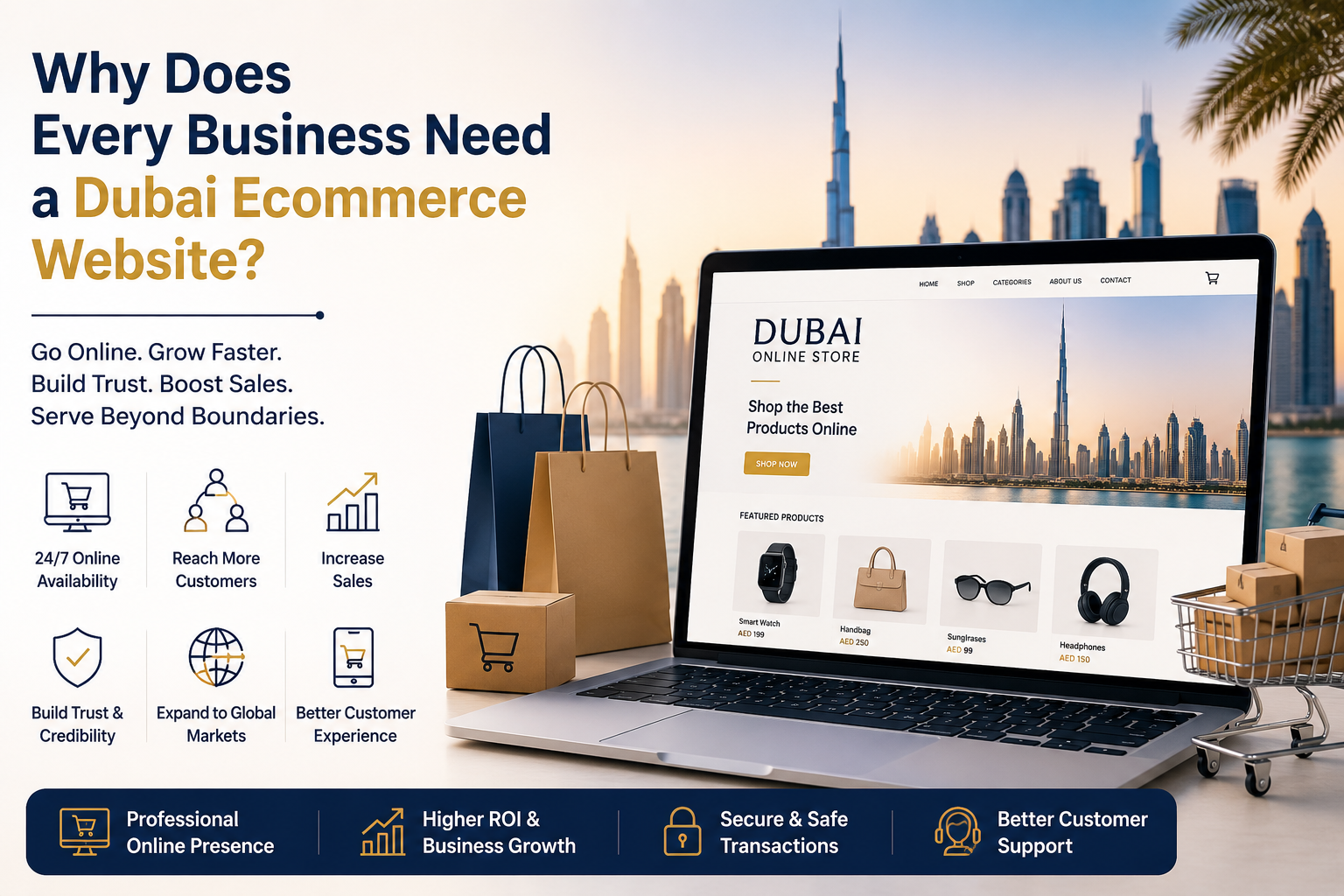
Dubai has transformed itself into one of the most dynamic commercial hubs in the world, and its digital economy is growing at a pace that few cities can match. Consumers across the UAE are shopping online more than ever, and businesses that fail to establish a strong ecommerce presence risk being left behind. Whether you run a small boutique, a wholesale trading company, or a large retail chain, having a dedicated Dubai ecommerce website is no longer optional — it is a fundamental requirement for survival and growth.
This article explores the key reasons why every business, regardless of size or industry, needs an ecommerce website tailored to the Dubai market.
1. Dubai’s Digital Consumer Base Is Massive and Growing
The UAE consistently ranks among the countries with the highest internet and smartphone penetration rates globally. Dubai residents are digitally savvy, tech-forward, and comfortable making purchases online, ranging from groceries and electronics to luxury goods and services. This creates an enormous pool of potential customers who expect brands to offer a seamless online shopping experience.
A Population That Shops Online by Default
Younger demographics in Dubai have grown up with mobile-first shopping habits. For them, browsing a physical store without the option to also shop online feels outdated. A business without an ecommerce website essentially excludes itself from the primary channel through which a large segment of the population prefers to shop.
Expats and Tourists Expect Digital Convenience
Dubai’s population is highly international, with expatriates and tourists making up a significant portion of consumer spending. These groups are accustomed to global ecommerce standards and expect local businesses to match that level of convenience, further increasing the pressure on companies to go digital.
2. Ecommerce Extends Your Reach Beyond Physical Boundaries
A physical store in Dubai, no matter how well-located, can only serve customers within a limited geographic radius. An ecommerce website removes that limitation entirely.
Selling Across the Emirates and the GCC
With a well-built ecommerce platform, a business based in Dubai can sell to customers in Abu Dhabi, Sharjah, and other emirates, as well as expand into the broader Gulf Cooperation Council (GCC) market. This regional reach can dramatically increase revenue potential without the overhead of opening additional physical locations.
Tapping Into International Markets
Dubai’s position as a global trade and logistics hub makes it an ideal base for businesses that want to sell internationally. An ecommerce website, combined with efficient shipping and payment infrastructure, allows a Dubai-based business to reach customers far beyond the UAE’s borders.
3. Consumer Behavior Has Permanently Shifted Toward Online Shopping
Online shopping habits accelerated dramatically in recent years, and this shift has proven to be permanent rather than temporary. Consumers now research products online, compare prices, read reviews, and often complete purchases digitally even when a physical store is nearby.
Convenience Drives Purchasing Decisions
Modern consumers value convenience above almost everything else. The ability to browse a catalog, place an order, and receive a product at their doorstep within hours has become the expected norm rather than a luxury. Businesses that don’t offer this convenience risk losing customers to competitors who do.
The Rise of Mobile Commerce
A significant share of online shopping in Dubai happens through smartphones. An ecommerce website that is optimized for mobile devices is essential for capturing this segment of shoppers, who often make impulsive or convenience-driven purchases while on the go.
4. A Dubai Ecommerce Website Builds Trust and Credibility
In a competitive market like Dubai, credibility matters enormously. A professional, well-designed ecommerce website signals to customers that a business is legitimate, established, and serious about customer service.
Professional Presentation Matters
An ecommerce site with high-quality product images, clear descriptions, secure checkout processes, and responsive customer support builds confidence. Customers are far more likely to complete a purchase and return in the future when they trust the platform they are buying from.
Reviews and Social Proof
Ecommerce platforms make it easy to showcase customer reviews, ratings, and testimonials. This social proof is a powerful trust-building tool, especially in a market where word-of-mouth and reputation carry significant weight.
5. Cost-Effective Growth Compared to Physical Expansion
Opening additional physical stores in Dubai involves substantial costs, including rent, licensing, staffing, and utilities. An ecommerce website offers a far more cost-effective path to growth.
Lower Overhead, Higher Margins
Running an online store typically involves lower operational costs than maintaining multiple physical locations. This allows businesses to allocate more resources toward marketing, product development, or customer service, ultimately improving profitability.
Scalability Without Physical Constraints
An ecommerce platform can handle a growing number of customers and orders without the same physical limitations as a brick-and-mortar store. Scaling an online business often requires upgrading server capacity or expanding a product catalog, which is far simpler than opening new retail locations.
6. Data-Driven Insights for Smarter Business Decisions
One of the most underrated advantages of ecommerce is the wealth of data it generates. Every click, purchase, and abandoned cart provides valuable insight into customer behavior.
Understanding Customer Preferences
Ecommerce platforms allow businesses to track which products are most popular, what times of day generate the most traffic, and which marketing campaigns drive the most conversions. This data helps businesses make informed decisions rather than relying on guesswork.
Personalization and Targeted Marketing
With access to customer data, businesses can create personalized shopping experiences, recommend relevant products, and run targeted advertising campaigns. This level of personalization significantly improves conversion rates compared to generic, one-size-fits-all marketing.
7. Staying Competitive in a Crowded Market
Dubai is home to a highly competitive business landscape, with both local and international brands vying for consumer attention. Businesses that fail to adapt to digital trends risk losing market share to competitors who do.
Competitors Are Already Online
Chances are, direct competitors already have a functioning ecommerce presence. Without one, a business is essentially handing over potential customers to rivals who offer the convenience of online shopping.
Standing Out With a Strong Digital Identity
An ecommerce website isn’t just a sales channel; it’s also a branding tool. A well-designed site with a strong visual identity, clear messaging, and unique value proposition helps a business differentiate itself in a crowded marketplace.
8. Government Support for Digital Transformation
The UAE government has actively promoted digital transformation across industries, encouraging businesses to embrace ecommerce as part of the broader economic diversification strategy. Dubai, in particular, has positioned itself as a smart city with infrastructure designed to support digital businesses.
Favorable Regulatory Environment
Simplified licensing procedures for ecommerce businesses, along with initiatives supporting digital payments and logistics, make it easier than ever for companies to launch and operate online stores in Dubai.
Investment in Digital Infrastructure
High-speed internet, advanced logistics networks, and widespread adoption of digital payment systems all contribute to an environment where ecommerce businesses can thrive with minimal friction.
9. Meeting Customer Expectations for 24/7 Availability
Unlike physical stores with fixed operating hours, an ecommerate website is available to customers around the clock. This continuous availability aligns with modern consumer expectations.
Always-On Sales Opportunities
Customers can browse and purchase products at any time, whether it’s early morning or late at night. This flexibility captures sales that would otherwise be lost if a business only operated during traditional business hours.
Customer Support Beyond Business Hours
Many ecommerce platforms integrate chatbots, automated responses, and self-service options that allow customers to get answers to basic questions even when human support isn’t available, improving overall customer satisfaction.
Conclusion
The case for building a Dubai ecommerce website is overwhelming. From reaching a massive and growing digital consumer base to extending market reach beyond physical boundaries, reducing operational costs, and gathering valuable customer data, the benefits touch nearly every aspect of a business’s operations and growth potential.
In a city as forward-thinking and digitally connected as Dubai, businesses that ignore ecommerce are not just missing an opportunity — they are actively falling behind competitors who have already embraced it. Investing in a well-designed, mobile-friendly, and locally optimized ecommerce website isn’t just a smart business move; in today’s market, it’s an essential one for long-term survival and success.
