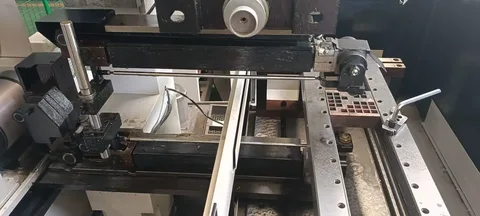
The modern manufacturing industry relies heavily on precision, efficiency, and the ability to machine complex materials that traditional tools cannot handle easily. One of the most important technologies enabling this capability is the cnc electric discharge machine. It plays a crucial role in shaping hard metals and intricate components with extreme accuracy. Unlike conventional machining methods, it does not rely on physical cutting force but instead uses controlled electrical discharges.
This article explains the working principle of the cnc electric discharge machine in detail, breaking it down into its core processes, components, and applications. By understanding how it works, manufacturers and engineers can better appreciate its value in modern production environments.
Basic Concept of CNC Electric Discharge Machining
The cnc electric discharge machine operates on a fundamentally different principle compared to traditional machining tools. Instead of cutting material with a blade or drill, it removes material using rapid electrical sparks between an electrode and the workpiece. These sparks generate intense heat that erodes the material in a controlled manner.
This process is especially useful for hard metals such as titanium, tungsten, and hardened steel, which are difficult to machine using conventional methods. The CNC (Computer Numerical Control) system ensures precision and repeatability by controlling electrode movement automatically.
Key points:
- Uses electrical discharges instead of mechanical cutting
- Ideal for hard and conductive materials
- CNC system ensures automated precision control
- No direct contact between tool and workpiece
- Suitable for complex and delicate geometries
The process begins when the electrode approaches the workpiece within a small gap filled with dielectric fluid. When voltage is applied, a spark occurs, melting and vaporizing tiny portions of the material. This repeated process shapes the workpiece gradually.
The cnc electric discharge machine is widely used in industries requiring high precision such as aerospace, automotive, and mold manufacturing.
Main Components of CNC Electric Discharge Machine
The efficiency of a cnc electric discharge machine depends on its key components working in perfect synchronization. Each part plays a specific role in ensuring accurate and controlled machining.
The system typically includes a power supply unit, CNC controller, electrode, dielectric fluid system, and work tank. These components work together to create and control the electrical discharge process.
Key points:
- Power supply generates controlled electrical pulses
- CNC controller manages movement and accuracy
- Electrode acts as the cutting tool
- Dielectric fluid cools and removes debris
- Work tank holds the machining environment
The electrode is usually made of graphite or copper, chosen for its conductivity and durability. It is shaped according to the desired cavity or cut required in the workpiece. The dielectric fluid, often oil or deionized water, helps maintain stability and prevents unwanted electrical arcing.
The CNC system is the brain of the machine. It follows programmed instructions to move the electrode with extreme precision, ensuring consistent machining quality even for complex shapes.
Working Process of CNC Electric Discharge Machine
The working process of a cnc electric discharge machine involves controlled electrical erosion. It starts when the electrode and workpiece are brought very close to each other without touching. A voltage is then applied, creating a spark that removes material.
This cycle of sparking continues thousands of times per second, gradually shaping the material into the desired form. The process is highly controlled to ensure accuracy and prevent damage to the workpiece.
Key points:
- Electrode approaches workpiece with a small gap
- Electrical sparks generate heat up to 10,000°C
- Material is melted and vaporized
- Dielectric fluid removes debris and cools area
- Process repeats until desired shape is achieved
Each spark removes a microscopic amount of material, making the process extremely precise but relatively slow compared to traditional cutting. However, the accuracy achieved is unmatched.
The cnc electric discharge machine ensures that every spark is precisely controlled, allowing manufacturers to create intricate cavities, molds, and fine details that would otherwise be impossible to achieve.
Role of Dielectric Fluid and Spark Control
One of the most important aspects of the cnc electric discharge machine is the use of dielectric fluid. This fluid plays a critical role in controlling the machining environment and ensuring consistent performance.
The dielectric fluid acts as an insulator until the voltage becomes strong enough to create a spark. It also helps cool the machining area and flush away eroded particles, preventing short circuits and maintaining stability.
Key points:
- Acts as an electrical insulator until breakdown occurs
- Cools both electrode and workpiece
- Removes metal debris from machining zone
- Prevents uncontrolled arcing
- Improves machining accuracy and surface finish
Spark control is equally important. The CNC system carefully regulates voltage, current, and pulse duration to ensure each spark is consistent. This control determines the quality, speed, and precision of the machining process.
Without proper dielectric fluid and spark regulation, the cnc electric discharge machine would lose accuracy and could damage the workpiece or electrode.
Applications and Advantages of CNC Electric Discharge Machine
The cnc electric discharge machine is widely used across industries that require high precision and complex geometries. Its ability to machine hard materials without physical force makes it highly valuable in modern manufacturing.
Industries such as aerospace, automotive, medical device manufacturing, and mold making rely heavily on this technology for producing detailed components.
Key points:
- Used in aerospace for turbine blades and engine parts
- Essential in mold and die manufacturing
- Ideal for medical instruments and implants
- Suitable for automotive precision components
- Enables complex and deep cavity machining
One of the major advantages of the cnc electric discharge machine is its ability to produce extremely fine details with high accuracy. It can create complex shapes that are impossible with conventional machining.
Additionally, it eliminates tool wear issues since there is no physical cutting contact. This reduces maintenance costs and improves consistency over long production runs.
Conclusion
The cnc electric discharge machine is a powerful and advanced manufacturing technology that has transformed modern machining processes. By using controlled electrical discharges instead of mechanical cutting, it allows manufacturers to achieve unmatched precision and work with extremely hard materials.
Its working principle relies on a combination of electrical energy, dielectric fluid, and CNC automation to gradually erode material and shape it into highly complex forms. Each component of the system plays a vital role in ensuring accuracy, stability, and efficiency.
As industries continue to demand higher precision and more complex designs, the cnc electric discharge machine will remain an essential tool in advanced manufacturing, offering reliability, versatility, and exceptional machining capabilities.
