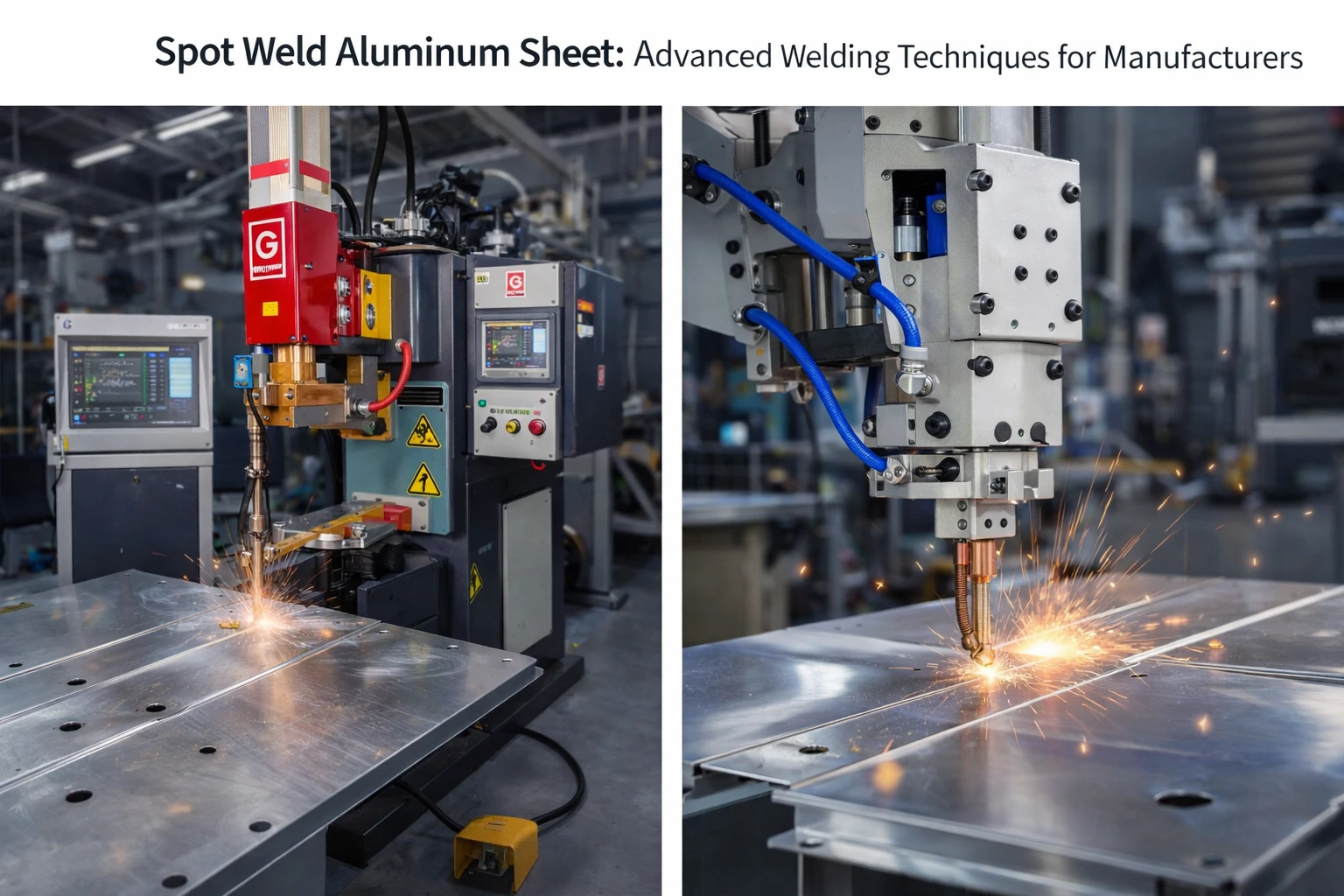
In modern manufacturing, precision, repeatability, and production efficiency define competitiveness. Among all joining technologies, the spot resistance welder remains one of the most widely adopted solutions for sheet metal assembly across automotive, appliance, and industrial fabrication sectors. From high-speed robotic lines to custom OEM production systems, this process delivers strong, clean, and consistent welds without filler materials or complex post-processing.
As a global manufacturer of advanced resistance welding and automation systems, Heron Welder focuses on delivering engineered solutions that improve productivity, weld quality, and process stability for industrial users worldwide.
What is a Spot Resistance Welder?
A spot resistance welder is a resistance welding machine that joins two or more overlapping metal sheets at localized points using controlled electrical current, pressure, and time.
The principle is based on Joule heating, where electrical resistance at the contact interface generates heat:
- High current passes through copper electrodes
- Heat is generated at the sheet interface
- Metal melts locally and forms a weld “nugget”
- Pressure is maintained during cooling to solidify the joint
This creates a strong metallurgical bond without filler wire or shielding gas.
Working Principle of Spot Resistance Welding
The process is simple in concept but highly controlled in execution. Industrial systems rely on precise regulation of three key parameters:
1. Current
The primary heat source. Higher current increases nugget size, but excessive current may cause expulsion or electrode damage.
2. Time
The duration of current flow. Modern controllers use millisecond-level accuracy to ensure repeatability.
3. Force (Electrode Pressure)
Copper electrodes apply pressure to ensure stable contact and controlled resistance heating.
When optimized together, these parameters produce consistent weld nuggets with strong mechanical strength and minimal distortion.
Key Components of a Spot Resistance Welder
A typical industrial system includes:
- Welding transformer (AC or MFDC inverter type)
- Copper alloy electrodes
- Pneumatic or servo force system
- Welding controller (PLC-based or digital inverter control)
- Cooling system for electrodes and cables
Heron Welder integrates advanced MFDC technology and automated control systems to improve energy efficiency and weld stability in high-volume production environments.
Industrial Applications of Spot Resistance Welders
Spot resistance welding is widely used in mass production industries where speed and consistency are critical.
Automotive Manufacturing
One of the largest applications, used for:
- Car body frames
- Doors and chassis panels
- Battery trays for EVs
A single vehicle body may contain thousands of spot welds.
Appliance Industry
Used in:
- Refrigerators
- Washing machines
- Air conditioning units
- Metal enclosures
Electrical & Battery Manufacturing
- Battery pack assembly
- Nickel strip welding
- Electrical cabinets and connectors
Industrial Fabrication
- Sheet metal structures
- HVAC ducting systems
- Metal furniture and enclosures
Advantages of Spot Resistance Welding
Spot resistance welding offers several production advantages that make it ideal for automated manufacturing:
1. High Production Speed
Weld cycles can be completed in fractions of a second, making it ideal for robotic assembly lines.
2. No Consumables Required
No filler material or shielding gas is needed, reducing operational cost.
3. Automation Friendly
Easily integrated into robotic arms and CNC production systems.
4. Strong and Repeatable Joints
Consistent weld quality when parameters are properly controlled.
5. Minimal Surface Distortion
Localized heating reduces deformation compared to arc welding.
Limitations and Engineering Considerations
While highly efficient, spot resistance welding requires proper engineering control:
- Material must be electrically conductive
- Surface cleanliness affects weld quality
- Thick materials require higher current systems
- Electrode wear must be managed in high-volume production
Advanced systems like MFDC inverter welders significantly reduce these limitations by improving energy control and stability.
Spot Resistance Welder vs Other Welding Methods
| Feature | Spot Resistance Welding | MIG Welding | Laser Welding |
|---|---|---|---|
| Speed | Very High | Medium | Very High |
| Consumables | None | Wire + Gas | None |
| Automation | Excellent | Good | Excellent |
| Heat Affected Zone | Low | Medium | Very Low |
| Best Use Case | Sheet metal mass production | Structural welding | Precision welding |
This comparison shows why spot welding remains dominant in large-scale sheet metal manufacturing.
Role of Heron Welder in Spot Resistance Technology
Heron Welder develops industrial-grade spot resistance welding systems designed for:
- High-volume automotive production
- Smart factory automation lines
- Custom OEM welding solutions
- Energy-efficient MFDC systems
- Integrated welding + clinching + riveting platforms
By combining mechanical engineering with digital welding control, Heron helps manufacturers improve productivity while reducing welding defects and maintenance downtime.
Best Practices for Industrial Spot Welding
To achieve optimal weld quality, engineers should follow these guidelines:
- Maintain clean, oxide-free metal surfaces
- Select correct electrode geometry for material type
- Optimize current-time-force balance
- Use water-cooled electrodes for continuous production
- Regularly calibrate welding controllers
Proper process control is essential for achieving consistent nugget formation and long-term production stability.
FAQs About Spot Resistance Welder
1. What materials can be welded using spot resistance welding?
Low-carbon steel, stainless steel, aluminum alloys, and nickel-based materials are commonly used in industrial applications.
2. Is spot welding stronger than other welding methods?
For sheet metal overlap joints, spot welds provide excellent shear strength and durability when properly engineered.
3. Can spot resistance welders be automated?
Yes, most modern systems are fully compatible with robotic arms and automated production lines.
4. What industries use spot resistance welders the most?
Automotive, appliance manufacturing, electronics, EV battery production, and HVAC industries.
5. What is the main maintenance requirement?
Electrode dressing/replacement and cooling system maintenance are essential for consistent performance.
Final Thoughts
The spot resistance welder remains a cornerstone of modern industrial manufacturing due to its speed, efficiency, and adaptability in automated environments. As production demands increase, especially in automotive and energy sectors, advanced resistance welding systems are evolving toward smarter, more controlled, and energy-efficient solutions.
Heron Welder continues to support global manufacturers with engineered welding systems designed for precision, durability, and high-output production environments.
Request a Custom Welding Solution
Looking to improve your production line with advanced spot resistance welding technology?
Heron Welder provides customized resistance welding machines, automation systems, and turnkey production solutions tailored to your industry needs.
Contact Heron Welder to request a quote or technical consultation for your welding application.
