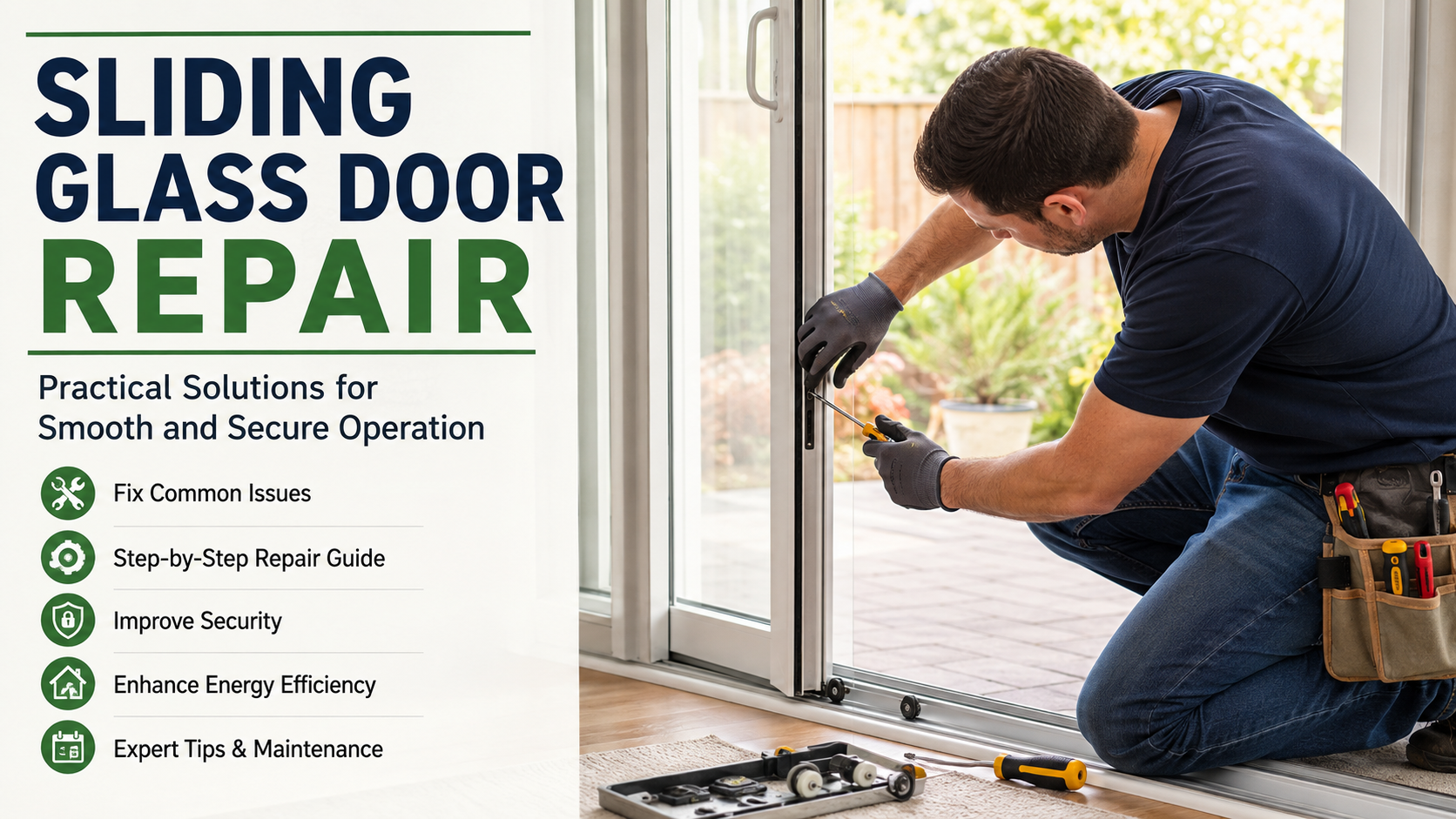
Sliding glass doors add natural light, improve ventilation, and create a seamless connection between indoor and outdoor spaces. However, these doors also experience daily wear that eventually affects their performance. Homeowners often notice sticking tracks, broken rollers, damaged locks, drafts, or difficulty opening and closing the door smoothly. In many cases, these issues develop gradually until the door becomes frustrating or unsafe to use.
Understanding the basics of sliding glass door repair can help homeowners identify problems early and prevent more expensive replacements later. A properly maintained sliding glass door improves energy efficiency, home security, and overall convenience. Small repairs, when handled quickly, often restore the door’s function without requiring a complete overhaul.
Many people assume a malfunctioning sliding door automatically needs replacement. In reality, most common problems involve components like rollers, tracks, handles, or weather stripping. Addressing these parts individually is usually more affordable and less disruptive than installing a new door system.
Understanding Common Sliding Glass Door Problems
Sliding glass doors rely on several moving components working together smoothly. When one part begins to fail, the entire system becomes harder to operate.
One of the most common issues is worn-out rollers. Over time, dirt, moisture, and constant movement damage the wheels underneath the door. As the rollers deteriorate, the door becomes difficult to slide and may scrape against the track.
Damaged tracks are another frequent problem. Bent or clogged tracks prevent smooth movement and create resistance during operation. In coastal or humid areas, corrosion can also weaken aluminum tracks over time.
Faulty locks and handles create security concerns. A loose handle or misaligned locking mechanism may prevent the door from securing properly. This issue is particularly important for families with children or homes with backyard access.
Drafts and water leaks often result from damaged weather stripping. When seals wear down, outside air and moisture can enter the home, increasing energy costs and creating discomfort during extreme temperatures.
Glass damage is less common but still significant. Cracks, fogging between panes, or shattered sections require immediate attention for both safety and insulation purposes.
Step-by-Step Guide to Sliding Glass Door Repair
Repairing a sliding glass door starts with identifying the exact source of the problem. Many homeowners make the mistake of replacing parts before diagnosing the issue correctly.
Inspect the Door and Track
Begin by examining the track for visible dirt, debris, dents, or corrosion. Small rocks, pet hair, and dust often accumulate inside the track and interfere with movement.
Use a vacuum and a stiff brush to remove buildup. After cleaning, wipe the track with a damp cloth and inspect for damage. Minor dents can sometimes be straightened using pliers.
Next, check the rollers by lifting the door slightly and testing its movement. Grinding noises or uneven motion usually indicate roller damage.
Remove the Sliding Door Carefully
Most sliding doors can be removed by adjusting the roller screws located near the bottom edge of the door. Lower the rollers fully before lifting the door upward and pulling the bottom outward.
Because glass doors are heavy, having another person assist during removal improves safety and prevents accidental damage.
Place the door on a soft surface to avoid scratching the frame or glass.
Replace Worn Rollers
Inspect both rollers carefully. Cracked wheels, rusted bearings, or uneven movement signal replacement is necessary.
Matching the replacement rollers to the door manufacturer is important because sizes vary across models. Install the new rollers securely and ensure both sides are aligned evenly.
After replacement, test the wheel movement manually before reinstalling the door.
Repair or Replace the Track
Minor track damage can sometimes be repaired using a track repair cap or aluminum cover. These solutions restore a smooth surface without replacing the entire frame.
If corrosion or bending is severe, full track replacement may be necessary. In older homes, this process often requires professional assistance because the track may be integrated into the floor structure.
Adjust the Alignment
Once the door is reinstalled, adjust the roller height gradually until the door slides evenly across the track.
An improperly aligned door may appear fixed initially but continue causing long-term wear on rollers and locks. Testing the movement several times helps confirm smooth operation.
Check Locks and Weather Stripping
Finally, inspect the lock alignment and test the handle operation. Replace worn weather stripping around the edges to improve insulation and reduce drafts.
This step often makes a noticeable difference in indoor comfort and energy efficiency.
Common Mistakes During Sliding Glass Door Repair
Many repair problems occur because homeowners rush the process or overlook important details.
One common mistake is ignoring track cleaning before replacing rollers. Dirt buildup alone can cause sliding resistance, leading people to replace perfectly functional components unnecessarily.
Another issue involves forcing the door open when it sticks. Excessive force damages rollers, bends tracks, and may even crack the glass. Gentle troubleshooting is always safer and more effective.
Using incorrect replacement parts also creates complications. Rollers, locks, and handles vary significantly between manufacturers. Installing incompatible hardware often leads to uneven movement or security issues.
Improper lubrication is another overlooked problem. Thick grease attracts dirt and worsens track buildup over time. Silicone-based lubricants typically work better because they reduce friction without collecting debris.
Some homeowners also underestimate the door’s weight during removal. Attempting the process alone increases the risk of injury or accidental glass breakage.
Expert Tips for Long-Term Performance
Regular maintenance is the easiest way to extend the lifespan of a sliding glass door. A few preventative habits can reduce repair costs significantly over time.
Clean the tracks monthly, especially in homes with pets, children, or nearby landscaping. Sand, leaves, and dirt accelerate roller wear quickly.
Inspect weather stripping twice a year. Replacing damaged seals early prevents moisture intrusion and energy loss during seasonal temperature changes.
Lubricate the track lightly every few months using a silicone-based product. Avoid oil-heavy lubricants because they trap debris inside the track.
Pay attention to small operational changes. A door that suddenly feels heavier or noisier often signals an early mechanical issue. Addressing these warning signs immediately usually prevents larger repairs later.
Homeowners in coastal climates should inspect tracks regularly for corrosion. Salt air can damage metal components faster than in dry environments.
If the glass develops condensation between panes, the insulated seal may have failed. In these situations, replacing the glass unit often restores insulation without requiring a full door replacement.
For older homes, upgrading outdated locks can improve security substantially. Modern sliding door locks provide stronger protection and better resistance against forced entry.
When Professional Help Makes Sense
Some repairs are manageable for experienced homeowners, but certain situations require professional attention.
Large glass cracks, structural frame damage, or major alignment problems usually need specialized tools and expertise. Attempting these repairs without proper knowledge can worsen the issue or create safety hazards.
Professional technicians can also identify hidden causes behind recurring problems. For example, foundation settling or improper installation may affect door alignment repeatedly.
If the door continues sticking after roller replacement and track cleaning, a deeper structural issue may exist. An expert inspection often saves time and prevents repeated repair attempts.
Older sliding door systems may also have discontinued hardware that professionals can source more efficiently.
Conclusion
Sliding glass doors improve comfort, visibility, and accessibility, but they require periodic maintenance to function properly. Issues like damaged rollers, dirty tracks, worn weather stripping, and faulty locks are common and often repairable without full replacement.
A careful inspection process, proper cleaning, and timely component replacement can restore smooth operation and improve the door’s lifespan significantly. Avoiding common mistakes and performing routine maintenance also reduces long-term repair costs.
Whether handling minor fixes independently or seeking professional assistance for larger issues, addressing sliding glass door problems early helps maintain safety, efficiency, and everyday convenience throughout the home.
