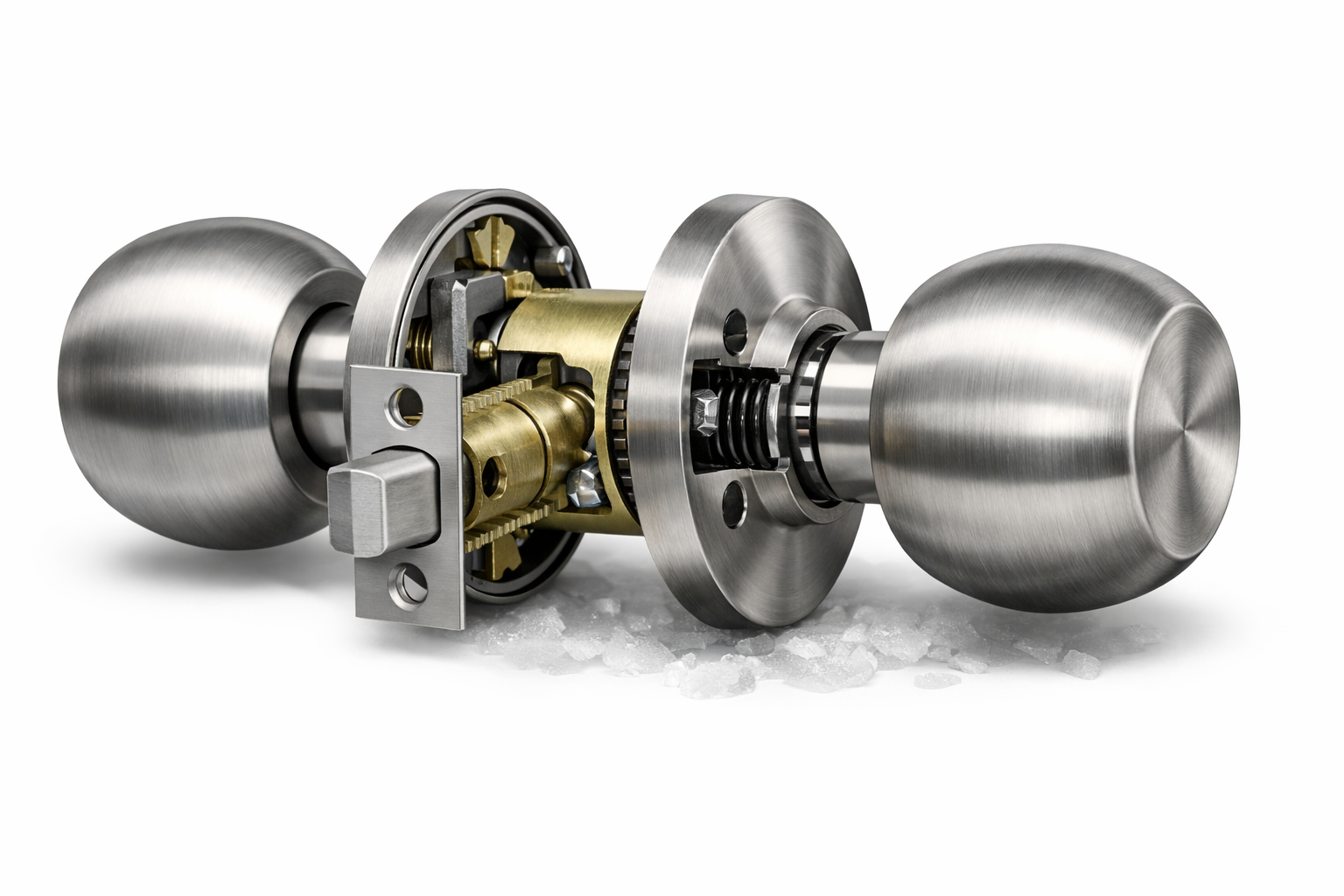
In today’s architectural hardware industry, a door knob making company is far more than a simple metal workshop. It is a precision-driven manufacturing environment where engineering, design, and material science come together to produce components that must withstand years of daily use while maintaining smooth functionality and visual appeal. Modern consumers expect door hardware that is not only durable but also ergonomic and aesthetically aligned with interior design trends.
Behind this seemingly simple product lies a highly engineered supply chain that often depends on advanced mechanical components, finishing systems, and quality control standards. Many manufacturers also rely on industrial component specialists such as elesa for precision hardware elements used in production equipment and assembly systems, ensuring consistency and repeatability across high-volume manufacturing lines.
Understanding how these companies operate provides valuable insight into industrial production systems, especially in sectors where durability, safety, and design must work together seamlessly. Whether for residential buildings, commercial properties, or industrial facilities, door knobs are a small but essential part of everyday infrastructure.
How a Door Knob Making Company Operates
A professional door knob making company typically operates through a combination of design engineering, metal processing, machining, surface finishing, and assembly lines. Each stage is optimized for efficiency and quality control.
The process begins with product design, where engineers define the shape, internal mechanism, and material specifications. Door knobs must balance aesthetics with mechanical reliability, meaning that even small design changes can affect performance. Computer-aided design (CAD) tools are used to simulate stress points, rotation smoothness, and lock compatibility.
Once the design is finalized, production planning determines which manufacturing methods will be used—such as die casting for brass or zinc alloys, or CNC machining for stainless steel components. The choice depends on durability requirements and cost targets.
After manufacturing, components move into finishing processes like polishing, powder coating, electroplating, or PVD coating. These treatments ensure resistance to corrosion, scratches, and daily wear.
Finally, assembly and testing bring all components together. Springs, spindles, locking mechanisms, and decorative shells are integrated and tested for torque resistance, rotation cycles, and installation compatibility.
Step-by-Step Manufacturing Process in a Door Knob Making Company
A structured production workflow ensures that every door knob meets strict quality and performance standards. Below is a breakdown of the key stages involved in manufacturing.
Material Selection and Engineering Input
Material selection is one of the most critical decisions in the process. Common materials include brass, stainless steel, zinc alloy, and aluminum. Each material has its own advantages. Brass offers corrosion resistance and a premium finish, while stainless steel provides superior strength for heavy-use environments.
Engineers evaluate factors such as environmental exposure, expected usage frequency, and cost constraints. For example, coastal buildings often require corrosion-resistant materials to withstand humidity and salt exposure.
Design and Prototyping
Once materials are selected, the design team develops prototypes using CAD modeling and 3D printing technologies. This stage allows engineers to test ergonomics, grip comfort, and rotational mechanics before full-scale production begins.
Prototyping helps identify issues such as uneven weight distribution or weak internal locking points. Adjustments are made early, reducing costly errors during mass production.
Casting and Machining
In large-scale production, die casting is commonly used to form the basic structure of door knobs. Molten metal is injected into steel molds to create uniform shapes with high precision.
For premium or high-strength products, CNC machining is used to refine components with tighter tolerances. This ensures smooth rotation and perfect alignment between moving parts. Machining also enhances surface accuracy, which is critical for high-end architectural hardware.
Surface Finishing and Coating
Finishing is what gives a door knob its final appearance and durability. Common techniques include polishing for a mirror finish, electroplating for chrome or nickel surfaces, and powder coating for matte textures.
Advanced coatings like PVD (Physical Vapor Deposition) are used for scratch resistance and long-term durability. This stage also ensures color consistency across production batches.
Assembly and Quality Testing
The final stage involves assembling internal components such as springs, spindles, and locking systems. Each unit is tested for rotational smoothness, load resistance, and cycle durability.
Quality control teams simulate thousands of usage cycles to ensure the product can withstand long-term operation without failure. Only units that pass strict performance benchmarks move to packaging.
Common Mistakes and Manufacturing Challenges
Even experienced manufacturers face challenges in door knob production. One common issue is inconsistent material quality, which can lead to weak structural integrity or surface defects. Poor-quality alloys may cause premature corrosion or breakage under pressure.
Another challenge is inadequate precision during machining. Even minor misalignment in internal components can result in stiffness, noise, or failure in locking mechanisms. This is especially critical in commercial-grade hardware where reliability is essential.
Surface finishing errors are also frequent. Uneven coating or improper curing can lead to peeling, discoloration, or reduced durability. Additionally, insufficient quality testing often results in defective products reaching the market.
Many companies also underestimate ergonomic design. A poorly shaped knob can cause discomfort during repeated use, negatively impacting user experience and brand reputation.
Practical Tips for Building a High-Quality Door Knob Making Operation
To build a reliable and competitive manufacturing process, companies must focus on precision, consistency, and long-term durability.
First, invest in advanced machining equipment. High-precision CNC machines reduce tolerance errors and ensure smoother assembly. Automation in production lines also improves consistency and reduces human error.
Second, prioritize material traceability. Knowing the exact source and composition of raw materials helps maintain quality control and reduces production risks.
Third, implement multi-stage quality testing rather than a single inspection point. Testing at every stage—from casting to final assembly—ensures early detection of defects.
Fourth, focus on ergonomic design. Small improvements in grip comfort and rotational resistance can significantly enhance user satisfaction.
Finally, maintain continuous supplier evaluation. Components such as springs, screws, and internal mechanisms must meet strict standards to ensure long-term product reliability.
Conclusion
A modern door knob making company operates at the intersection of engineering precision, material science, and industrial design. From raw material selection to final quality testing, each stage plays a crucial role in ensuring durability, functionality, and user comfort.
While the product itself may seem simple, the manufacturing process is highly technical and requires strict attention to detail. Companies that invest in advanced machinery, strong quality systems, and thoughtful design consistently outperform competitors in both reliability and customer satisfaction.
Understanding this process highlights how even everyday objects are shaped by complex industrial systems and careful engineering decisions.
