Feeling nervous before meeting new people, speaking in a group, or entering a room full of strangers is familiar to many people. Some naturally take longer to warm up socially. Others prefer listening to talking or need quiet time after being around people. These traits may reflect shyness, introversion, or simply a personal communication style.
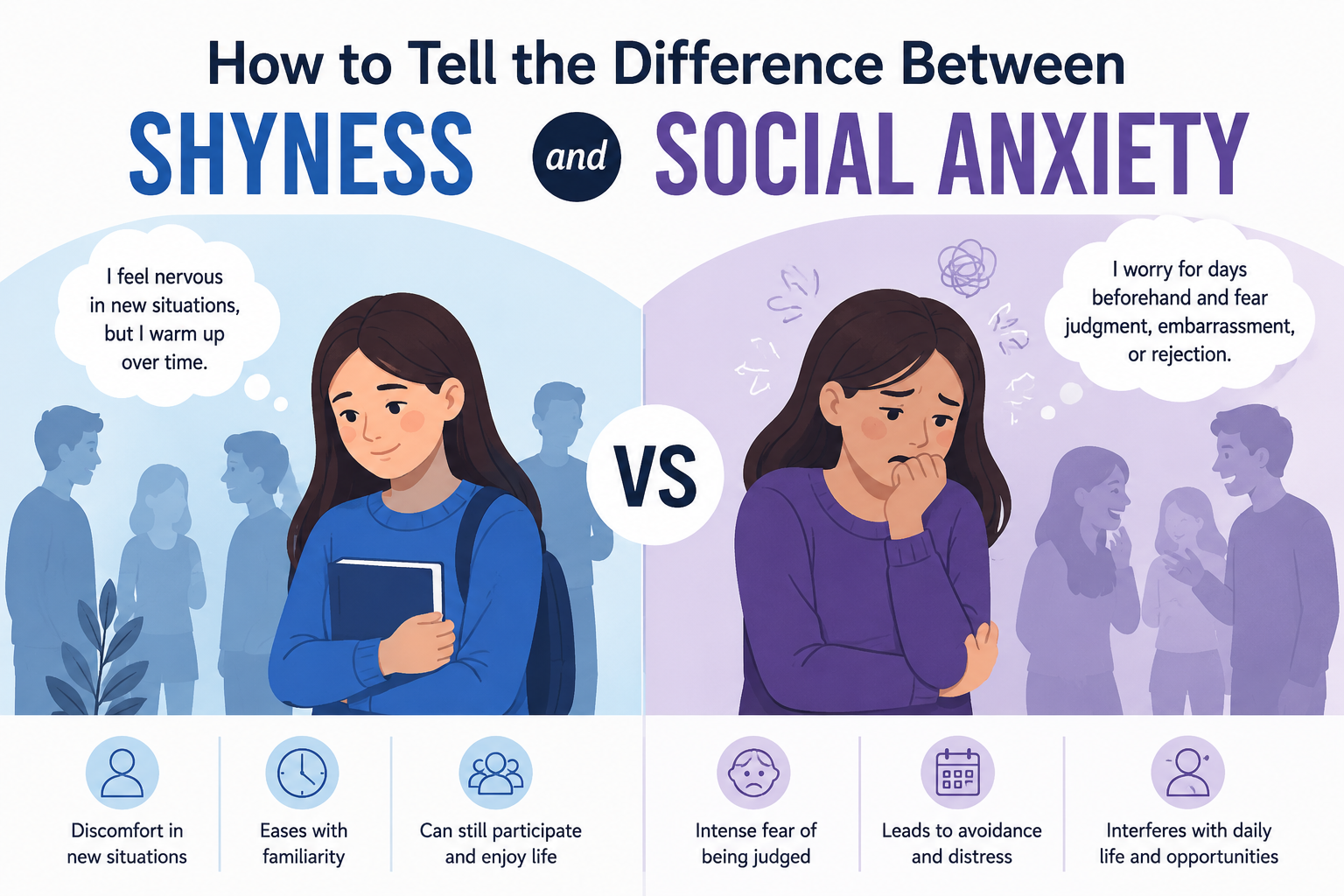
Social anxiety can look similar from the outside, but the internal experience is often different. A shy person may feel awkward and still participate. Someone with social anxiety may experience intense fear of being judged, embarrassed, rejected, or noticed negatively. That fear can become strong enough to affect school, work, friendships, relationships, and everyday tasks.
The difference is usually less about whether a person feels nervous and more about the intensity of the fear, how long it lasts, how much avoidance it creates, and whether it interferes with daily life.
What Does It Mean to Be Shy?
Shyness is a personality tendency rather than a mental health disorder. A shy person may feel uncomfortable, self-conscious, or hesitant in unfamiliar social situations. The discomfort is often strongest at first and may fade as the person becomes familiar with the people or setting.
Someone may feel nervous on the first day at a new job but gradually become comfortable talking with coworkers. A student may hesitate to raise a hand during the first weeks of class but participate more once the environment feels familiar.
Shyness can be frustrating, but it does not automatically prevent a person from doing things that matter to them. It is also different from introversion, which generally refers to a preference for lower-stimulation environments and time alone to recharge.
What Is Social Anxiety?
Social anxiety involves more than discomfort around other people. It is marked by a strong fear of situations in which a person believes they may be watched, evaluated, criticized, or embarrassed.
Triggers can include speaking in meetings, eating in front of others, attending parties, making phone calls, meeting unfamiliar people, dating, giving presentations, or having brief conversations with cashiers or coworkers.
The fear can begin long before the event. A person may spend days worrying about what could go wrong, rehearsing conversations, imagining criticism, or looking for ways to cancel. During the situation, they may experience sweating, trembling, nausea, a racing heart, blushing, muscle tension, or a feeling that their mind has gone blank. Afterwards, they may replay the interaction and focus on things they believe they did wrong.
When these patterns become persistent and start limiting daily life, it may be worth learning more about anxiety therapy for social anxiety NuVista Anxiety Support, especially if avoidance is becoming frequent or difficult to control.
The Main Differences Between Shyness and Social Anxiety
No single sign separates shyness from social anxiety in every person. Looking at several patterns together is more useful.
1. The Intensity of the Fear
Shyness usually creates mild to moderate discomfort. A person might feel butterflies in the stomach, worry briefly about making a good impression, or stay quiet until they settle in.
Social anxiety can create a much stronger reaction. Even a routine interaction may feel threatening because the person fears being observed or judged.
The key question is not, “Do I feel nervous?” It is, “How powerful is the fear, and how difficult is it to move through it?”
2. How Much Avoidance Is Happening
A shy person may prefer not to attend a large gathering but can usually go when it matters. Someone with social anxiety may repeatedly avoid situations because the distress feels overwhelming.
Avoidance can be obvious, such as skipping parties or refusing presentations. It can also be subtle. A person might arrive late to avoid small talk, keep their camera off during online meetings, avoid eating in public, or rely on someone else to speak for them.
Over time, this pattern can narrow daily life and reduce opportunities.
3. How Long the Anxiety Lasts
Temporary shyness often improves with familiarity. Once a person gets used to a class, workplace, group, or social setting, the nervousness may settle.
Social anxiety tends to be more persistent. The same fears may appear across settings and continue for months or longer. Someone might feel anxious before an event, during it, and for hours afterwards.
Duration is only one part of an assessment, but a lasting pattern is more concerning when it also causes avoidance or disruption.
4. Fear of Negative Judgment
Both shy people and people with social anxiety can worry about what others think. The degree of that concern is often different.
A shy person might wonder whether they sounded awkward. Someone with social anxiety may become preoccupied with humiliation or rejection. Thoughts such as “Everyone will notice I am nervous,” “I will say something stupid,” or “They will think I am strange” can feel convincing even when there is little evidence of judgment.
5. Physical Symptoms
Shyness can cause physical nervousness, but social anxiety may produce a stronger body response.
A racing heartbeat, shaking hands, sweating, nausea, facial flushing, or muscle tension may appear in feared social situations. Some people also worry that others will notice these symptoms, creating another layer of anxiety.
6. The Effect on Everyday Life
This is one of the clearest differences.
A person can be shy and still maintain friendships, attend school, work effectively, date, speak when necessary, and participate in important activities.
Social anxiety may interfere with education, career development, relationships, healthcare, hobbies, or ordinary responsibilities. Someone might avoid applying for a promotion because it requires presentations or repeatedly cancel plans despite feeling lonely.
When fear begins deciding what a person can and cannot do, the issue deserves closer attention.
Can a Shy Person Develop Social Anxiety?
Yes, but shyness does not automatically lead to social anxiety. Many shy people never develop an anxiety disorder.
Social anxiety can develop through a combination of biological, environmental, and learning-related influences rather than one simple cause. It can also affect people who appear friendly, confident, or talkative. Outward behaviour does not always reveal the distress underneath.
What Social Anxiety Can Look Like in Children and Teenagers
Young people may not always describe their experience as anxiety. The problem can instead appear as school avoidance, stomachaches before social events, refusal to speak in certain settings, difficulty making friends, tearfulness, irritability, or strong reactions before performances or group activities.
A child may be called “just shy” even when they are distressed. A quiet child who takes time to warm up but eventually participates, however, may simply have a cautious temperament.
Parents and caregivers can look at the broader pattern. Is anxiety affecting attendance, friendships, learning, or family routines? Is the child avoiding activities they want to join? Has the problem continued rather than easing with familiarity?
A Simple Self-Check
Rather than trying to choose a label immediately, focus on what is happening:
- Do I avoid social situations that I genuinely want or need to attend?
- Do I worry about social events for days before they happen?
- Do I frequently assume people are judging me negatively?
- Do physical anxiety symptoms make ordinary interactions difficult?
- Do I replay conversations and criticize myself afterwards?
- Has this fear affected work, school, relationships, healthcare, or other responsibilities?
- Has the pattern continued for months rather than appearing only occasionally?
Answering “yes” to several questions does not provide a diagnosis. It may, however, suggest that the problem is worth discussing with a qualified mental health professional.
When Professional Support May Be Helpful
Professional support is worth considering when anxiety causes significant distress, repeated avoidance, or limits important parts of life.
Therapy can help a person understand the thoughts and behaviours that maintain social fear, develop coping skills, and gradually approach situations that have become difficult. Cognitive behavioural therapy, commonly called CBT, is often used for social anxiety. Treatment may also include carefully planned exposure to feared situations and strategies for responding differently to anxious thoughts.
For someone who wants to discuss the broader pattern privately before deciding what kind of support fits, individual therapy for emotional and anxiety-related challenges NuVista Individual Therapy can provide a one-to-one setting to explore symptoms, triggers, goals, and possible next steps.
The goal is not to turn a quiet person into an extrovert. Useful treatment should help someone participate more freely in the relationships, responsibilities, and experiences that matter to them.
Small Steps That May Help With Social Discomfort
Whether the problem is shyness or social anxiety, forcing a dramatic personality change is rarely helpful. Small steps are usually more manageable.
Start with a situation that feels uncomfortable but possible. That might mean asking one question in a meeting, making a short phone call, staying at a gathering for 20 minutes, or starting a brief conversation with a familiar coworker.
Notice predictions before the interaction. What do you expect to happen? Afterwards, compare that prediction with what actually occurred. This can help show the difference between an anxious expectation and the real outcome.
It can also help to reduce excessive post-event analysis. Most conversations contain pauses, awkward moments, and imperfect wording. Treating every small mistake as evidence of failure can keep anxiety active long after an interaction ends.
If a step feels consistently overwhelming, a therapist can help break it into smaller stages rather than simply pushing harder.
The Bottom Line
Shyness and social anxiety can look alike, but they are not the same. Shyness is usually a manageable personality trait that may become easier with familiarity. Social anxiety involves stronger and more persistent fear of scrutiny or negative judgment, often accompanied by avoidance, physical symptoms, anticipatory worry, and meaningful interference with daily life.
The most useful question is not whether someone is “shy enough” or “anxious enough” to fit a label. It is whether fear is restricting choices, relationships, opportunities, or daily functioning.
If social situations regularly create intense distress or avoidance, speaking with a qualified professional can provide clarity. The goal is not to become a different personality, but to have more freedom to participate in life without fear making the decisions.
