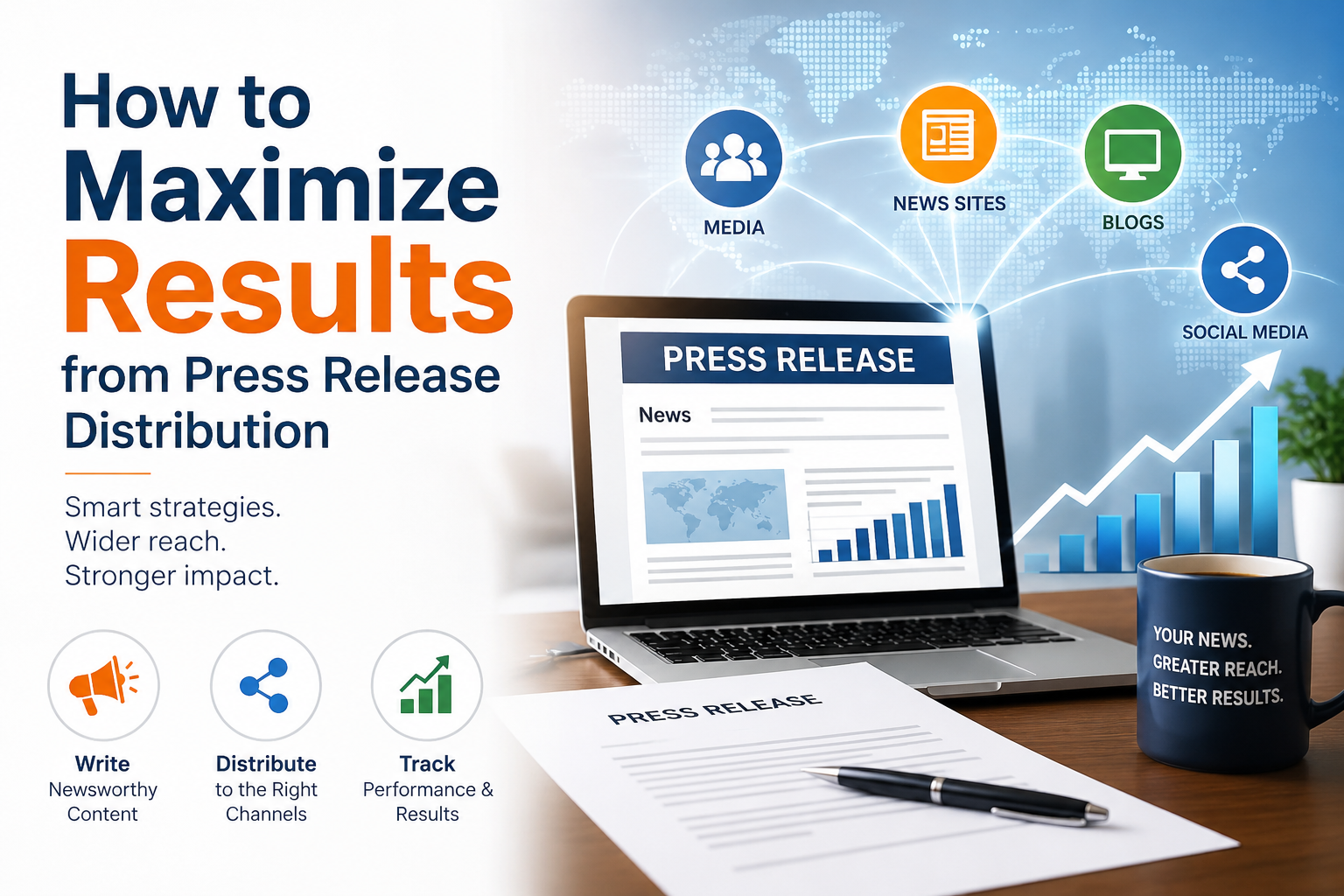
Press release distribution remains one of the most effective ways for businesses, startups, nonprofits, and established organizations to share important news with a wider audience. While publishing a press release is relatively simple, achieving meaningful results requires planning, strategy, and a clear understanding of how modern media works.
In today’s digital landscape, a press release is much more than a news announcement. It supports brand visibility, strengthens online credibility, creates opportunities for media coverage, and can even contribute to long-term search engine optimization (SEO). However, these benefits only happen when a press release is written, distributed, and promoted correctly.
This guide explains how organizations can maximize the value of press release distribution using proven best practices.
Understand the Purpose of a Press Release
Many organizations publish press releases expecting immediate sales or viral attention. In reality, the primary purpose of a press release is to communicate newsworthy information to journalists, publishers, investors, partners, and the public.
Examples of newsworthy announcements include:
- Product launches
- Company milestones
- Strategic partnerships
- Research findings
- Awards and recognitions
- Leadership appointments
- Events and conferences
- Business expansion
When a release focuses on genuine news instead of marketing language, it becomes much more valuable to editors and readers.
Start with a Newsworthy Story
The strongest distribution strategy begins before the release is even written.
Ask yourself:
- Why should someone care?
- What makes this announcement timely?
- Does it affect customers, an industry, or a community?
- Is there useful information readers can learn?
A newsworthy story has a significantly higher chance of being picked up by publishers and industry websites.
Instead of writing about how great a company is, explain what has changed and why that change matters.
Write Like a Journalist
Editors receive hundreds of press releases every week. A professional structure makes your announcement easier to review.
A strong press release usually includes:
- A clear headline
- A concise subheadline
- Dateline
- Introduction summarizing the news
- Supporting details
- Relevant quotes
- Company background
- Media contact information
Avoid exaggerated claims such as:
- “The world’s best”
- “Revolutionary”
- “Guaranteed success”
- “Unmatched quality”
Objective language builds credibility and aligns with journalistic standards.
Focus on Accuracy and Credibility
Trust has become one of the most valuable assets online.
Every statement within a press release should be factual and verifiable.
Include:
- Real statistics
- Verified research
- Official company information
- Accurate dates
- Correct spelling of names
- Working contact details
Supporting information from reputable sources increases confidence among journalists and readers.
Optimize for Search Engines
Modern press releases should also consider search visibility.
SEO does not mean stuffing keywords into every paragraph.
Instead:
- Use a primary keyword naturally in the headline.
- Include related keywords throughout the article.
- Write descriptive subheadings.
- Add relevant internal or external links where appropriate.
- Keep paragraphs short and readable.
Search engines reward useful, well-structured content that answers user questions.
Choose the Right Distribution Platform
Distribution plays an important role in determining how widely a press release reaches its intended audience.
Different distribution services offer varying levels of media syndication, industry targeting, geographic coverage, and newsroom visibility. Organizations should compare these features before selecting a provider.
For example, businesses looking to understand modern news distribution practices can review resources available through SP Tech Solutions which provides information about press release publishing and media distribution.
The best distribution channel depends on your industry, target audience, and communication goals rather than simply selecting the largest network.
Include High-Quality Multimedia
Visual content helps increase reader engagement.
Consider including:
- Company logos
- Executive photos
- Product images
- Infographics
- Event photographs
- Short videos
Images often improve media interest because publishers can use them alongside the article.
Ensure all visuals are high resolution and appropriately licensed.
Target the Right Audience
Not every press release needs nationwide coverage.
Sometimes a regional or industry-specific audience produces stronger results.
Examples include:
- Healthcare publications
- Technology media
- Financial news
- Local newspapers
- Manufacturing journals
- Education websites
Reaching the right audience often generates higher engagement than reaching the largest audience.
Include Expert Quotes
Quotes provide context and human insight.
Instead of generic promotional statements, encourage company representatives to explain:
- Why the announcement matters
- Industry trends
- Future expectations
- Customer impact
Meaningful quotes help journalists develop more complete stories.
Time Distribution Strategically
Timing can affect visibility.
Many communication professionals recommend distributing releases during standard business hours when journalists are actively reviewing news.
Also consider:
- Industry events
- Holiday schedules
- Major conferences
- Competing announcements
- Seasonal trends
Avoid publishing important announcements during periods when significant national news is dominating media coverage.
Promote Beyond Distribution
Distribution should not be the final step.
Organizations can extend visibility by sharing the announcement through:
- Corporate websites
- Company blogs
- Email newsletters
- Industry forums
- Professional communities
Repurposing the information into multiple content formats increases long-term value.
Track Performance Metrics
Measuring results helps improve future campaigns.
Useful performance indicators include:
- Media pickups
- Referral traffic
- Website visits
- Search visibility
- Social engagement
- Backlink acquisition
- Brand mentions
- Reader engagement
Analytics provide insights into which topics resonate with audiences and which distribution methods perform best.
Build Long-Term Media Relationships
Successful public relations is based on relationships rather than one-time announcements.
Organizations should:
- Respond promptly to journalist inquiries.
- Provide accurate information.
- Respect editorial deadlines.
- Offer expert commentary when appropriate.
- Maintain updated media contacts.
Consistent professionalism increases the likelihood of future media coverage.
Avoid Common Mistakes
Many press releases fail because they contain avoidable errors.
Common issues include:
- Excessive promotional language
- Weak headlines
- Lack of supporting evidence
- Poor formatting
- No clear news angle
- Overuse of keywords
- Broken links
- Missing contact information
Careful editing before publication significantly improves quality.
Prioritize E-E-A-T Principles
Google increasingly values content demonstrating Experience, Expertise, Authoritativeness, and Trustworthiness (E-E-A-T).
Press releases should reflect these principles by:
- Sharing real organizational experience
- Presenting accurate information
- Citing reliable sources when appropriate
- Using transparent company details
- Maintaining objective language
These practices benefit both readers and search engines.
Think Beyond Immediate Results
One press release rarely transforms a business overnight.
Instead, organizations should view distribution as part of an ongoing communication strategy.
Over time, consistent publication of meaningful announcements can contribute to:
- Greater online visibility
- Increased media recognition
- Improved brand authority
- Stronger stakeholder confidence
- Better search performance
Patience and consistency often produce the strongest long-term outcomes.
Conclusion
Press release distribution continues to be an important communication tool for organizations seeking to share meaningful news with the public. Success depends on much more than simply publishing an announcement. Newsworthy content, accurate information, thoughtful timing, strategic distribution, multimedia support, and careful audience targeting all contribute to stronger outcomes.
By following established best practices and focusing on delivering valuable information rather than promotional messaging, organizations can improve media engagement, increase online visibility, and build lasting credibility. A well-planned press release strategy remains an effective component of modern digital communications and public relations.
