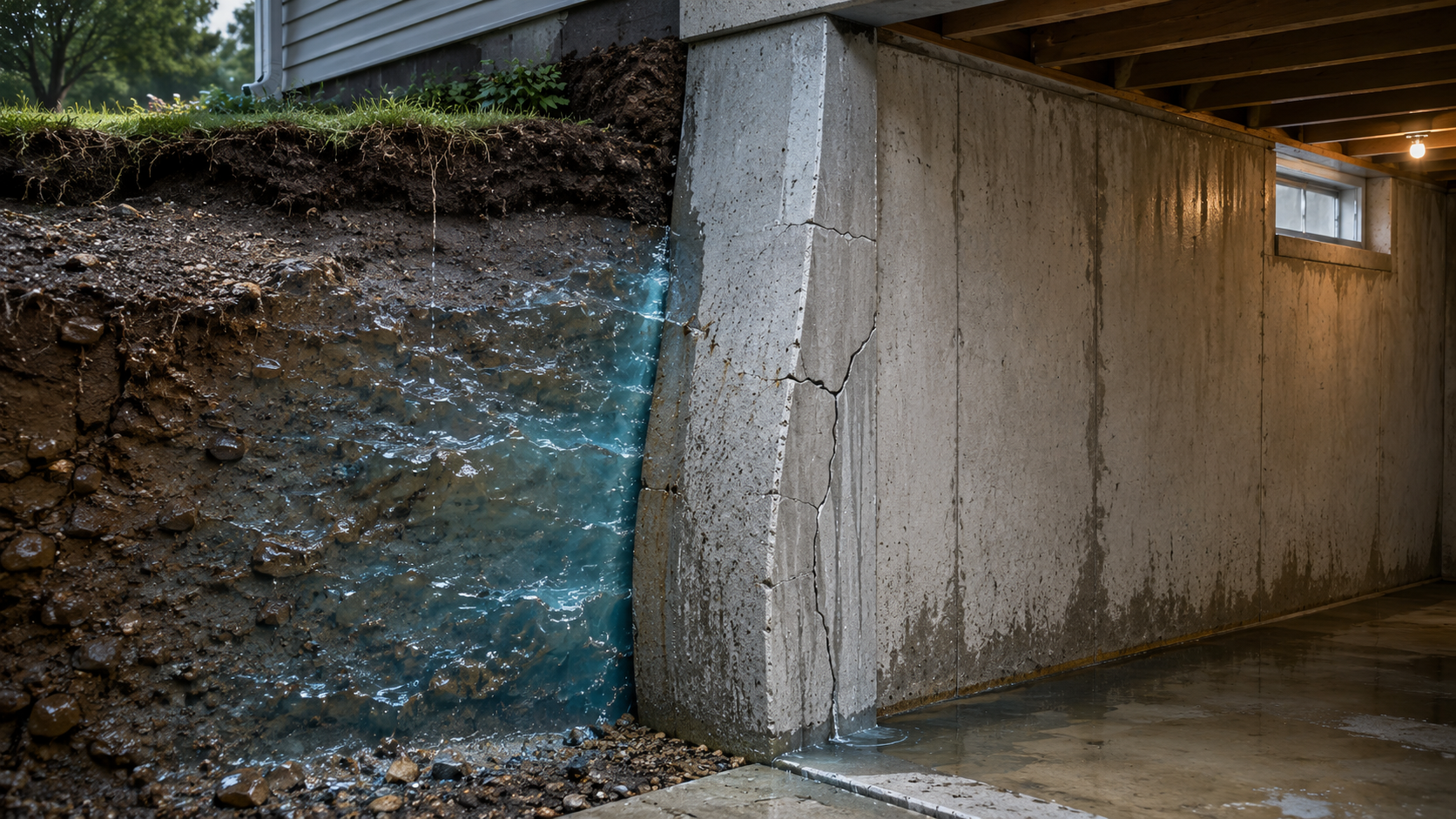
A basement can look perfectly fine from the inside while pressure is slowly building outside the walls. That is what makes hydrostatic pressure such a serious problem for homeowners. It does not always show up as a sudden flood or dramatic wall collapse. More often, it starts quietly with damp spots, small cracks, musty smells, or a little water near the floor. Over time, that pressure can weaken basement walls, open existing cracks, damage waterproofing systems, and create expensive foundation problems.
Hydrostatic pressure is one of the main reasons basements leak, especially in homes surrounded by clay-heavy soil, poor grading, clogged gutters, or aging drainage systems. When water collects in the soil around a foundation, it pushes against the basement walls and floor. Concrete may feel solid, but it is not designed to hold back constant water pressure forever. If the pressure keeps building, the basement wall becomes the weak point.
Understanding how hydrostatic pressure works can help homeowners spot early warning signs and take action before the damage becomes severe.
What Is Hydrostatic Pressure?
Hydrostatic pressure is the force created when standing or trapped water pushes against a surface. Around a home, this usually happens when rainwater, melting snow, or groundwater builds up in the soil around the basement foundation.
Your basement walls sit below ground level. That means the soil outside the walls naturally holds moisture. When the soil becomes saturated, water needs somewhere to go. If the home’s drainage system is weak, blocked, damaged, or missing, the water remains around the foundation. As it collects, the pressure increases.
This pressure can push against:
- Basement foundation walls
- The joint where the wall meets the floor
- Floor cracks
- Existing wall cracks
- Window wells
- Weeping tile systems
- Exterior waterproofing membranes
At first, the pressure may only cause small leaks. But with repeated wet seasons, freeze-thaw cycles, and soil movement, it can slowly damage the structure of the basement walls.
Why Basement Walls Are Vulnerable
Basement walls are built to support the home and resist soil pressure, but they are not invincible. Concrete, block, stone, and older foundation materials can all be affected by long-term moisture and pressure.
Concrete is strong under compression, but water can still find its way through cracks, pores, weak joints, and gaps around service lines. Concrete block walls are even more vulnerable because the hollow cores can fill with water. Once water enters the wall system, pressure can build inside the blocks and lead to staining, cracking, bowing, and leaks.
Older homes often face a higher risk because their original drainage systems may no longer work properly. Weeping tiles can clog with sediment. Exterior waterproofing coatings can break down. Soil grading can change over time. Add heavy rainfall or snowmelt, and the basement walls may face more pressure than they were designed to handle.
How Hydrostatic Pressure Starts Causing Damage
Hydrostatic pressure usually damages basement walls in stages. The early signs may seem minor, but each one can point to a larger water management problem outside the foundation.
1. Water Collects Around the Foundation
The process often starts with poor drainage. Water may collect near the foundation because of overflowing gutters, short downspouts, clogged drains, poor yard grading, or heavy soil that does not drain well.
When water stays in the soil, it increases the load against the basement walls. The wetter the soil becomes, the heavier and more forceful it gets. This is especially common after long periods of rain or during spring thaw when the ground is already saturated.
2. Pressure Pushes Against Weak Points
Water pressure always looks for the easiest path. If there is a small crack, cold joint, pipe penetration, or gap between the floor and wall, hydrostatic pressure can push moisture through it.
A small hairline crack may not seem serious at first. But when water pressure keeps pressing on it, the crack can widen. Moisture may begin to stain the wall, peel paint, or leave mineral deposits behind. These white chalky marks, often called efflorescence, are a sign that water is moving through masonry.
3. Cracks Begin to Spread
Once water enters a crack, seasonal changes can make the problem worse. In cold climates, trapped water can freeze and expand. This puts more stress on the foundation wall and can make cracks longer or wider.
Vertical cracks often show settlement or shrinkage issues, while horizontal cracks may suggest pressure from the soil outside. Stair-step cracks in block walls can also point to movement. No matter the pattern, cracks should not be ignored when water is involved.
4. Walls May Start to Bow or Shift
If hydrostatic pressure becomes strong enough, it can push basement walls inward. This is more common with concrete block walls, but poured concrete walls can also move under severe pressure.
Bowing walls are a major warning sign. They may start with a slight inward curve, horizontal cracking, or separation near corners. If not repaired, the wall can continue to weaken. In extreme cases, structural repair or wall replacement may be needed.
5. Water Enters the Basement
Eventually, pressure can force water into the basement. It may appear as damp patches, trickling water, puddles near the wall, or seepage where the wall meets the floor.
Many homeowners try to solve this with interior paint, sealers, or patching compounds. These may hide the symptom for a short time, but they do not remove the pressure outside the wall. If water is still collecting around the foundation, the problem usually returns.
Common Signs of Hydrostatic Pressure Damage
Hydrostatic pressure does not always announce itself with a flooded basement. In many homes, the warning signs build slowly. Look for:
- Damp basement walls
- Musty smells
- White powdery deposits on concrete or block walls
- Peeling paint or bubbling wall coatings
- Water stains near the floor
- Cracks in walls or floors
- Water seepage after rain
- Mold or mildew growth
- Bowing or leaning foundation walls
- Rust on metal supports or appliances
- Wet carpet, baseboards, or stored items
The sooner these signs are checked, the easier it is to prevent larger damage.
Why Paint and Interior Sealers Are Not Enough
One common mistake homeowners make is trying to stop hydrostatic pressure from the inside only. Waterproof paint or sealant may look like a quick fix, but it does not address the real issue: water pressure outside the wall.
When pressure keeps building, it can push through the coating, cause bubbling, or force water to find a new entry point. In some cases, sealing the inside without proper drainage can trap moisture inside the wall, which may make the wall deteriorate faster.
A better approach is to understand where the water is coming from, how it is collecting, and how it can be moved away from the foundation.
What Causes Hydrostatic Pressure Around a Home?
Several conditions can increase hydrostatic pressure around basement walls.
Poor Grading
If the soil slopes toward the house, rainwater flows directly to the foundation instead of away from it. Even a small grading issue can send large amounts of water toward basement walls during storms.
Clogged or Short Downspouts
Gutters and downspouts should move roof water away from the foundation. If they are clogged, leaking, or discharging too close to the house, water can collect beside the basement walls.
Heavy Clay Soil
Clay soil holds water longer than sandy soil. When saturated, it expands and puts more pressure on foundation walls. During dry periods, it can shrink and create gaps where water later collects.
Damaged Weeping Tile
Weeping tile systems are designed to collect groundwater and move it away from the foundation. If the system is clogged, crushed, or poorly installed, water can build up and increase pressure.
High Water Table
Some properties naturally sit in areas with a high water table. After heavy rain or snowmelt, groundwater may rise and push against basement floors and walls.
Aging Waterproofing
Exterior waterproofing materials can wear down over time. Once the protective barrier fails, water has a much easier path toward the foundation wall.
Long-Term Damage Hydrostatic Pressure Can Cause
Ignoring hydrostatic pressure can lead to more than a wet basement. Over time, it may affect the comfort, safety, and value of the home.
Foundation Cracks
Repeated pressure can turn small cracks into active leaks. Once cracks widen, they may require professional repair.
Structural Movement
When pressure pushes walls inward, the structural stability of the foundation may be affected. Bowing walls, shifting blocks, or large horizontal cracks should be inspected quickly.
Mold and Indoor Air Problems
Moisture in a basement can create the right conditions for mold and mildew. Since air from the basement can move through the rest of the house, this can affect indoor comfort and air quality.
Damage to Finished Basements
Drywall, flooring, insulation, furniture, and stored items can all be damaged by moisture. A small leak can become costly if the basement is finished.
Lower Property Value
Foundation and water problems can scare away buyers. Even if the basement looks clean, signs of past leaks or wall movement may raise concerns during inspections.
How Professionals Reduce Hydrostatic Pressure
The goal is not just to block water. The real goal is to control it. A proper solution usually focuses on drainage, waterproofing, and structural stability.
Depending on the home, this may include exterior excavation, waterproof membranes, drainage board, new weeping tile, sump pump systems, crack repair, wall reinforcement, or foundation replacement.
For homeowners in the Greater Toronto Area dealing with ongoing basement leaks or water pressure issues, working with experienced specialists such as GJ MacRae Foundation Repair can help identify whether the problem needs drainage correction, exterior waterproofing, or more advanced foundation work. Their team provides long-term basement waterproofing solutions designed to manage water before it continues damaging the foundation.
In more serious cases, where hydrostatic pressure has already caused major cracking, bowing, or wall failure, simple patching may not be enough. A professional inspection can determine whether the wall can be repaired or whether a larger structural solution is needed. For severely damaged walls, services such as foundation replacement and repair may be required to restore strength and protect the home long term.
Exterior vs. Interior Waterproofing for Hydrostatic Pressure
Both exterior and interior waterproofing can help, but they work differently.
Exterior waterproofing tackles water before it enters the basement. It may involve excavating around the foundation, repairing cracks, applying waterproof membranes, adding drainage board, and installing or replacing weeping tile. This approach is often considered a strong long-term solution because it relieves pressure outside the wall.
Interior waterproofing manages water after it enters or reaches the inside drainage system. It may include interior drainage channels, sump pumps, vapor barriers, and crack repairs. This can be useful when exterior excavation is not practical or when water is rising from below the floor.
The right option depends on the home’s condition, the type of foundation, the source of water, and the level of damage.
How Homeowners Can Reduce Risk
While major waterproofing and structural repairs should be handled by professionals, homeowners can take simple steps to reduce water pressure around the foundation.
Keep gutters clean so rainwater flows properly. Extend downspouts away from the house. Check that the soil slopes away from the foundation. Avoid planting large shrubs or trees too close to basement walls. Watch for pooling water after storms. Test sump pumps before heavy rainfall seasons. Fix small cracks before they become active leaks.
These steps will not solve every hydrostatic pressure problem, but they can reduce the amount of water sitting around the foundation.
When to Call a Professional
A single damp spot may not seem urgent, but water pressure problems tend to get worse with time. Homeowners should call a professional if they notice recurring leaks, widening cracks, bowing walls, water at the floor-wall joint, musty smells, or moisture after every rainfall.
The most important thing is to avoid guessing. A basement leak may come from surface drainage, wall cracks, window wells, plumbing, groundwater, or a failed drainage system. A proper inspection helps identify the cause before money is spent on the wrong fix.
Final Thoughts
Hydrostatic pressure is one of the quietest ways a basement can be damaged. It builds outside the walls, often out of sight, and slowly forces moisture into weak points. By the time water appears inside, the foundation may have already been under stress for months or years.
The good news is that hydrostatic pressure can be managed when it is properly diagnosed. Strong drainage, effective waterproofing, crack repair, and foundation support can all help protect the basement from long-term damage.
For any homeowner, the best approach is to pay attention early. Damp walls, small cracks, musty smells, and water stains are not just cosmetic issues. They may be signs that the soil outside your home is putting pressure on the foundation. Acting early can protect the basement, preserve the structure, and save the home from more expensive repairs later.
