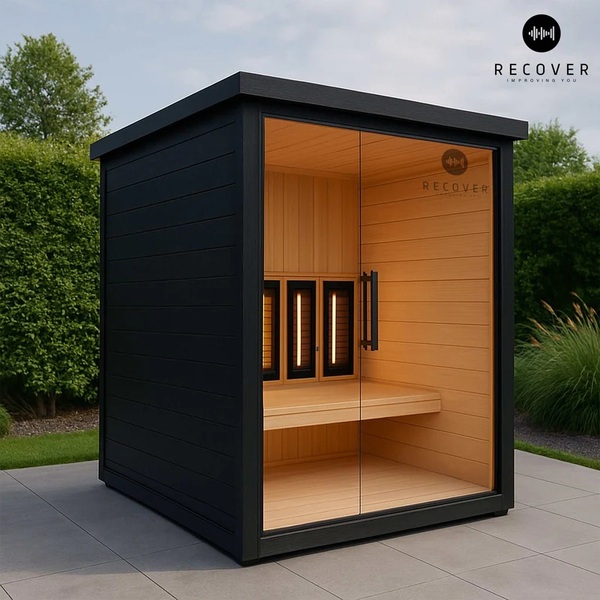
When most people decide to add a sauna to their home, they face an immediate and often underexplored decision: dry Finnish sauna or steam room? The two are frequently lumped together as interchangeable wellness amenities, but they are meaningfully different experiences with different physiological effects, different installation requirements, different running costs, and different maintenance demands.
Choosing the wrong type for your goals and space means either underutilizing the investment or dealing with a setup that creates more friction than benefit. Choosing correctly means a home wellness facility you use daily for decades.
This guide gives you the complete, honest comparison across every dimension that matters for a home installation decision.
What Is a Dry Sauna?
A dry sauna — most commonly the Finnish sauna — is a wood-lined room heated to 70°C–100°C by an electric or wood-burning heater called a kiuas. Humidity is low (10%–20%), though users can pour water over heated rocks to generate bursts of steam (löyly) that briefly spike humidity and intensify the heat sensation.
The defining characteristic is high temperature with low sustained humidity. The body sweats intensely, but the low moisture content of the air allows sweat to evaporate quickly, creating a dry, enveloping heat that most people find deeply relaxing once acclimatized.
Traditional Finnish saunas use kiln-dried spruce or Nordic pine benching and walls. The wood absorbs moisture, regulates humidity, and creates the characteristic warm, woody aroma that defines the Finnish sauna experience. Infrared saunas are a variation that achieves lower air temperatures (50°C–65°C) while delivering radiant heat directly to body tissue — a distinct but related experience.
What Is a Steam Sauna?
A steam room (also called a steam sauna or Turkish bath in some traditions) operates at lower temperatures — typically 40°C–50°C — but at extremely high humidity levels of 95%–100%. A steam generator continuously produces steam that fills the room, creating an enveloping moist heat environment.
Because the air is saturated with moisture, sweat cannot evaporate from the skin, and heat transfer from the environment to the body is more efficient than in dry conditions. The lower temperature is therefore experienced as comparably or more intensely warm, and the respiratory experience — breathing saturated steam — is dramatically different from a dry sauna’s drier air.
Steam rooms are typically tiled rather than wood-lined due to the constant moisture exposure. They require sealed, waterproof construction and dedicated steam generators sized to the room volume.
How Each Type Affects Your Body
Understanding the physiological differences helps you match your choice to your actual health goals.
Dry sauna physiology:
High temperatures (80°C–100°C) cause core body temperature to rise by 1°C–2°C during a typical session. This triggers a cascade including increased heart rate (comparable to moderate aerobic exercise), peripheral vasodilation, significant sweat production, and release of heat shock proteins. The cardiovascular stress is real and produces real cardiovascular adaptation over time. Endorphin and growth hormone release during and after sessions contributes to mood elevation and recovery benefits.
Steam room physiology:
Lower temperatures limit the cardiovascular training stimulus somewhat compared to dry sauna. However, saturated air means 100% of the respiratory surface is exposed to warm, humidified air — the respiratory benefits are superior to dry sauna for conditions like sinusitis, bronchitis, and asthma. Skin hydration effects are more immediate and pronounced because saturated air prevents transepidermal water loss during the session. The heat still triggers sweating and detoxification, just through a different thermal mechanism.
Health Benefits Compared
Cardiovascular Health
Dry sauna: Superior. The high-temperature heat stress creates a genuine cardiovascular training stimulus. The landmark Finnish research showing 63% reduction in sudden cardiac death risk with frequent sauna use was conducted on traditional dry Finnish sauna users. Steam room research on cardiovascular outcomes is less extensive and shows smaller effect sizes.
Respiratory Health
Steam room: Superior. Humidified air directly benefits bronchial passages, sinuses, and lung tissue. Regular steam room use reduces frequency of upper respiratory tract infections, improves symptoms of chronic sinusitis, and supports respiratory recovery after illness. Dry sauna air, while not harmful, does not deliver the same respiratory benefit.
Skin Health
Steam room: Marginally superior for hydration. The saturated air environment prevents moisture loss and opens pores for deep cleansing. Dry sauna benefits skin primarily through sweat-driven detoxification and improved circulation, which also produces excellent long-term skin quality outcomes.
Athletic Recovery
Dry sauna: Superior. The higher temperature stimulus and more significant heat shock protein production make dry sauna more effective for muscle recovery, delayed onset muscle soreness reduction, and growth hormone stimulation. Research on heat therapy for athletic recovery predominantly involves traditional Finnish sauna protocols.
Mental Health and Stress Reduction
Both: Comparable. Both types activate the parasympathetic nervous system, reduce cortisol, and create a profoundly relaxed state. The ritual component — dedicated quiet time in heat — contributes to mental health benefits regardless of the specific type.
Sleep Quality
Dry sauna: Marginally superior. The more dramatic core temperature elevation and subsequent post-session cooling more strongly mimics the temperature drop associated with natural sleep onset, producing a stronger sleep-promoting signal.
Installation Requirements Compared
Dry Sauna Installation
Room requirements: Wood-lined interior (cedar, Nordic spruce, or thermally treated aspen). No waterproofing required for walls and benches — wood manages moisture naturally. A standard household electrical circuit (typically 32–50A for electric heaters) or appropriate flue for wood-burning units.
Ventilation: Fresh air inlet near the floor, exhaust outlet near the ceiling. Critical for safe oxygen levels and heat regulation.
Floor: Wood slats over a tiled or sealed floor for drainage. Alternatively, full wood floor in low-humidity installations.
Size minimum: 1.8m x 1.2m for a functional 2-person unit. Standard room height 2.1m–2.3m.
Installation timeline: Prefabricated units: 1–2 days. Custom built: 5–15 days depending on size and specification.
Steam Room Installation
Room requirements: Fully waterproofed, tiled construction — walls, floor, ceiling, and all penetrations must be completely watertight. A continuous gradient floor slope toward the drain. The ceiling must be sloped to prevent condensed water dripping on users.
Steam generator: Sized to the room volume. Typically installed in an adjacent utility cupboard and connected via a steam outlet pipe. Requires a cold water supply, drain connection, and dedicated electrical supply.
Ventilation: Steam rooms use a different ventilation principle than dry saunas — typically a small exhaust to manage humidity between sessions, sealed during use.
Seating: Tiled or composite benching rather than wood, which would rot in constant moisture.
Waterproofing quality is critical: A steam room with inadequate waterproofing will cause structural damage to adjacent walls and floors within 12–18 months. This is not a place to cut costs on installation.
Installation timeline: Custom build: 7–20 days. Prefabricated steam room pods: 2–4 days.
Running Costs Compared
| Factor | Dry Sauna | Steam Room |
| Preheat time | 20–40 minutes | 10–15 minutes |
| Energy per session (electricity) | 2–5 kWh | 1–3 kWh |
| Monthly electricity (daily use) | AED 200–400 | AED 150–300 |
| Water consumption | Minimal (löyly only) | 3–6 liters per session |
| Monthly water cost | Negligible | AED 30–80 |
Dry saunas use more electricity per session due to higher temperatures, but the per-session cost difference between well-insulated dry and steam units is modest. Over a full year of daily use, total running costs are comparable within AED 1,000–2,000 difference depending on efficiency and usage patterns.
Maintenance Compared
Dry Sauna Maintenance
Wood surfaces require periodic cleaning with a mild sauna cleaner. Sand and re-treat wooden benches annually to prevent discoloration. Clean the heater stones every 1–2 years, replacing cracked stones. The electrical heater requires professional inspection every 3–5 years. Overall maintenance demand is low — dry saunas are mechanically simple and robust.
Steam Room Maintenance
Significantly higher maintenance demand. Tiled surfaces require regular cleaning with anti-fungal cleaners to prevent mold growth in the constantly moist environment. Grout lines need sealing annually. The steam generator requires monthly descaling to remove mineral deposits — particularly important with UAE’s moderately hard water. Generator elements have a lifespan of 3–7 years depending on water quality and frequency of use.
If a steam room is not cleaned consistently, mold and bacterial growth in grout and corners becomes a health concern rather than a health benefit.
Which One Is Right for You?
Choose a dry Finnish or infrared sauna if:
- Athletic recovery and cardiovascular health are your primary goals
- You want lower maintenance demands and simpler installation
- You prefer higher-temperature, lower-humidity heat
- You are installing in a space without full waterproofing
- You want the deeper research base behind your health investment
Choose a steam room if:
- Respiratory health benefits are a priority (sinusitis, asthma, frequent congestion)
- You prefer moist heat and find dry sauna air uncomfortable
- You are installing within a bathroom or wet room where waterproofing already exists
- Skin hydration and pore-cleansing effects are primary motivations
- You prefer lower temperatures with equivalent heat sensation
Consider both if: Villa owners and those with dedicated wellness rooms increasingly install both — a dry sauna and an adjacent steam room — for complete thermal therapy flexibility. The additional cost over a single installation is manageable when planned from the beginning of a build, and the combined facility covers every health goal and user preference.
FAQs
Can I convert a dry sauna into a steam room? No. They require fundamentally different construction — waterproofed tile for steam, wood lining for dry. Conversion is essentially a full rebuild.
Which is better for weight loss? Neither provides meaningful fat loss directly. Both increase temporary water weight loss through sweating. Long-term cardiovascular benefits of dry sauna support metabolic health more meaningfully than steam.
Which is safer for people with respiratory conditions? For most respiratory conditions, steam is more beneficial and comfortable. For severe asthma, consult your physician before starting either practice.
How long does a home sauna last? Quality dry saunas last 20–30 years with basic maintenance. Steam rooms typically last 15–20 years before significant renovation is required due to ongoing moisture exposure.
Which heats up faster? Steam rooms reach operating temperature in 10–15 minutes. Dry saunas require 20–40 minutes of preheating.
Can I install either in a UAE apartment? Yes. Infrared dry saunas and compact steam generators are available in formats suitable for bathrooms or spare rooms in UAE apartments.
Conclusion
Both dry and steam saunas deliver genuine, research-supported health benefits. The better choice is not universal — it depends on your primary health goals, your installation environment, and your tolerance for ongoing maintenance. For most home users prioritizing athletic recovery and cardiovascular health, the dry Finnish or infrared sauna wins on depth of research, installation simplicity, and long-term maintenance ease. For those prioritizing respiratory health and preferring moist heat, steam delivers specific advantages worth the additional installation and maintenance requirements. When budget and space allow, having both is the complete answer.
