Remember, each account has its own code or number (called a folio number), and this would normally be inserted next to the account name. Remember, we can easily cross-reference between two accounts because of the contra account being used as the description of the transaction. Access and download collection of free Templates to help power your productivity and performance. The YoY change in revenue is equal to $55,749 / $53,494 minus one, which retained earnings equals 4.2%. In order to perform this exercise, you need to take the value in Period N and divide it by the value in Period N-1 and then subtract 1 from that number to get the percent change.
A free answerjust for you
And right at the bottom of the page, you can find more questions on the topic submitted by fellow students. Ultimately, financial statement analysis guides internal strategies and attracts external investment by showcasing financial strength and resilience. Before going any further, take out a piece of paper and try construct the loan T-account using the journal entries above. So, we have our opening balance (debit) of $4,300 and our closing balance (debit) of $19,100. Balance c/f is just an entry t account example used in calculating that the closing balance is $19,100 on the debit side.
Additional Resources
- Balancing T-accounts is one of the more complicated and frustrating things for many accounting students.
- This is the most advanced section of our financial analysis course, and we recommend that you watch a demonstration of how professionals perform this analysis.
- This document provides several T-accounts with debit and credit amounts and asks to calculate the ending balance for each account.
- The Balance b/f shown above is the actual closing balance of the bank account (a debit balance).
- Investors also use ratio analysis to gauge a company’s financial health and growth potential for informed investment decisions.
With horizontal analysis, we look at the year-over-year (YoY) change in each line item. And if you look in the “bank” account above, “loan” is inserted on the debit side of the T-account on the same date. Let’s try another account from the sample business we’ve been using throughout our lessons, George’s Catering – the “loan” T-account. This is the most advanced section of our financial analysis course, and we recommend that you watch a demonstration of how professionals perform this analysis. It’s important to understand how different ratios can be used to properly assess the operation of an organization from a cash management standpoint. Each of these three sections tells us a unique and important part of the company’s sources and uses of cash over a specific time period.
What is Financial Statement Analysis?
- The “Balance b/f” indicates that the debit side is greater than the credit side by $19,100, and that we have $19,100 in our bank account at the end of May (the closing balance of the account).
- Access and download collection of free Templates to help power your productivity and performance.
- We can also use the financial ratios derived from the balance sheet and compare them historically versus industry averages or competitors.
- The balance sheet metrics can be divided into several categories, including liquidity, leverage, and operational efficiency.
- Ultimately, financial statement analysis guides internal strategies and attracts external investment by showcasing financial strength and resilience.
In addition, evaluating key financial ratios such as profitability, liquidity, and solvency helps finance teams and business leaders assess resource management and progress toward financial goals. Investors also use ratio analysis to gauge a company’s financial health and growth potential for informed investment decisions. It also keeps finance professionals, and investors informed about business and market trends, enabling better decision-making. Financial statement analysis is the process of evaluating a company’s financial health and performance by reviewing its financial statements, including the income statement, balance sheet, and cash flow statement. Additionally, financial statement analysis is the first step investors take when evaluating a company’s profitability and viability as an investment opportunity.

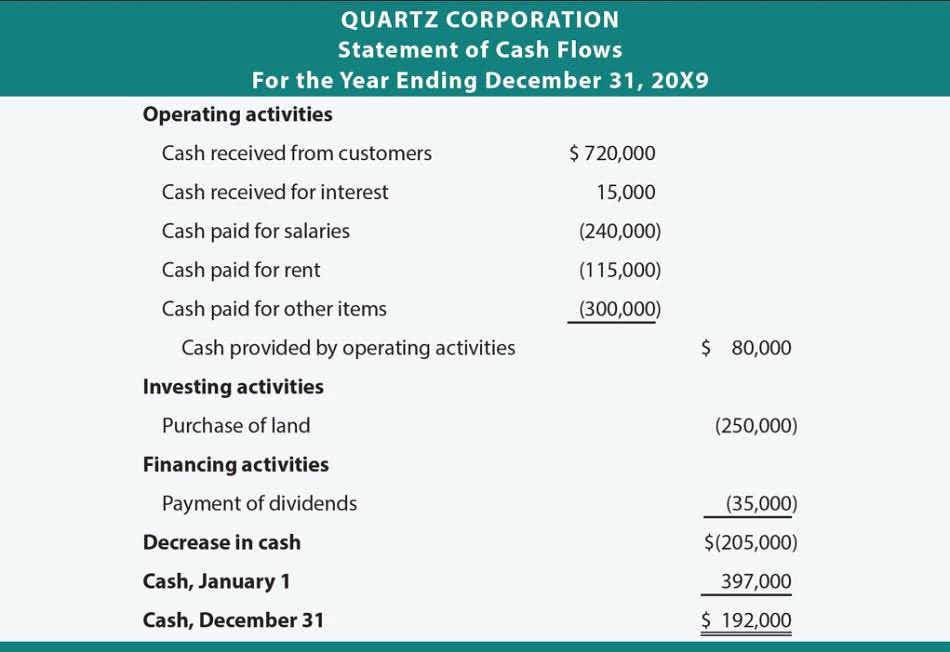
- With the income statement and balance sheet under our belt, let’s look at the cash flow statement and all the insights it tells us about the business.
- We do not make any further entries to work out the closing balance – the $4,000 balance is self-evident from the single entry.
- Let’s try another account from the sample business we’ve been using throughout our lessons, George’s Catering – the “loan” T-account.
- Balance c/f is just an entry used in calculating that the closing balance is $19,100 on the debit side.
- It provides a clear view of the company’s financial health, including profitability, liquidity, and debt management, building investor confidence in the company’s ability to generate returns and manage obligations.
The “Balance b/f” indicates that the debit side is greater than the credit side by $19,100, and that we have $19,100 in our bank account at the end of May (the closing balance of the account). At the end of each accounting period (month or year) a brief calculation is done to work out the closing balance of the account. Be sure to test yourself on this lesson and how to balance a T-account by trying the Balancing a T-Account Practice Question further below.

- With horizontal analysis, we look at the year-over-year (YoY) change in each line item.
- And right at the bottom of the page, you can find more questions on the topic submitted by fellow students.
- As you see in the above example, we do a thorough analysis of the income statement by seeing each line item as a proportion of revenue.
- With vertical analysis, we will look up and down the income statement to see how every line item compares to revenue as a percentage.
- At the end of each accounting period (month or year) a brief calculation is done to work out the closing balance of the account.
- Additionally, this analysis helps finance teams identify risks early and take corrective actions to maintain the financial stability of their companies.
In this section of our analysis of financial statements, we uncover the drivers of financial performance through ratio analysis. By using a “pyramid” of ratios, we can demonstrate how to determine the profitability, efficiency, and leverage drivers for any business. We can also use the financial ratios derived from the balance sheet and compare them historically versus industry averages or competitors. With the income statement and balance sheet under our belt, let’s look at the cash flow statement and all the insights it tells us about the business. “Sal-1” is the individual code for the account “salaries” and would also be referred to in the journal entries relating to salaries.

T-Account Codes (Folio Numbers)
The cash flow statement will help us understand the inflows and outflows of cash over the time period we’re looking at. A thorough analysis should also account for https://ipatingamotorpecas.com.br/bookkeeping-services-in-minneapolis/ obligations that do not appear directly on financial statements but still affect risk exposure. With vertical analysis, we will look up and down the income statement to see how every line item compares to revenue as a percentage. This document provides several T-accounts with debit and credit amounts and asks to calculate the ending balance for each account. It includes T-accounts for Cash, Accounts Payable, Supplies, Accounts Receivable, and Wages Payable, with debit and credit transactions listed as well as space to solve for the ending balance.
