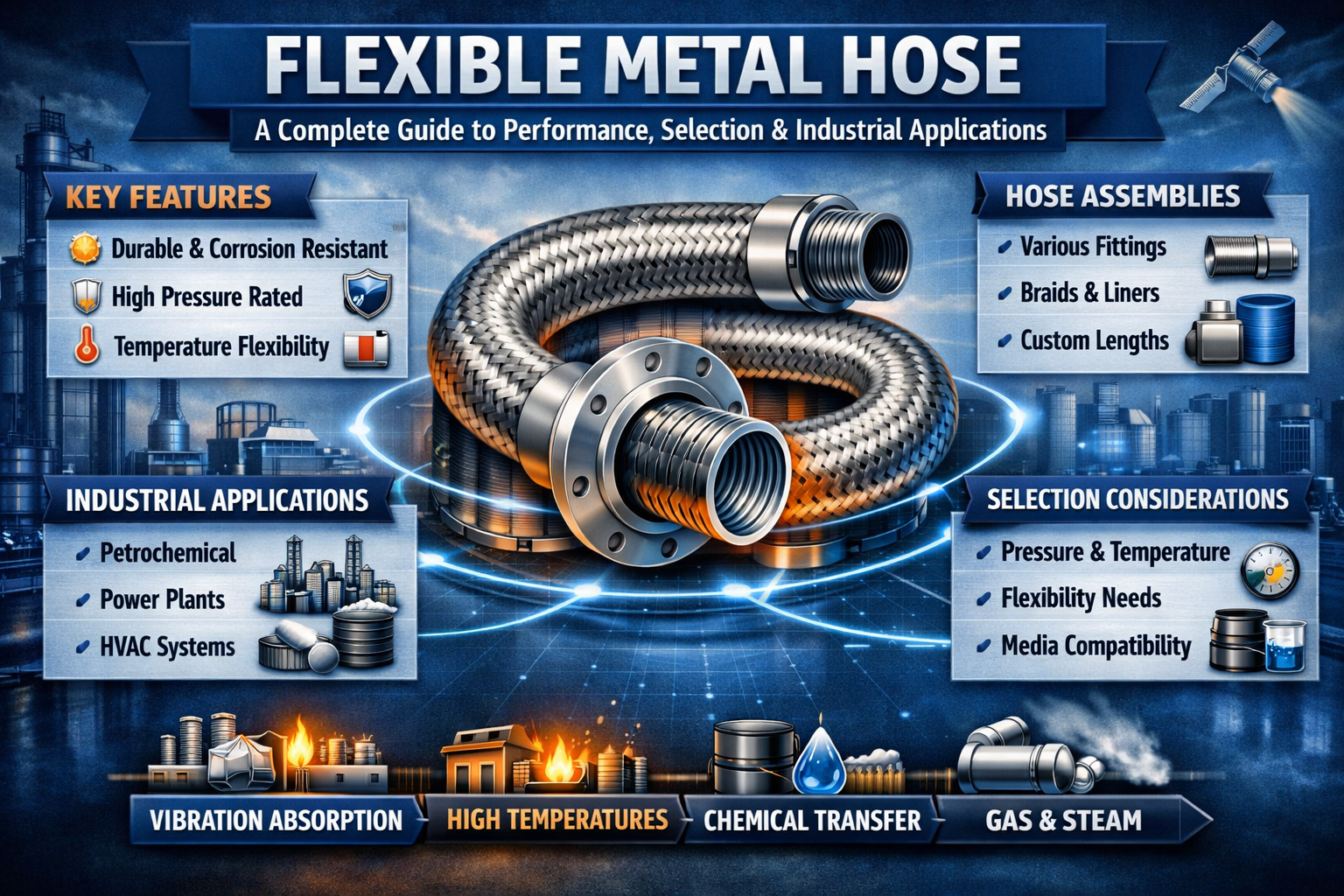
In industrial environments where heat, vibration, pressure changes, and movement are constant challenges, rigid piping often falls short. That’s where flexible metal hose systems become essential. Whether used in manufacturing plants, chemical processing, or HVAC systems, they provide a reliable solution for transferring gases and liquids under demanding conditions. If you’re searching for specifications, sourcing options, or technical support like flexible metal hose near reno nevada, understanding how these components work is the first step toward making the right selection.
Flexible metal hoses are not just about convenience—they are about safety, system longevity, and operational efficiency. A poorly chosen hose can lead to leaks, pressure loss, or even system failure. On the other hand, the right configuration can significantly reduce maintenance costs and improve performance across an entire system.
In this guide, we’ll break down everything you need to know about flexible metal hoses, including how they work, where they are used, how to select them properly, and what common mistakes to avoid.
Core Concept: What a Flexible Metal Hose Is and Why It Matters
A flexible metal hose is a corrugated tube made from stainless steel or other corrosion-resistant alloys designed to handle movement, vibration, and pressure variations. Unlike rubber or plastic hoses, metal hoses can withstand extreme temperatures and harsh operating environments without degrading quickly.
The structure typically includes three main components:
- Corrugated inner core: Provides flexibility and pressure resistance
- Outer braid (optional but common): Adds strength and prevents elongation
- End fittings: Allow secure integration into piping systems
What makes these hoses especially valuable is their ability to combine flexibility with durability. They can bend without breaking, absorb vibration from machinery, and accommodate thermal expansion in piping systems.
Industries rely on them for applications where rigid piping would fail or require constant maintenance. From steam lines to cryogenic systems, flexible metal hoses ensure continuous flow even under stress.
How to Select and Use Flexible Metal Hose Effectively
Choosing the right flexible metal hose is not a guesswork process. It requires understanding system conditions and matching hose specifications accordingly.
1. Understand the Operating Environment
Start by evaluating temperature, pressure, and media type. For example:
- High-temperature steam requires stainless steel grades with excellent heat resistance
- Chemical transfer lines need corrosion-resistant alloys
- Cryogenic applications require materials that remain flexible at extremely low temperatures
2. Determine Movement Requirements
Not all hoses are used the same way. Some applications require frequent flexing, while others only need occasional movement compensation.
- Static offset compensation: minimal bending
- Thermal expansion absorption: moderate flexibility
- Dynamic motion systems: high-cycle flexibility required
3. Choose the Correct Hose Construction
Different designs serve different purposes:
- Unbraided hoses: More flexible, suitable for low-pressure systems
- Single-braided hoses: Balanced strength and flexibility
- Double-braided hoses: High-pressure applications with heavy vibration
4. Select Proper End Fittings
End fittings are often overlooked but are critical for system safety. Incorrect fittings can lead to leakage or mechanical failure. Common types include threaded, flanged, and welded ends depending on the system design.
5. Verify Compliance and Standards
Industrial systems often require compliance with ASME, ISO, or specific OEM standards. Always ensure the hose meets regulatory requirements for your industry.
Supporting Insight: Real-World Application Example
In a chemical processing facility, flexible metal hoses are commonly installed between rigid pipeline sections and pumps. These hoses absorb vibration generated by pump operation, preventing stress fractures in the pipeline. Without them, repeated vibration could lead to joint failure and costly downtime.
Common Mistakes and Challenges in Using Flexible Metal Hoses
Even experienced engineers can make mistakes when selecting or installing flexible metal hoses. These errors often reduce system efficiency or shorten hose lifespan.
1. Over-Bending the Hose
One of the most common issues is exceeding the minimum bend radius. This can cause permanent deformation, weakening the hose structure over time.
2. Ignoring Pressure Ratings
Every hose has a maximum working pressure. Using a hose beyond its rated limit can lead to dangerous ruptures or leaks.
3. Improper Alignment During Installation
Misalignment places uneven stress on fittings. Over time, this leads to fatigue failure at connection points.
4. Using the Wrong Material Grade
Not all stainless steels are the same. Selecting the wrong alloy can lead to corrosion, especially in chemically aggressive environments.
5. Neglecting Vibration Analysis
In dynamic systems, vibration frequency matters. If not accounted for, even a high-quality hose can fail prematurely due to fatigue.
Practical Tips and Expert Recommendations for Better Performance
Experienced engineers follow a few key principles when working with flexible metal hoses. These best practices significantly improve reliability and service life.
1. Always Account for Thermal Expansion
Piping systems expand and contract with temperature changes. Flexible metal hoses should be strategically placed to absorb this movement rather than resist it.
2. Use Proper Support Structures
Hoses should not carry excessive weight. Supporting clamps or brackets help distribute load and prevent strain on fittings.
3. Avoid Twisting During Installation
Twisting is more damaging than bending. Even slight torsional stress can shorten hose life significantly.
4. Schedule Routine Inspections
Regular inspection helps identify early signs of wear such as:
- Braid fraying
- Corrosion spots
- Reduced flexibility
- Fitting loosening
5. Match Hose Length to Application Needs
A hose that is too short will be overstressed, while one that is too long may sag and create pressure inconsistencies. Proper sizing is essential for system balance.
Conclusion
Flexible metal hoses play a crucial role in modern industrial systems by providing a safe, durable, and adaptable solution for fluid and gas transfer. Their ability to withstand high pressure, extreme temperatures, and constant movement makes them indispensable across industries like manufacturing, energy, and chemical processing.
However, performance depends heavily on correct selection, installation, and maintenance. Understanding operating conditions, choosing the right construction, and avoiding common mistakes ensures long service life and system efficiency. When properly implemented, these hoses significantly reduce downtime and improve overall operational reliability.
