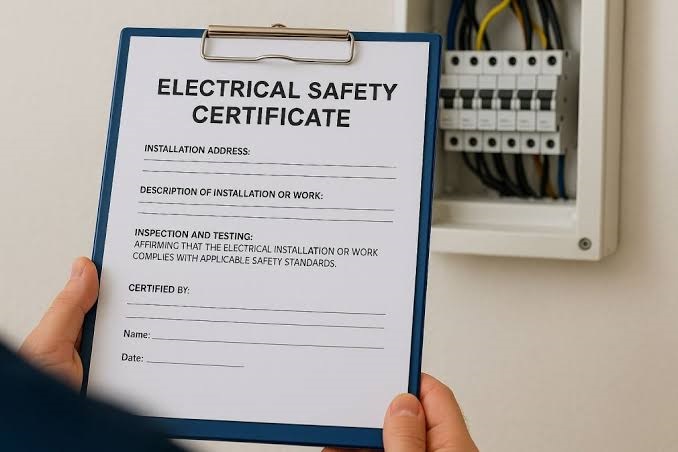
When electrical work is carried out in a home, it is important to know that the installation is safe, properly tested and suitable for continued use. Electrical systems can develop faults over time, and poor installation work can create risks such as electric shock, overheating and electrical fires. Proper inspection and certification provide evidence that electrical work has been completed and tested to the required standards.
A domestic electrical installation certificate is an important document used to confirm that new electrical installation work in a domestic property has been designed, installed and tested correctly. It records key details about the work and the results of electrical tests carried out by the competent person responsible for the installation. Whether you are a homeowner, landlord, buyer or property professional, understanding this certificate can help you make better decisions about electrical safety.
In the UK, electrical installation work should be completed in line with the requirements of BS 7671, commonly known as the IET Wiring Regulations. The certificate provides a formal record of compliance for applicable electrical work and can be useful when selling, letting, managing or maintaining a property.
What Is a Domestic Electrical Installation Certificate?
A domestic electrical installation certificate, often shortened to EIC, is issued when new electrical installation work has been completed in a home. It confirms that the work has been designed, installed and inspected, and that the required tests have been carried out.
The certificate normally contains information about the property, the scope of the electrical work, the installer and the test results. It may also identify the relevant design, construction and inspection responsibilities.
An EIC is different from an Electrical Installation Condition Report (EICR). An EIC generally relates to new installation work or certain additions and alterations, while an EICR assesses the condition of an existing electrical installation.
Understanding this difference is important because the two documents serve different purposes.
When Do You Need a Domestic Electrical Installation Certificate?
A domestic electrical installation certificate may be required when significant new electrical installation work is completed.
Examples include installing a new consumer unit, adding new circuits, carrying out a complete rewire or completing substantial electrical alterations. The exact certification requirements depend on the nature and extent of the work.
Minor electrical work may instead be documented using a Minor Electrical Installation Works Certificate where appropriate.
The electrician or electrical contractor carrying out the work should determine the appropriate certification based on the installation and the work completed.
What Information Does a Domestic Electrical Installation Certificate Include?
A domestic electrical installation certificate contains technical information about the completed electrical work. This allows another competent person to understand what was installed and review the test results.
Typical information can include:
| Certificate information | What it records |
| Property details | Address where the electrical work was completed |
| Client information | Details of the person commissioning the work |
| Installation description | Nature and extent of the electrical installation |
| Installer details | Information about the responsible electrical professional |
| Design information | Details relating to the design of the installation |
| Inspection results | Results from the required visual checks |
| Test results | Measurements recorded during electrical testing |
| Protective measures | Information about earthing, bonding and protective devices |
| Declaration | Confirmation relating to the design, construction and inspection |
| Date | Date on which the work was completed and certified |
The certificate should be completed accurately. Missing information or unclear test results can make the document less useful for future maintenance and inspection.
Domestic Electrical Installation Certificate vs EICR
The terms EIC and EICR are often confused, but they have different purposes.
A domestic electrical installation certificate is generally associated with new electrical installation work, whereas an EICR is used to assess the condition of an existing installation.
An EICR can identify defects, deterioration, damage, overloading and other issues that may affect electrical safety. It does not normally act as a replacement for the certificate issued when new installation work was originally completed.
For example, if a homeowner has a new electrical circuit installed, an EIC may be appropriate for that work. Years later, an electrician may carry out an EICR to assess the condition of the wider installation.
Both documents can therefore have an important role in maintaining a clear electrical safety record.
Why Is a Domestic Electrical Installation Certificate Important?
Electrical certification provides a written record of work that may otherwise be difficult to verify later.
For homeowners, the certificate can help demonstrate that electrical work was completed and tested. It can also provide useful information to future electricians who need to modify or inspect the installation.
For landlords, electrical documentation forms part of the wider safety record for a rental property. Keeping accurate certificates and inspection documents can make property management easier.
For buyers, electrical certificates can provide useful evidence about previous electrical work. However, a certificate should not be treated as a guarantee that an installation remains safe forever. Electrical systems can change and deteriorate, so inspection may still be necessary.
What Electrical Testing Is Carried Out?
Testing is a key part of electrical certification. The exact tests depend on the installation and the work carried out.
Electrical testing can include checks relating to continuity, insulation resistance, polarity, protective measures and earth fault loop impedance. Other tests may also apply depending on the installation.
The purpose is to confirm that the installation operates safely and that protective measures are working as intended.
Test results should be recorded clearly on the appropriate certificate. A competent electrical professional should carry out the testing using suitable equipment and follow the applicable requirements.
Who Can Issue a Domestic Electrical Installation Certificate?
The certificate should be completed by the person or organisation responsible for the electrical installation work and its required inspection and testing.
Electrical work should be carried out by a suitably competent electrician. Depending on the type of work and circumstances, building regulations requirements may also apply.
It is important to distinguish between an electrician who is competent to perform electrical work and a person or business that belongs to a competent person scheme. Scheme membership can provide a route for certain work to be self-certified under applicable building regulations arrangements.
Homeowners should always ask what certification will be provided before electrical work begins.
Part P and Domestic Electrical Work
Part P of the Building Regulations applies to electrical safety in dwellings in England. Its purpose is to ensure that electrical installations in homes are designed and installed in a way that protects people from fire and injury.
Certain types of domestic electrical work may be notifiable under the Building Regulations. The requirements can depend on where the work is carried out and the nature of the installation.
This is why homeowners should not rely only on the electrical certificate. Where applicable, they should also ensure that the relevant building regulations requirements have been addressed.
The position can differ in other parts of the UK because electrical and building regulations are devolved. Therefore, requirements should be checked for the relevant nation.
What Happens If You Lose Your Electrical Certificate?
Losing a certificate does not automatically mean that the electrical installation is unsafe. However, missing documentation can make it harder to establish what work was completed and when.
The first step is to contact the electrician or electrical contractor who completed the work. They may have retained a copy of the certificate.
If the work was completed through a registered competent person scheme, there may also be records relating to the work, depending on the circumstances.
If the original certificate cannot be located, a suitably qualified electrician can assess the installation. An EICR may be appropriate where the condition of an existing installation needs to be assessed.
It is important not to create a replacement certificate for work that was not inspected and tested by the person completing the certificate.
How Long Should You Keep a Domestic Electrical Installation Certificate?
There is value in keeping electrical certificates for as long as you own or manage the property.
A certificate can help establish the history of electrical work and may assist electricians during future alterations, inspections and maintenance.
For property owners, a good electrical record can include certificates for new installations, minor works certificates, EICRs and relevant building regulations documentation.
Keeping these documents together reduces the chance of losing important information when the property changes hands.
Can a Certificate Prove That a House Is Completely Safe?
No certificate should be viewed as a permanent guarantee of electrical safety.
An installation that was safe when it was inspected can change over time. Components can deteriorate, cables can become damaged, equipment can be added and modifications can be made without proper documentation.
For this reason, periodic inspection remains important where appropriate.
An electrical installation certificate confirms the condition and test results associated with the work at the relevant time. It should be considered part of a wider electrical safety management approach.
Common Problems With Electrical Certification
Several issues can reduce the value of electrical documentation.
One common problem is incomplete information. A certificate should contain the required details and test results rather than vague statements.
Another issue is using the wrong type of certificate. An EIC, Minor Electrical Installation Works Certificate and EICR have different purposes.
Poor record keeping can also cause problems. If certificates are lost, future electricians may have limited information about previous work.
Finally, electrical work should not be certified without the necessary inspection and testing. Certification should reflect work that has actually been assessed.
What Should Homeowners Ask Their Electrician?
Before electrical work begins, homeowners can ask the electrician what certificate will be provided after completion.
It is also sensible to ask whether the work falls under any building regulations notification requirements and whether those requirements will be handled by the contractor.
The homeowner should receive the relevant documentation after the work has been completed. Certificates should be stored safely with other property documents.
Where the work involves a new circuit, consumer unit or major alteration, asking for clear information about the scope of work and testing can help avoid confusion later.
Domestic Electrical Installation Certificate for Property Sales
Electrical documentation can become particularly useful when selling a property.
A buyer may ask questions about electrical alterations, rewiring, consumer unit replacement or other significant work. Having certificates available can make it easier to explain the property’s electrical history.
However, the presence of a certificate does not remove the need for appropriate checks. A prospective buyer may still arrange an inspection as part of the property purchase process.
Keeping certificates organised can therefore help support a smoother property transaction.
Domestic Electrical Installation Certificate for Landlords
Landlords should maintain clear records of electrical safety work carried out at rental properties.
In England, private rented sector rules include requirements relating to electrical safety inspections and reports. These requirements are separate from the certificate issued for new installation work.
A landlord should understand which document applies to each situation and retain relevant records.
For new electrical work, the appropriate installation certificate can provide evidence of the work carried out. For periodic assessment of an existing installation, an EICR may be required under applicable regulations.
Electrical Standards and Regulations to Understand
Several terms are relevant when discussing domestic electrical installations in the UK.
BS 7671 sets out requirements for electrical installations. It is widely known as the IET Wiring Regulations.
Part P relates to electrical safety in dwellings in England under the Building Regulations.
EIC refers to an Electrical Installation Certificate.
EICR refers to an Electrical Installation Condition Report.
Minor Electrical Installation Works Certificate is used for certain minor electrical installation work where an EIC is not appropriate.
Understanding these terms makes it easier for homeowners and property managers to discuss electrical work with contractors.
How Almens Consult Can Help
At Almens Consult, we understand the importance of clear electrical documentation and safe domestic installations. We can support property owners and businesses with professional electrical engineering and compliance-focused services, helping ensure that electrical work is assessed against the relevant requirements.
Our approach focuses on accurate inspection, appropriate testing and clear documentation. We can help clients understand which electrical certification may be relevant to their project and what information should be retained for future maintenance, property management and compliance.
For properties where documentation is missing or electrical work has been changed over time, professional assessment can also help identify what further inspection or reporting may be appropriate. The goal is to provide clients with clear information so they can make informed decisions about electrical safety.
Conclusion
A domestic electrical installation certificate provides an important record of new electrical installation work in a home. It confirms that the relevant work has been inspected and tested and records important information about the installation.
Understanding the difference between an EIC, EICR and Minor Electrical Installation Works Certificate can help homeowners, landlords and property professionals keep accurate electrical records.
Good documentation should be supported by competent electrical work, appropriate testing and compliance with the relevant regulations and standards. Certificates should also be stored safely so they remain available for future maintenance, inspections and property transactions.
For professional support with electrical installation, inspection, testing and compliance, Almens Consult can help clients understand their electrical requirements and maintain clear records for their properties.
FAQs
Is a domestic electrical installation certificate the same as an EICR?
No. An EIC is generally used for new electrical installation work, while an EICR assesses the condition of an existing electrical installation.
Do I need a certificate after electrical work in my home?
The appropriate certification depends on the type and extent of the work. New circuits and substantial installation work generally require an Electrical Installation Certificate, while certain minor work may use a Minor Electrical Installation Works Certificate.
Can I get a certificate for old electrical work?
A new certificate should not simply be issued for historical work that has not been inspected and tested by the person completing the certificate. An electrician can assess the existing installation and determine what inspection or report is appropriate.
How long is an electrical installation certificate valid?
An installation certificate records work and testing completed at a particular time. It is not a permanent statement that the electrical installation will remain safe indefinitely.
Should I keep my electrical certificates?
Yes. Keeping electrical certificates, EICRs and related documents can provide a useful record of the property’s electrical history and may help with future maintenance or property transactions.
Is an EICR required for every home?
Not every owner-occupied home is subject to the same statutory inspection requirements as private rented properties. However, periodic inspection can still be useful, particularly where an installation is older or has undergone multiple changes.
