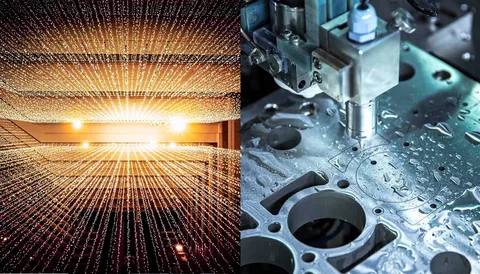
Artificial Intelligence is transforming modern manufacturing, especially in CNC machining, where precision, speed, and efficiency are critical. Traditional tool path planning relies heavily on pre-programmed rules and operator experience, which can limit flexibility and optimization potential. With the rise of AI cnc machining, manufacturers can now achieve smarter, faster, and more efficient machining strategies.
AI algorithms analyze massive datasets from previous machining operations, material behavior, and machine performance to generate optimal tool paths. This reduces trial-and-error approaches and improves overall production consistency. As a result, manufacturers can significantly reduce machining time while maintaining or improving part quality.
- AI analyzes historical machining data for better decision-making
- It reduces dependency on manual programming expertise
- Enhances accuracy in complex geometries
- Improves consistency across production batches
- Minimizes human error in tool path design
Real-Time Data Analysis for Smarter Tool Path Decisions
One of the biggest advantages of AI cnc machining is its ability to process real-time data from CNC machines. Sensors embedded in modern machines collect information such as vibration, temperature, tool wear, and cutting force. AI systems use this data to adjust tool paths dynamically during machining operations.
This real-time responsiveness allows manufacturers to prevent errors before they occur. Instead of waiting for defects or tool failures, AI predicts and corrects inefficiencies instantly, leading to smoother operations and higher productivity.
- Uses sensor data for live machining adjustments
- Detects tool wear and compensates automatically
- Reduces risk of machine downtime
- Improves surface finish quality
- Enhances operational safety and stability
Machine Learning Algorithms Improving Path Efficiency
Machine learning plays a major role in enhancing tool path optimization in AI cnc machining systems. These algorithms continuously learn from previous machining cycles, improving their recommendations over time. The more data they process, the more accurate and efficient they become.
By analyzing factors like cutting speed, feed rate, and material type, machine learning models identify the most efficient tool paths. This leads to reduced cycle times and optimized material removal rates, which are essential for cost-effective manufacturing.
- Learns from past machining operations
- Optimizes feed rates and cutting speeds
- Reduces unnecessary tool movements
- Improves material utilization efficiency
- Increases overall production speed
Reducing Tool Wear and Extending Machine Life
Tool wear is a major challenge in CNC machining, often leading to increased costs and production delays. With AI cnc machining, predictive models can forecast tool degradation and adjust tool paths to minimize stress on cutting tools. This ensures longer tool life and reduces replacement frequency.
AI systems also optimize cutting strategies to distribute load evenly across tools. Instead of overloading a single tool or axis, the system intelligently balances machining operations, improving machine durability and reducing maintenance costs.
- Predicts tool wear before failure occurs
- Extends tool lifespan through optimized cutting paths
- Reduces machine maintenance requirements
- Prevents unexpected production interruptions
- Balances cutting loads for better equipment health
Enhancing Complex Geometry Machining Accuracy
Modern industries such as aerospace, automotive, and medical manufacturing require extremely complex component designs. Traditional CNC programming often struggles with these intricate geometries. However, AI cnc machining enables highly precise tool path generation for even the most complex shapes.
AI systems simulate machining processes before execution, identifying potential collisions, inefficiencies, or weak points. This simulation-driven optimization ensures higher accuracy and reduces the need for manual corrections after machining.
- Enables accurate machining of complex geometries
- Uses simulation to detect errors before production
- Reduces scrap rates and material waste
- Improves consistency in high-precision industries
- Enhances design freedom for engineers
Conclusion
AI-driven tool path optimization is revolutionizing the CNC machining industry by introducing intelligence, adaptability, and precision into traditional manufacturing systems. Through AI cnc machining, manufacturers can achieve real-time optimization, predictive maintenance, improved efficiency, and superior accuracy in even the most complex machining tasks.
As technology continues to evolve, the integration of AI into CNC systems will become even more advanced, leading to smarter factories and fully automated production environments. Businesses that adopt AI-powered machining early will gain a strong competitive advantage in terms of productivity, cost savings, and product quality.
