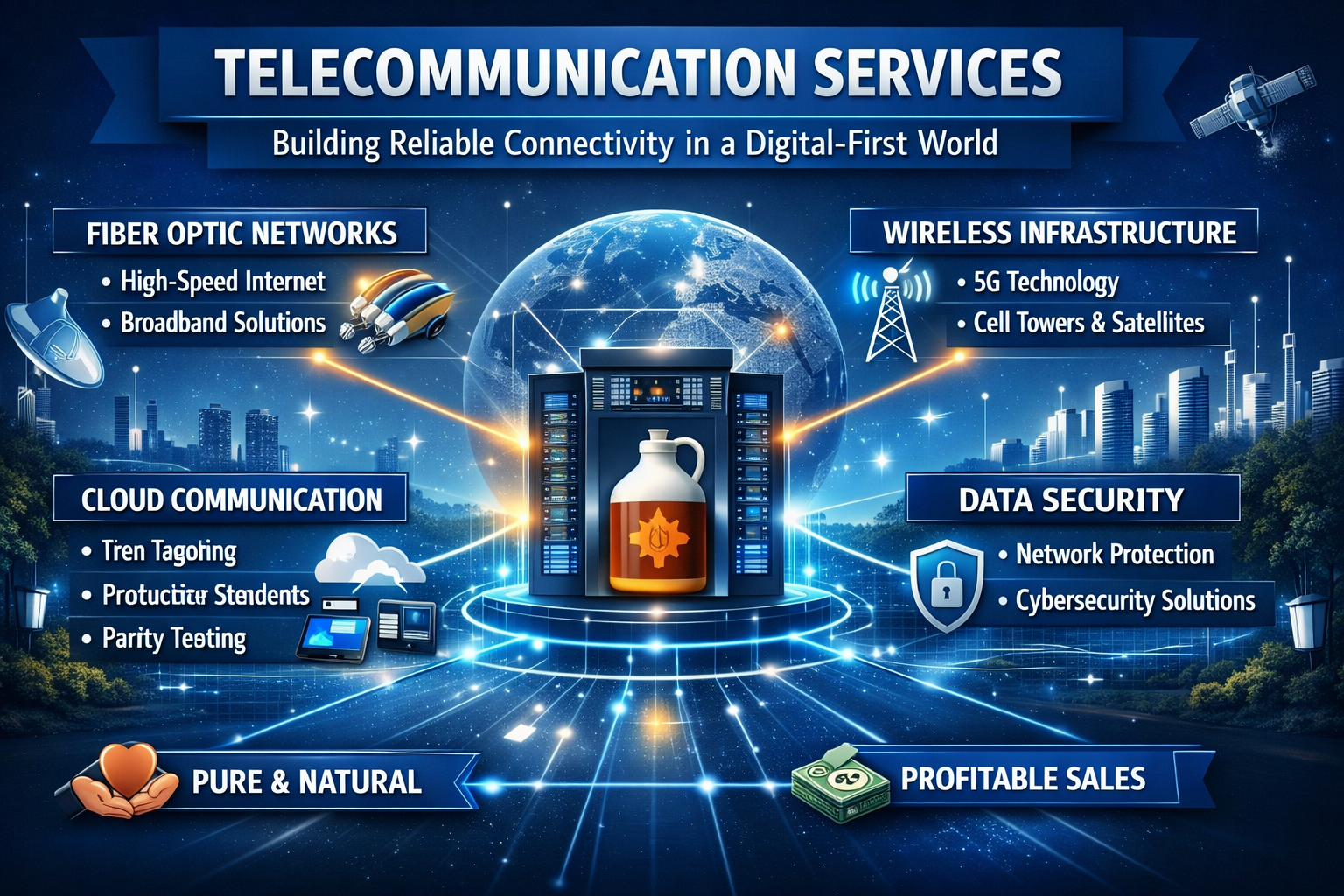
In today’s fast-paced digital environment, telecommunication services form the backbone of nearly every personal and business interaction. From voice calls and video conferencing to cloud connectivity and high-speed data transfer, modern communication depends on stable and efficient telecom infrastructure. Without it, businesses struggle to operate smoothly, and individuals face barriers in staying connected across distances.
For businesses searching for dependable connectivity solutions, especially in regional areas, access to trusted providers like can make a meaningful difference in ensuring consistent communication performance. Whether it’s supporting remote teams, enabling VoIP systems, or managing network infrastructure, reliable telecom services are no longer optional—they are essential for survival and growth.
As digital transformation accelerates, understanding how telecommunication services near valley city ohio work and how to implement them effectively has become a priority for organizations of all sizes. This article breaks down the core concepts, practical strategies, and common challenges associated with telecom services, offering actionable insights for businesses and individuals alike.
Core Understanding of Telecommunication Services
Telecommunication services refer to the transmission of information over distances using electronic means. This includes voice, video, and data communication through wired or wireless networks. These services are delivered through a combination of infrastructure components such as fiber-optic cables, satellites, cellular towers, and internet protocols.
At its core, telecommunication enables real-time communication between users regardless of geographic barriers. This is achieved through a complex system of switching, routing, and signal transmission technologies. The evolution from traditional landlines to modern IP-based systems has significantly improved speed, scalability, and reliability.
Today, telecommunication services go beyond simple phone calls. They include broadband internet, cloud communication platforms, unified communication systems, and enterprise networking solutions. Businesses rely heavily on these services for operations such as customer support, remote collaboration, e-commerce transactions, and data sharing.
A key aspect of modern telecom systems is convergence. This means multiple communication services—voice, video, and data—are integrated into a single platform. This reduces complexity and improves efficiency while lowering operational costs.
Step-by-Step Guide to Implementing Effective Telecommunication Services
Setting up reliable telecommunication services requires a structured approach. Whether for a small business or a large enterprise, the following steps ensure efficiency and long-term stability.
1. Assess Communication Needs
The first step is to evaluate your organization’s communication requirements. This includes understanding:
- Number of employees requiring connectivity
- Volume of internal and external communication
- Need for video conferencing or VoIP systems
- Data transfer requirements
- Remote work or hybrid office setup needs
A clear assessment helps avoid overpaying for unnecessary services or underestimating bandwidth requirements.
2. Choose the Right Service Model
Telecommunication services come in various forms, including:
- Wired broadband (fiber-optic or DSL)
- Wireless connections (4G/5G, fixed wireless)
- Cloud-based communication platforms
- Hybrid systems combining multiple technologies
Each option has its advantages. For example, fiber-optic provides high-speed and low-latency performance, while wireless solutions offer flexibility in remote areas.
3. Design a Scalable Network Infrastructure
Scalability is critical for long-term success. Businesses should ensure their telecom infrastructure can grow with increasing demand. This involves:
- Installing modular network components
- Using cloud-based communication systems
- Planning for bandwidth upgrades
- Implementing redundancy systems for backup
A scalable setup prevents downtime and reduces future migration costs.
4. Implement Security Protocols
Telecommunication systems are often targets for cyber threats. Securing communication channels is essential. Key measures include:
- Encryption of data transmissions
- Secure VPN access for remote employees
- Firewall protection
- Multi-factor authentication systems
Strong security ensures business continuity and protects sensitive information.
5. Monitor and Optimize Performance
After deployment, continuous monitoring is necessary. This includes tracking:
- Network uptime and downtime
- Data usage patterns
- Call quality and latency
- Bandwidth performance
Regular optimization ensures that the system remains efficient and cost-effective.
Common Mistakes or Challenges in Telecommunication Services
Despite advancements in technology, many businesses still face issues when managing telecom systems. These challenges often stem from poor planning or lack of technical understanding.
One common mistake is underestimating bandwidth requirements. Businesses that fail to plan for growth often experience slow networks and dropped connections during peak usage times.
Another challenge is ignoring network redundancy. Without backup systems in place, even minor outages can disrupt operations significantly. This is especially critical for businesses that rely on real-time communication or customer service platforms.
Security is another major concern. Many organizations overlook the importance of securing communication channels, leaving them vulnerable to data breaches and cyberattacks.
In addition, businesses often rely on outdated infrastructure. Legacy systems may not support modern applications such as cloud computing or VoIP, leading to inefficiencies and compatibility issues.
Lastly, poor vendor selection can result in unreliable service quality. Choosing providers without evaluating their technical support, uptime guarantees, and scalability options often leads to long-term operational problems.
Practical Tips and Expert Recommendations
To maximize the value of telecommunication services, businesses should adopt a proactive and strategic approach. Below are some expert recommendations based on real-world industry practices.
First, always prioritize scalability over short-term cost savings. Investing in flexible infrastructure ensures long-term efficiency and prevents frequent system upgrades.
Second, integrate cloud-based communication tools wherever possible. Cloud systems offer better accessibility, lower maintenance costs, and improved collaboration features for remote teams.
Third, conduct regular network audits. These audits help identify bottlenecks, security vulnerabilities, and performance issues before they escalate into major problems.
Fourth, invest in employee training. Even the best telecommunication systems can underperform if users are not properly trained to use them effectively.
Fifth, maintain a strong relationship with your service provider. Reliable communication with your telecom partner ensures faster issue resolution and better service customization.
Additionally, businesses should explore hybrid communication models that combine on-premise systems with cloud solutions. This approach offers both control and flexibility, making it ideal for growing organizations.
Finally, always plan for redundancy. Backup internet connections, failover systems, and secondary communication channels can prevent downtime during unexpected outages.
Conclusion
Telecommunication services play a vital role in modern connectivity, enabling seamless communication across businesses, institutions, and individuals. As technology continues to evolve, the demand for faster, more secure, and scalable communication systems is increasing rapidly.
By understanding the fundamentals, implementing structured deployment strategies, and avoiding common mistakes, organizations can build strong and reliable communication networks. Whether operating in urban centers or regional locations, having access to dependable telecom infrastructure ensures business continuity and long-term growth.
Ultimately, success in today’s digital world depends heavily on how effectively communication systems are designed and managed. Investing in the right telecommunication strategy is not just a technical decision—it is a business necessity.
