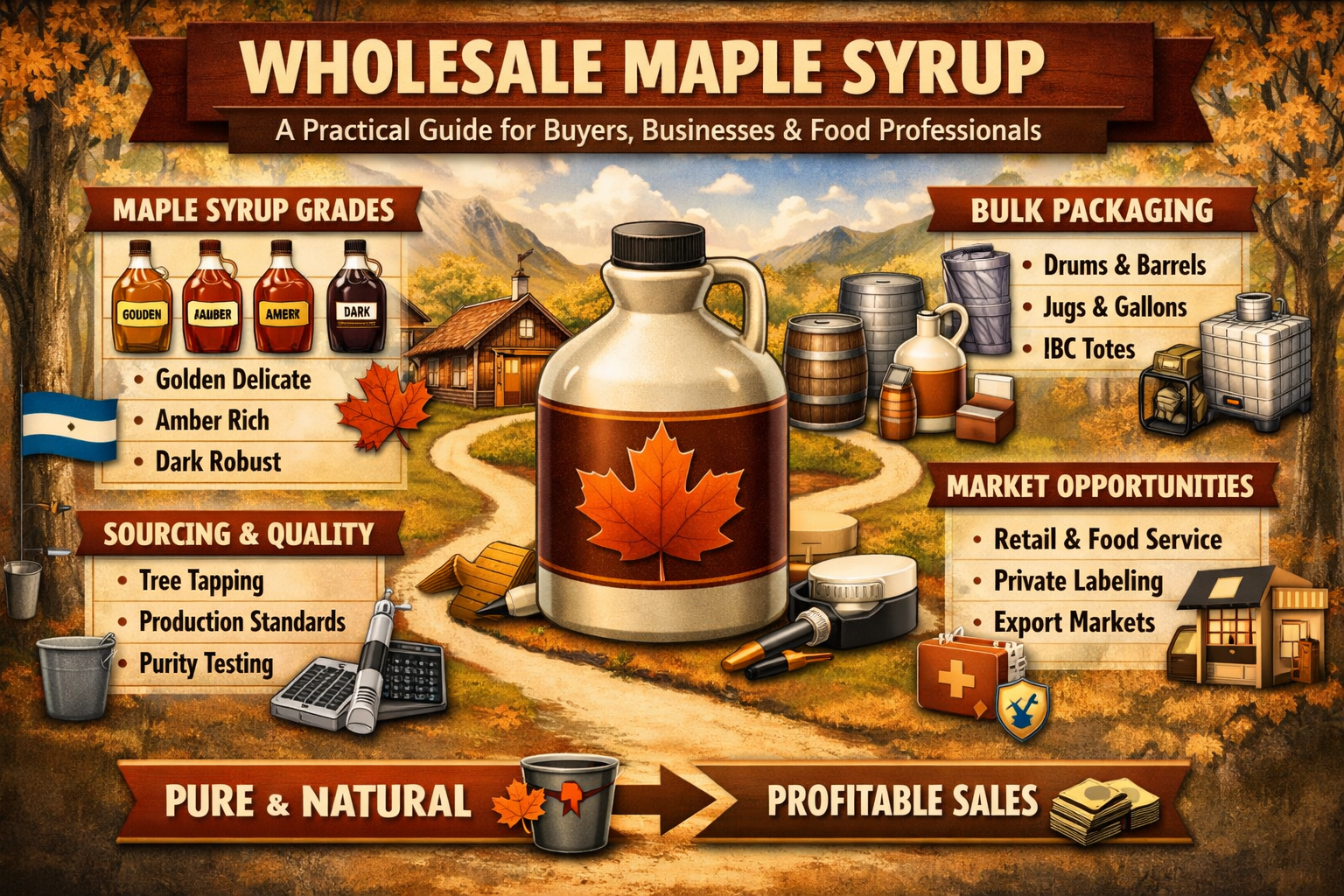
If you are sourcing natural sweeteners for retail, food service, or manufacturing, understanding the wholesale maple syrup market is essential. Many buyers start by searching for reliable suppliers like wholesale maple syrup near jefferson ohio, especially when they want consistent quality, traceability, and competitive bulk pricing from trusted regional producers. The challenge is not just finding syrup—it’s finding syrup that meets grade standards, flavor expectations, and supply reliability.
Maple syrup is no longer just a breakfast condiment. It has become a premium ingredient in bakeries, restaurants, beverage companies, and specialty food brands. As demand grows, so does the complexity of sourcing it in bulk. Buyers must understand grades, sourcing regions, pricing structures, and how production methods influence taste and consistency.
For businesses, a poor sourcing decision can affect product quality, customer satisfaction, and long-term brand trust. That is why wholesale purchasing requires more than just price comparison—it requires knowledge, supplier evaluation, and a clear understanding of the product itself.
Understanding Wholesale Maple Syrup and Its Market Value
Wholesale maple syrup refers to purchasing syrup in large volumes directly from producers or distributors, typically at reduced per-unit cost. This is common among bakeries, cafes, food manufacturers, and retailers who use maple syrup as a core ingredient or resale product.
The market is heavily influenced by geography and production conditions. Most high-quality maple syrup comes from regions with cold winters and sugar maple forests. The process of tapping trees, collecting sap, and boiling it down into syrup is labor-intensive, which contributes to its premium value.
One of the most important factors in wholesale sourcing is grading. Maple syrup is generally categorized by color and flavor intensity. Lighter grades tend to have a mild taste, while darker grades offer stronger, more robust flavor profiles suitable for cooking and baking.
Another key consideration is consistency. Businesses often require uniform taste across batches to maintain product standards. That’s why long-term relationships with suppliers matter more than one-time purchases.
Wholesale buyers also need to consider packaging options such as food-grade drums, jugs, or bulk containers depending on storage capacity and usage volume.
How to Source Wholesale Maple Syrup Effectively
Sourcing maple syrup in bulk is not just about placing an order—it involves evaluating suppliers, testing product quality, and understanding logistics. A structured approach helps ensure you get both value and reliability.
Step 1: Identify Your Usage Requirements
Before contacting suppliers, define how you plan to use the syrup. Restaurants may need smaller bulk containers for daily kitchen use, while manufacturers may require large drums for processing. Knowing your volume helps avoid overpaying or under-ordering.
You should also determine:
- Desired flavor intensity (light, medium, dark)
- Monthly or seasonal usage volume
- Packaging preferences
- Storage conditions available
Step 2: Evaluate Supplier Quality Standards
Not all maple syrup is processed the same way. High-quality producers follow strict boiling temperatures, filtration methods, and sanitation standards. Ask suppliers about:
- Sap sourcing methods
- Boiling and filtering processes
- Quality control checks
- Shelf life and storage recommendations
Consistency is critical. Even small variations in production can affect taste, color, and viscosity.
Step 3: Request Samples Before Bulk Ordering
Sampling is a crucial step that many buyers overlook. Tasting syrup from different batches helps you understand flavor depth and consistency. It also ensures compatibility with your recipes or product formulations.
Step 4: Compare Pricing and Logistics
Wholesale pricing often depends on volume, grade, and packaging type. However, logistics such as shipping time, storage requirements, and delivery reliability can significantly affect overall cost efficiency.
Step 5: Build a Long-Term Supplier Relationship
Instead of switching suppliers frequently, many successful businesses focus on long-term partnerships. This ensures stable pricing, priority supply during peak seasons, and consistent product quality.
Common Mistakes in Wholesale Maple Syrup Purchasing
Even experienced buyers can make costly errors when sourcing maple syrup in bulk. One of the most common mistakes is focusing only on price. Lower-cost syrup may sometimes indicate lower grade, inconsistent flavor, or poor filtration practices.
Another frequent issue is ignoring grading differences. Buyers who do not understand color and flavor classifications may receive syrup that does not match their product requirements. This can lead to customer dissatisfaction or product inconsistency.
Storage is another overlooked factor. Maple syrup must be stored properly to maintain quality over time. Exposure to heat or improper sealing can lead to crystallization or spoilage.
Finally, many buyers fail to verify supplier credibility. Without checking production standards or requesting samples, businesses risk receiving inconsistent or mislabeled products.
Practical Tips for Buying Wholesale Maple Syrup Like an Expert
Experienced buyers follow a few practical strategies that help them maintain quality and reduce risk in sourcing.
First, always prioritize transparency. A trustworthy supplier should clearly explain production methods, grading standards, and storage guidelines. If information is vague, it is usually a red flag.
Second, align syrup grade with product use. Lighter syrup works well for table use and subtle flavoring, while darker syrup is better for baking, sauces, and marinades where strong maple flavor is desired.
Third, consider seasonal availability. Maple syrup production is seasonal, so planning ahead ensures better pricing and supply stability during peak demand periods.
Fourth, test syrup in real applications, not just tasting. A syrup that tastes good on its own may behave differently when used in baking or cooking. Always test in actual recipes before committing to large orders.
Finally, track supplier performance over time. Monitor consistency, delivery timelines, and customer feedback if you are reselling the product. This helps you refine sourcing decisions and reduce long-term risk.
Conclusion
Wholesale maple syrup sourcing requires more than finding the lowest price—it demands an understanding of grading, production methods, supplier reliability, and end-use requirements. Businesses that take a structured approach tend to achieve better consistency, stronger product quality, and more reliable supply chains.
Whether you operate a food service business, retail store, or manufacturing facility, investing time in supplier evaluation and product testing pays off in the long run. By focusing on quality, consistency, and long-term relationships, you can ensure that your maple syrup supply supports both your product standards and customer expectations.
