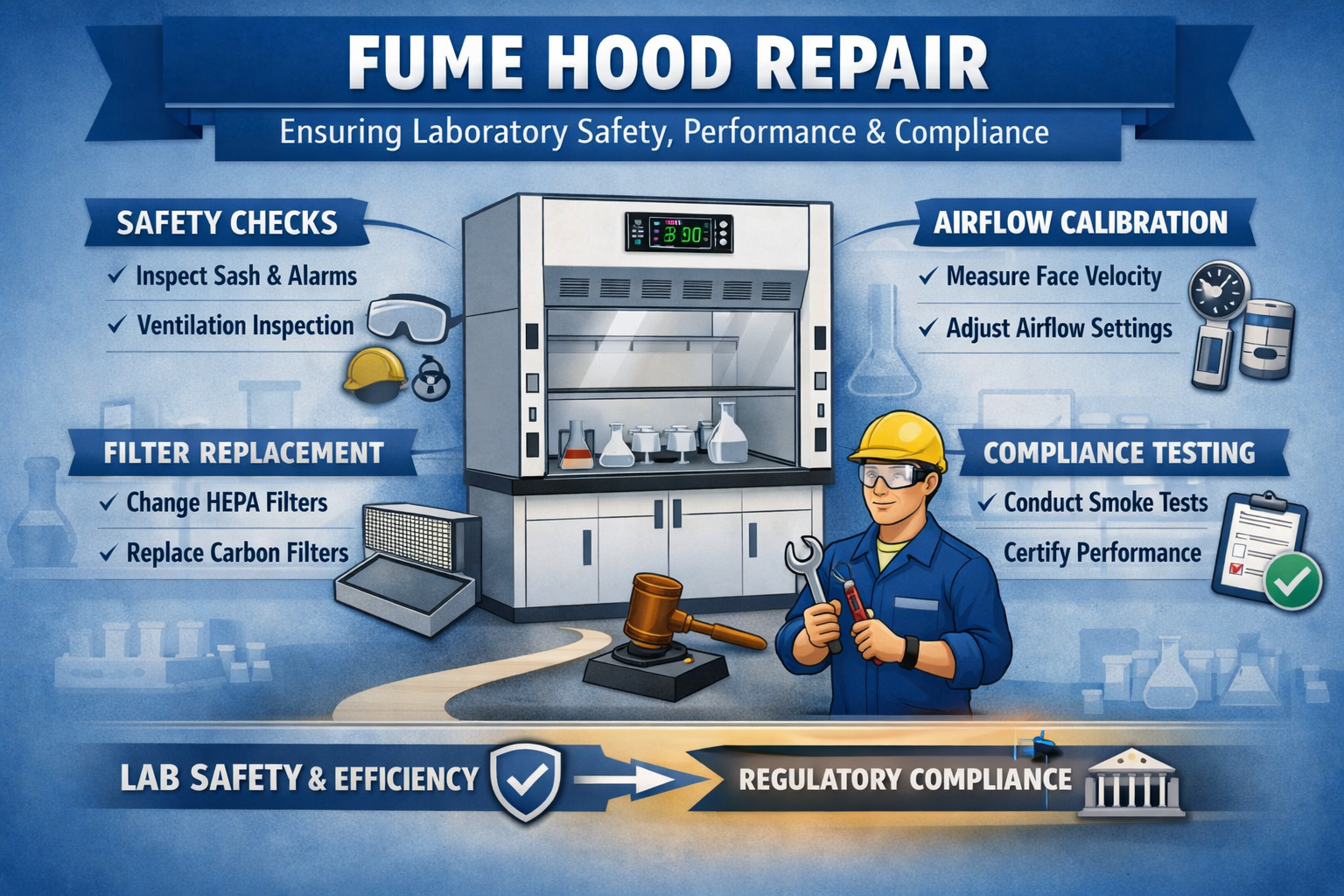
Modern laboratories rely heavily on controlled environments to protect researchers from hazardous fumes, vapors, and chemical exposure. When a fume hood begins to malfunction, it doesn’t just affect workflow—it creates a direct safety risk. That’s why timely maintenance and professional intervention are essential. Understanding how systems deteriorate and how proper servicing works can help labs maintain compliance and avoid costly downtime. Many facilities turn to specialized services like fume hood repair to ensure their ventilation systems are restored to safe operating conditions without disrupting critical research activities.
Fume hoods are designed to capture and exhaust harmful airborne contaminants away from users. However, even small performance issues—like reduced airflow or sensor malfunctions—can compromise containment efficiency. In high-stakes environments such as pharmaceutical labs, research universities, and industrial testing facilities, these issues can escalate quickly. Regular inspection and repair are not optional; they are part of maintaining a safe and compliant laboratory environment.
The challenge is that fume hood problems often develop gradually. Users may not notice subtle airflow changes or minor mechanical wear until the system fails a safety check. By then, the hood may already pose a risk. Understanding how repair works and what signs to look for can help prevent unsafe conditions and costly shutdowns.
Understanding Fume Hood Repair and Its Importance
Fume hood repair involves diagnosing and fixing mechanical, electrical, and airflow-related issues that affect containment performance. These systems are complex, combining fans, sensors, dampers, sash mechanisms, alarms, and ducting components. When any part fails, the hood’s ability to maintain proper face velocity and safe exhaust levels is compromised.
One of the most critical aspects of fume hood performance is airflow stability. If airflow drops below recommended levels, hazardous vapors may escape into the laboratory space. On the other hand, excessive airflow can create turbulence, pulling contaminants back toward the user. Repair ensures that the balance is restored according to safety standards.
Another key element is compliance. Regulatory agencies require laboratories to maintain specific performance standards for ventilation systems. Regular repairs help ensure that fume hoods pass certification tests and meet occupational safety requirements. Without proper maintenance, facilities risk violations, shutdowns, or exposure incidents.
Step-by-Step Guide to Effective Fume Hood Repair
Proper repair follows a structured process that begins with diagnostics and ends with performance verification. Each step ensures that no underlying issue is missed and that the system operates safely after restoration.
1. Initial Inspection and Problem Identification
The repair process begins with a detailed inspection of the fume hood system. Technicians examine airflow readings, sash movement, alarms, and visual indicators of wear. Common symptoms include weak suction, irregular airflow patterns, or persistent alarm signals. Identifying the root cause is essential before any corrective action is taken.
2. Airflow and Velocity Testing
Next, airflow is measured using calibrated instruments. Face velocity is tested across multiple points of the hood opening. This step helps determine whether the issue is related to fan performance, duct blockage, or control system failure. In many cases, uneven airflow distribution reveals hidden mechanical or calibration problems.
3. Mechanical Component Repair or Replacement
Once the issue is identified, technicians address faulty components. This may include repairing or replacing sash pulleys, adjusting dampers, fixing blower motors, or sealing duct leaks. Even small mechanical faults can significantly impact performance, so precision is critical.
4. Electrical and Sensor System Checks
Modern fume hoods rely on sensors and digital controls to maintain safe operation. Faulty alarms, broken airflow sensors, or malfunctioning control panels can lead to inaccurate readings. Repairing these systems ensures the hood responds correctly to changes in airflow or sash position.
5. Calibration and Balancing
After repairs, the system must be recalibrated. Airflow is balanced to meet manufacturer specifications and safety standards. This step ensures consistent performance across the entire hood opening and eliminates turbulence or dead zones.
6. Final Performance Validation
The final stage involves re-testing the system under normal operating conditions. Technicians verify that airflow, alarms, and containment performance meet required benchmarks. Only after passing these tests is the hood considered safe for use.
Common Mistakes and Challenges in Fume Hood Repair
One of the most common mistakes laboratories make is delaying repairs until a system completely fails. Small issues like inconsistent airflow or minor alarm errors are often ignored, but they usually indicate deeper problems. Addressing them early prevents larger system failures.
Another challenge is improper calibration after repairs. Even if mechanical issues are fixed, incorrect airflow balancing can leave the hood unsafe. This is why professional recalibration is essential after any repair work.
In some cases, labs attempt temporary fixes rather than full repairs. For example, taping duct leaks or manually adjusting sashes may provide short-term relief but often worsen the problem over time. These shortcuts compromise both safety and compliance.
Environmental factors also contribute to recurring issues. Dust accumulation, chemical residue, and humidity can degrade components faster than expected. Without routine cleaning and inspection, repaired systems may fail again prematurely.
Practical Tips and Expert Recommendations
Maintaining a reliable fume hood system requires more than occasional repair. Preventive strategies play a major role in reducing downtime and extending equipment lifespan.
One effective approach is scheduling regular performance testing. Quarterly airflow checks can identify early signs of malfunction before they escalate. This helps maintain consistent safety standards without unexpected disruptions.
Training laboratory staff is equally important. Users should understand proper sash operation, loading practices, and alarm responses. Misuse is one of the leading causes of fume hood performance issues.
It is also recommended to keep a maintenance log for each unit. Documenting repairs, calibrations, and inspections helps technicians track recurring issues and identify long-term trends. This data-driven approach improves decision-making and reduces repeat failures.
Finally, using high-quality replacement parts ensures long-term reliability. Inferior components may reduce costs initially but often lead to frequent breakdowns and inconsistent performance.
Conclusion
Fume hood repair is a critical aspect of laboratory safety and operational efficiency. These systems are complex, and even minor issues can have serious consequences if left unaddressed. A structured repair process—covering inspection, airflow testing, mechanical fixes, and calibration—ensures that the hood returns to safe working condition.
By recognizing early warning signs, avoiding temporary fixes, and investing in preventive maintenance, laboratories can significantly reduce downtime and improve compliance. Ultimately, a well-maintained fume hood is not just equipment—it is a frontline safety system that protects both researchers and the integrity of scientific work.
