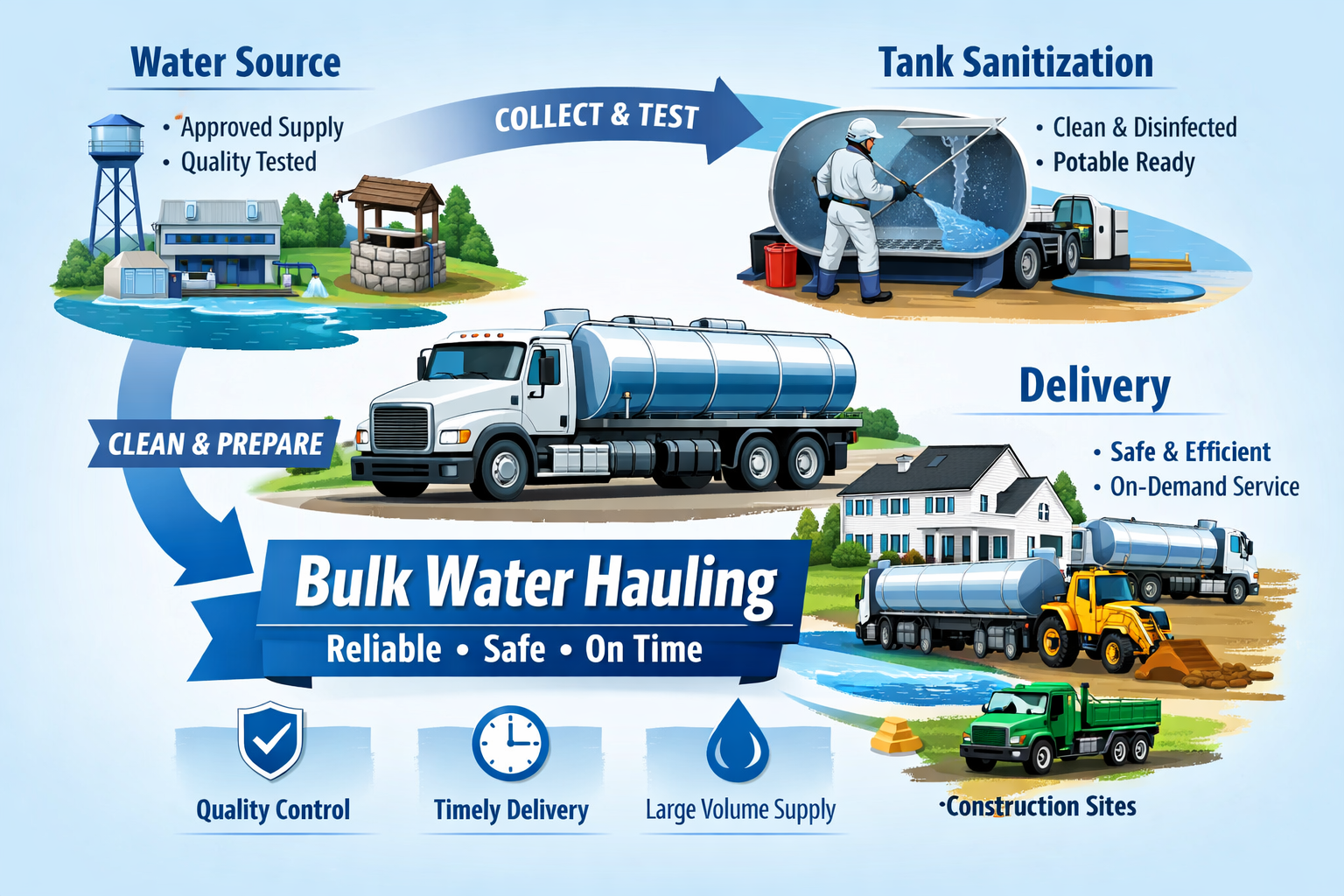
Access to clean, reliable water is something most people take for granted—until a shortage, system failure, or remote location makes it unavailable. In such situations, bulk water hauling becomes an essential service that bridges the gap between demand and supply. Whether it’s for filling residential cisterns, supporting construction projects, or supplying agricultural operations, transported water plays a critical role in maintaining daily operations.
For example, services like bulk water hauling near cleveland ohio represent how professionally delivered water solutions help communities and businesses stay functional even when local water access is limited or disrupted. Understanding how this process works can help property owners and managers make smarter, safer decisions when sourcing large volumes of water.
Bulk water hauling is not just about transporting water from one place to another—it involves safety standards, equipment precision, and careful planning to ensure water quality remains intact throughout the journey. In this article, we’ll explore how it works, when it’s needed, and how to avoid common pitfalls.
What Is Bulk Water Hauling and Why It Matters
Bulk water hauling refers to the transportation of large volumes of potable or non-potable water using specialized tanker trucks. These trucks are designed with food-grade tanks or industrial-grade containers depending on the intended use of the water.
This service is commonly used in areas where municipal water systems are unavailable, unreliable, or temporarily shut down. It is also widely used in industries such as construction, agriculture, firefighting support, and event management.
One of the most important aspects of bulk water hauling is safety. When water is intended for drinking or household use, it must meet strict health standards. That means clean tanks, sanitized hoses, and controlled loading and unloading processes are essential.
Beyond safety, reliability is another major factor. A delayed delivery can halt construction work, affect livestock health, or interrupt essential household needs. That’s why professional hauling services focus heavily on scheduling accuracy and route efficiency.
Step-by-Step Guide to Bulk Water Hauling Operations
Understanding how bulk water hauling works helps users better evaluate service quality and identify trustworthy providers. The process generally follows a structured workflow.
1. Water Source Selection and Quality Check
The first step involves sourcing water from approved municipal supplies, wells, or treatment facilities. If the water is for consumption, it must be tested for contaminants such as bacteria, heavy metals, and chemical residues.
Operators ensure the source meets regulatory standards before loading begins. This step is crucial for maintaining safety and compliance.
2. Tanker Preparation and Sanitization
Before loading water, tanker trucks must be thoroughly cleaned. Even minor contamination from previous loads can affect water quality.
Professional haulers use steam cleaning, disinfectants, and inspection protocols to ensure tanks are suitable for potable or non-potable transport. Dedicated tanks are often used for drinking water to eliminate cross-contamination risks.
3. Loading and Transport
Once the tanker is prepared, water is pumped in using controlled systems that minimize exposure to external contaminants. Drivers then transport the water using optimized routes to reduce delivery time and maintain temperature stability where needed.
4. Delivery and Dispensing
At the destination, water is carefully discharged into storage tanks, cisterns, pools, or industrial systems. Operators ensure proper flow control to avoid contamination during transfer.
In agricultural or construction settings, water may be delivered directly into mixing systems or irrigation infrastructure.
5. Documentation and Compliance
Professional hauling services often provide delivery logs, source verification, and safety documentation. This is especially important for regulated industries that require proof of water quality.
Common Challenges and Mistakes in Bulk Water Hauling
While bulk water hauling is a well-established service, several issues can compromise its effectiveness if not properly managed.
Using Unverified Providers
One of the biggest risks is choosing unlicensed or inexperienced haulers. Without proper certifications, there is no guarantee that water sources or tanks meet safety standards.
Poor Tank Maintenance
Neglected or poorly cleaned tanks can introduce bacteria or chemical residues into the water supply. This is especially dangerous when water is used for drinking or food preparation.
Incorrect Water Type Selection
Not all water is suitable for all uses. For example, non-potable water may be acceptable for construction but unsafe for household consumption. Miscommunication here can lead to serious health risks.
Inefficient Scheduling
Delays in delivery can disrupt entire operations. In agriculture, delayed irrigation can affect crop yields, while in construction, it can halt concrete mixing or dust control processes.
Ignoring Storage Conditions
Even after delivery, water must be stored properly. Improperly sealed or unclean storage tanks can quickly degrade water quality.
Practical Tips for Choosing a Bulk Water Hauling Service
Selecting the right provider requires more than just comparing prices. Experience, safety standards, and reliability should guide the decision.
Verify Water Quality Standards
Always ask where the water is sourced and whether it meets local health regulations. Reputable providers will have no issue sharing this information.
Inspect Equipment Standards
Tanker trucks should be well-maintained, clearly labeled, and dedicated to either potable or non-potable use. Cross-contamination is a major red flag.
Evaluate Delivery Consistency
Timely delivery is critical, especially for commercial operations. Look for providers with a track record of on-time service and flexible scheduling.
Consider Volume Flexibility
Different needs require different capacities. A good hauling service should be able to scale from small residential deliveries to large industrial requirements.
Ask About Emergency Availability
Water shortages and system failures can happen unexpectedly. Providers that offer emergency hauling services add an extra layer of security.
Conclusion
Bulk water hauling plays a vital role in ensuring consistent water access for residential, commercial, and industrial needs. From clean sourcing and safe transportation to precise delivery systems, every step matters in maintaining water quality and reliability.
By understanding how the process works and what to look for in a provider, users can avoid common mistakes and ensure uninterrupted water supply even in challenging conditions. Whether supporting construction projects, agricultural irrigation, or emergency needs, reliable water transport is an essential service that keeps operations running smoothly.
