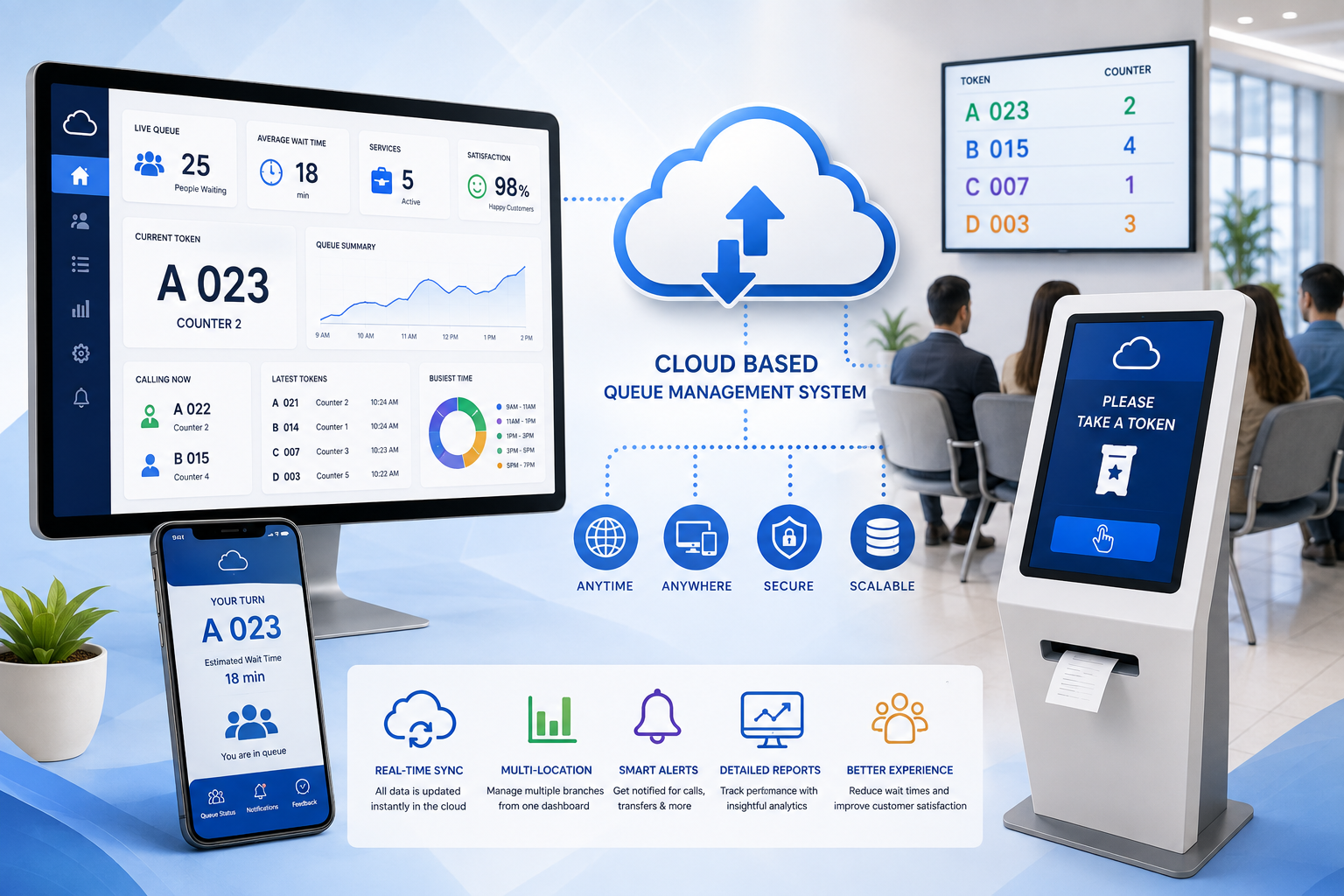
Efficient customer flow is an essential part of modern service delivery. Whether an organisation operates a healthcare facility, bank, retail store, government office, educational centre, or customer service department, managing visitors effectively can influence satisfaction and operational performance. Long physical queues, crowded waiting areas, and limited information can create frustration for customers and additional pressure for employees. A cloud based queue management system provides a modern way to organise waiting processes while offering greater flexibility and visibility.
Queue Tech provides queue management solutions designed to help UK organisations modernise their customer journeys. By using cloud-based technology, businesses can manage queue activity digitally, provide useful information to visitors, and gain operational insights that can support better decision-making.
Understanding Cloud Based Queue Management
A cloud based queue management system is a digital platform that uses cloud infrastructure to manage customers waiting for services. Instead of relying completely on paper tickets or locally operated equipment, organisations can use connected technology to manage queues and customer interactions.
Customers may join queues through self-service kiosks, reception systems, appointment platforms, or virtual queue options, depending on the organisation’s requirements.
Staff can manage customer flow through authorised digital interfaces, helping create a more structured service process.
Why Organisations Are Moving Towards Cloud Solutions
Cloud technology offers flexibility that can be valuable for organisations with changing operational requirements. Traditional queue systems may depend heavily on hardware located at individual branches, while cloud-based platforms can centralise management where appropriate.
This can be particularly useful for businesses with multiple locations. Management teams can potentially gain visibility across different sites without having to manage each queue environment completely separately.
For growing UK organisations, this can provide a more adaptable approach to queue management.
Improve the Customer Waiting Experience
Customers do not necessarily expect every service to be immediate, but they do expect waiting to be organised. Uncertainty can make even a short wait feel frustrating.
A cloud based queue management system can support digital queue numbers, display information, notifications, and virtual waiting processes. These tools can help customers understand their position and know when they need to take action.
Providing useful information throughout the waiting process can create a more transparent experience.
Reduce Physical Queues
Physical queues can occupy valuable space and make service environments feel crowded. This is especially challenging in smaller premises or locations that regularly experience high customer volumes.
Digital queue management can reduce the need for customers to stand continuously in a single line. Depending on the setup, visitors can check in and wait in designated areas while receiving appropriate notifications.
This can make better use of available space and create a more comfortable environment.
Manage Multiple Service Types
Businesses often provide different services that require different employees, departments, or processing times. A single physical queue may not be the most efficient way to manage these requirements.
A cloud queue platform can help organise customers according to the service they need. Staff can then manage different queues and allocate visitors to suitable service points.
This can improve customer flow and reduce unnecessary movement around the premises.
Cloud Queue Management in Healthcare
Healthcare facilities often deal with complex patient journeys. Hospitals, clinics, diagnostic centres, and specialist practices may have multiple departments and service points.
A cloud based queue management system can help organise patient flow and provide staff with greater visibility of waiting activity.
When using cloud technology in healthcare, organisations should carefully consider privacy, security, accessibility, data handling, and the requirements of their specific workflows.
Supporting Banks and Financial Services
Bank branches frequently serve customers with different requirements. Some visitors may need general assistance, while others require appointments or specialist financial services.
Digital queue technology can allow customers to identify their requirements and join an appropriate queue. Staff can then manage visitors according to service type and available resources.
For financial organisations operating multiple branches, cloud-based systems can also support centralised oversight where the technology allows it.
Applications in Retail and Service Centres
Retail businesses, repair centres, telecommunications providers, and other service organisations often experience fluctuating customer demand.
Customers may need help with returns, repairs, collections, complaints, consultations, or general enquiries. Digital queues can organise these requests and help employees manage visitors systematically.
During busy periods, this can reduce confusion and create a smoother customer journey.
Give Staff Greater Visibility
Employees need accurate information about customer demand to manage services effectively. A digital queue system can provide staff with a central view of waiting activity.
Depending on the solution, employees may be able to call visitors, update queue status, transfer customers between service categories, and monitor waiting activity.
A cloud based queue management system can reduce the amount of manual queue administration and allow employees to focus more on their primary service responsibilities.
Analyse Customer Demand
Digital queue systems can generate useful information about service performance. Depending on the platform, organisations may be able to monitor customer volumes, waiting times, service durations, and peak demand.
This data can help managers identify patterns and potential bottlenecks.
For example, if a particular service consistently experiences longer waits, managers can investigate whether staffing, capacity, or workflow changes may improve performance.
Support Smarter Resource Planning
Customer demand can change throughout the day, week, and year. Understanding these changes can help organisations plan resources more effectively.
Queue data can provide insights into busy periods and service demand. Managers can use this information when reviewing staff schedules and service capacity.
This can help organisations make more informed operational decisions.
Support Multiple Locations
One of the potential advantages of cloud technology is centralised management. Businesses with several branches can use a cloud platform to monitor supported locations through a connected environment.
This can make it easier for management teams to identify differences in customer demand and service performance.
Centralised systems can also help organisations establish consistent queue management processes across different locations.
Accessibility Matters
A digital queue system should be accessible to a wide range of visitors. Some customers may require alternative communication methods or additional assistance.
Readable screens, clear instructions, suitable audio notifications, accessible interfaces, and support from staff can help create an inclusive environment.
UK organisations should consider accessibility requirements when designing their queue management process.
Security and Data Protection
Cloud-based queue systems may process customer and operational information, so security should be considered carefully. Organisations should understand what data is collected, how it is stored, who can access it, and how it is protected.
Strong authentication, appropriate access controls, secure data practices, backups, and ongoing monitoring can support safer system operation.
Businesses should also consider applicable UK data protection requirements when selecting and implementing technology.
Scalability for Growing Organisations
A business may expand its services, increase customer volumes, or open additional locations. A queue system should ideally be capable of adapting to these changes.
Cloud-based solutions can provide a flexible foundation for expansion depending on the platform’s technical capabilities.
Scalability can help organisations avoid replacing their entire queue infrastructure every time their operational requirements change.
Why Choose Queue Tech?
Queue Tech provides queue management solutions for UK organisations that want to modernise customer waiting processes. A cloud based queue management system can support customer check-in, queue organisation, digital communication, staff management, operational monitoring, and multi-location oversight depending on the selected solution.
Queue Tech focuses on helping organisations identify queue management approaches that align with their service model, customer expectations, and operational goals.
Preparing for Modern Customer Service
Digital technology is becoming increasingly important in customer-facing environments. People are familiar with online appointments, mobile notifications, self-service systems, and digital check-ins.
Cloud-based queue management can bring similar convenience to physical service environments. By connecting digital tools with in-person services, organisations can create a more consistent customer journey.
This can help UK businesses respond to changing expectations while improving the management of their internal operations.
Conclusion
Queue management is an important part of customer service, particularly for organisations that handle high visitor volumes. Traditional physical queues can create congestion, uncertainty, and additional administrative pressure.
A cloud based queue management system provides a flexible approach to organising customer flow, reducing physical waiting, improving communication, supporting staff, and collecting operational information.
Queue Tech offers modern queue management solutions for UK organisations seeking to improve their waiting processes. With appropriate planning, security, accessibility, and ongoing management, cloud-based queue technology can help businesses create more organised, efficient, and customer-focused service environments while providing a scalable foundation for future growth.
