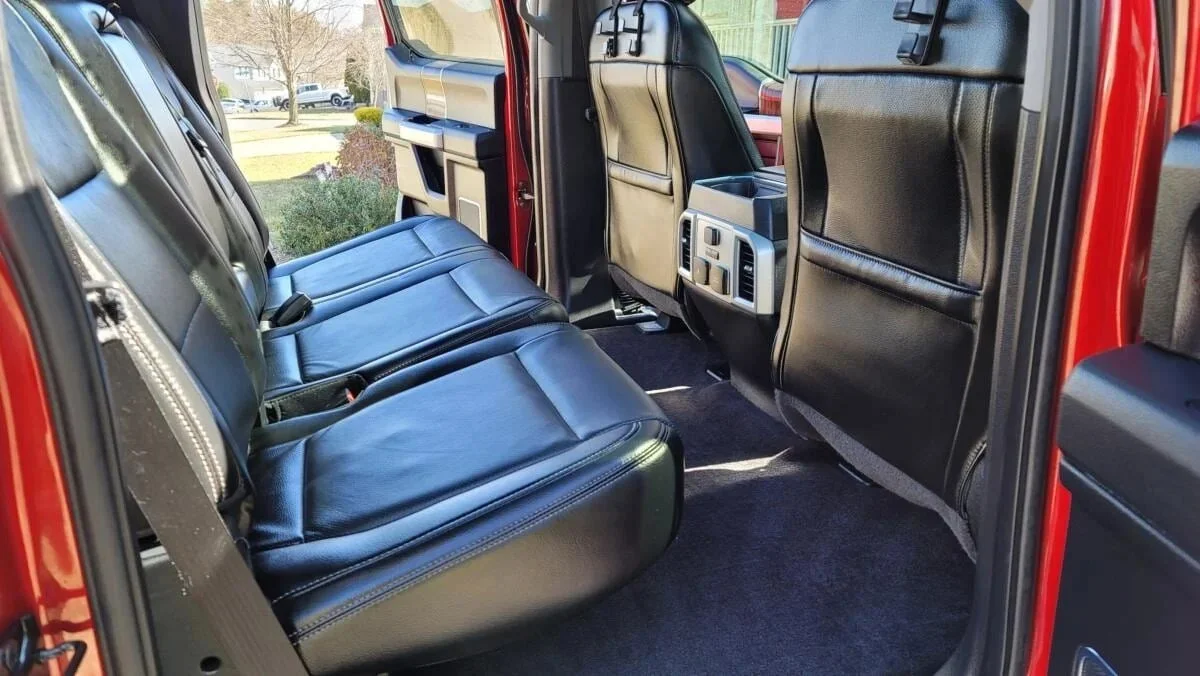
Why Larger Vehicles Need a Different Approach
An SUV or truck can have considerably more interior surface area than a compact car.
There may be three rows of seating, larger carpeted areas, multiple storage compartments, and additional trim pieces. Family vehicles also tend to have more frequent contact with passengers.
Common problem areas include:
- Third-row seating
- Floor mats and carpeting
- Door pockets
- Cup holders
- Seat tracks
- Cargo areas
- Center consoles
- Air vents
- Areas underneath child seats
These locations can be easy to overlook during a basic cleaning.
Start With a Detailed Interior Inspection
Before cleaning anything, take a few minutes to inspect the cabin.
Look at the condition of the seats, carpets, dashboard, door panels, headliner, and cargo area. Check for stains, embedded debris, pet hair, spills, and unusual odors.
This initial inspection helps determine what needs attention.
For example, a dusty dashboard requires a different approach from a fabric seat with an old beverage stain.
It also helps identify delicate materials before cleaning begins.
Remove Loose Items First
One of the simplest steps is often skipped: completely clearing the interior.
Remove:
- Toys
- Bottles
- Receipts
- Chargers
- Personal belongings
- Floor mats
- Removable organizers
This gives the detailer access to areas that would otherwise remain partially hidden.
In family vehicles, this step can reveal just how much debris has accumulated beneath seats and inside storage compartments.
Vacuuming Is More Than Running a Vacuum Over the Carpet
Thorough vacuuming is the foundation of interior detailing.
For SUVs and trucks, work systematically instead of moving randomly around the cabin.
Start from the upper areas and work downward. This prevents loosened dust and debris from settling onto surfaces you’ve already cleaned.
Pay special attention to:
- Seat seams
- Carpet edges
- Seat rails
- Under-seat areas
- Between center-console components
- Cargo-area corners
- Door pockets
- Floor-mat edges
A narrow vacuum attachment can be particularly useful around seat tracks and tight gaps.
Dealing With Pet Hair
Pet hair can be one of the more stubborn challenges in family vehicles.
Vacuuming alone may not remove hair that has become embedded in carpet fibers or upholstery.
A rubberized brush or suitable pet-hair removal tool can help loosen the fibers before vacuuming again.
Work in small sections rather than aggressively scrubbing the entire carpet.
An insider tip is to check the carpet against different lighting angles. Hair that seems invisible from one direction can become obvious from another.
Cleaning Fabric Seats
Fabric upholstery needs a measured approach.
The objective is to remove contamination without unnecessarily soaking the material.
A professional may use an upholstery-safe cleaner, agitation, extraction, or other appropriate techniques depending on the fabric and level of soiling.
Different stains may require different treatments.
For example, a greasy mark shouldn’t necessarily be treated exactly like a water-based spill.
Avoid repeatedly scrubbing one small area with excessive force. Aggressive agitation can distort fabric fibers and may create a visible difference between the cleaned area and surrounding material.
Leather and Synthetic Leather Care
Leather and synthetic leather require their own approach.
Dust and grime often collect in seams and perforations. These areas should be cleaned carefully rather than attacked with excessive pressure.
A suitable cleaner can be applied with controlled agitation, followed by appropriate wiping.
The material should then be conditioned only when the manufacturer’s recommendations and the material itself call for it.
Using too much product can leave a greasy surface that attracts additional dust.
Don’t Forget the Dashboard and Door Panels
Hard surfaces can collect an impressive amount of dust.
Dashboard surfaces, door panels, center consoles, and trim should be cleaned according to their material and finish.
A matte interior shouldn’t be treated like glossy exterior paint.
The goal is generally a clean, natural appearance rather than leaving behind a heavy layer of shine.
Pay particular attention to areas touched frequently, such as:
- Door handles
- Window switches
- Steering-wheel controls
- Gear selectors
- Center-console lids
- Armrests
These areas can accumulate oils from hands even when they don’t look obviously dirty.
Cup Holders Deserve Special Attention
Cup holders are notorious in family vehicles.
Small amounts of spilled drinks can collect at the bottom and eventually become sticky. Dust and debris then adhere to the residue.
Remove loose debris first, then clean according to the cup holder’s material.
If the cup holder is removable, taking it out can provide much better access to the surrounding area.
This is a small detail, but it often makes a newly cleaned interior feel noticeably more complete.
Cleaning the Headliner
The headliner should be approached cautiously.
It isn’t simply another fabric surface.
Excessive moisture or aggressive scrubbing can loosen adhesive or affect the appearance of the material.
Light contamination may require only controlled spot cleaning.
For heavier stains, use an appropriate technique rather than saturating the entire headliner.
This is one area where restraint is often better than enthusiasm.
Family Vehicle Odors
Odors can originate from several sources.
Food spills, damp carpets, pet accidents, smoke residue, and accumulated organic debris can all contribute to unpleasant smells.
Air fresheners generally mask odors rather than addressing their source.
If the odor comes from a contaminated carpet or upholstery, the underlying material needs to be identified and properly cleaned.
The cabin should also be allowed to dry thoroughly after any moisture-based cleaning.
Cargo Areas Need Attention Too
SUVs and trucks often have large cargo areas that receive heavy use.
Groceries, sports equipment, tools, luggage, and outdoor gear can introduce dirt and moisture.
Vacuum the cargo floor, clean side panels, and inspect storage compartments.
For trucks, don’t overlook areas where muddy footwear or equipment regularly enters the cabin.
A clean passenger compartment can still feel unfinished if the cargo area remains neglected.
Cleaning Around Child Seats
Child seats create another challenge.
Food crumbs and debris can accumulate beneath and around them, while the surrounding upholstery may experience frequent spills.
Always follow the child-seat manufacturer’s instructions when removing or cleaning the seat itself.
For the vehicle interior, clean the exposed carpet and upholstery once the seat is safely removed or repositioned according to appropriate instructions.
This is also a good opportunity to inspect areas that rarely receive routine attention.
Choosing the Right Interior Detailing Approach
Not every SUV or truck needs the same level of cleaning.
A lightly used vehicle may benefit from routine maintenance detailing.
A family vehicle with years of accumulated dirt, stains, pet hair, or spills may require a much deeper process.
For those researching interior car detailing richmond va, the most useful approach is to consider the actual condition of the vehicle rather than selecting a cleaning method simply because it worked on another car.
Material, contamination, age, and previous cleaning methods all matter.
How Often Should You Detail a Family Vehicle?
There isn’t one universal schedule.
Usage is the biggest factor.
A vehicle carrying children and pets every day will generally need more frequent attention than a truck used primarily for commuting.
Between professional details, simple habits can help:
- Remove trash regularly.
- Shake out floor mats.
- Clean spills promptly.
- Vacuum high-traffic areas.
- Avoid leaving damp items inside.
- Wipe frequently touched surfaces.
- Check underneath seats periodically.
These small habits reduce the amount of buildup that eventually requires intensive cleaning.
Final Thoughts
Interior detailing for SUVs, trucks, and family vehicles is really about working methodically.
A larger cabin provides more places for dirt, dust, stains, hair, and odors to hide. Cleaning everything effectively requires more than a quick vacuum and a wipe of the dashboard.
Start with inspection, remove loose debris, work systematically, and choose cleaning methods according to the material being treated. Pay particular attention to hidden areas such as seat tracks, cup holders, door pockets, third-row seating, and cargo compartments.
Most importantly, don’t confuse aggressive cleaning with effective cleaning. The best interior detailing leaves surfaces genuinely clean while preserving the materials that make up the cabin.
Also read for more information so click here.
