Not every great watch brand needs to shout. While Seiko Watches plenty of names in horology rely on aggressive marketing and celebrity endorsements, Seiko has spent well over a century letting its craftsmanship speak for itself. From humble beginnings in a Tokyo shop to a global presence spanning affordable everyday watches and hand-finished luxury pieces, Seiko has earned its reputation the hard way — through engineering, patience, and consistency.
Humble Beginnings, Global Influence
Seiko’s founder, Kintaro Hattori, opened a small watch and clock repair shop in Tokyo in 1881. What started as a modest business selling and repairing timepieces eventually grew into one of the most technically accomplished watch manufacturers on Earth. By 1892, the company was producing its own clocks, and by 1913 it had created Japan’s very first wristwatch.
That trajectory of steady, deliberate growth has remained a hallmark of the brand ever since. Rather than chasing trends, Seiko has tended to focus on solving genuine engineering problems — accuracy, durability, and craftsmanship — and letting the results define its reputation.
The Quartz Revolution
No discussion of Seiko is complete without mentioning the Astron. Released in 1969, it was the world’s first quartz wristwatch, offering a level of accuracy that mechanical movements simply couldn’t match at the time. The ripple effect was enormous. Swiss manufacturers, many of whom had dominated the industry for generations, suddenly found themselves competing against a completely different kind of technology.
This period, often referred to as the quartz crisis, permanently altered the watch industry’s landscape. It’s a reminder that Seiko isn’t just a brand that makes watches — it’s a company that has, at multiple points, redefined how watches are made in the first place.
Craftsmanship Beyond Price Point
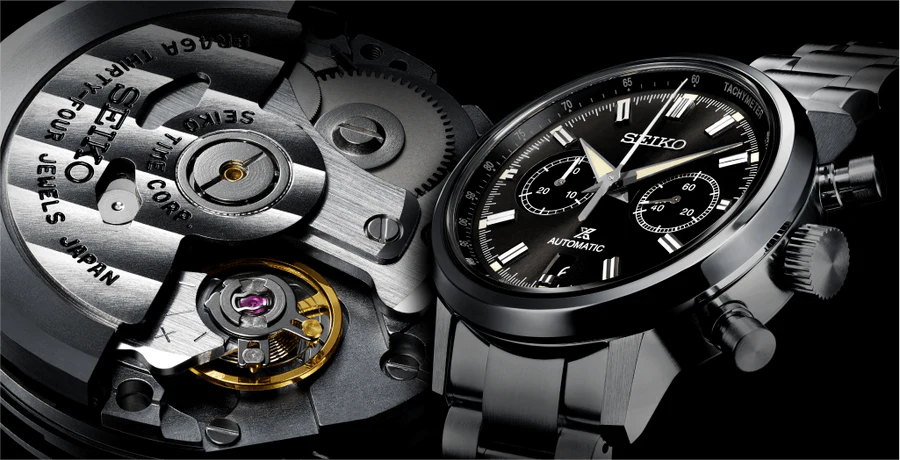
One of the most underrated aspects of Seiko is how much Seiko 5 Sports genuine craftsmanship appears even in its lower-priced models. Many entry-level automatics feature visible movements through exhibition case backs, hand-applied indices, and finishing details that are rarely found in other brands’ watches at similar price points.
This commitment becomes even more apparent in the Presage line, where dial designs often reflect traditional Japanese artistry. Techniques inspired by urushi lacquerwork, textile patterns, and enamel dial-making bring a distinctly Japanese sensibility to the wrist — something that feels handmade rather than mass-produced, even when priced reasonably.
At the highest level, Grand Seiko represents decades of refinement condensed into a single collection. Cases are polished using the zaratsu technique, a meticulous method that creates perfectly flat, distortion-free surfaces. Dials often draw inspiration from natural phenomena — frost patterns, birch forests, or moving water — translated into textures that shift dramatically depending on the light. It’s a level of detail typically associated with far more expensive Swiss competitors.
Built for Real Life
Seiko’s Prospex collection speaks to a different kind of craftsmanship — one built around durability rather than delicacy. These watches are designed to survive genuine wear: diving, hiking, fieldwork, and daily knocks. Models like the Turtle and Samurai have earned loyal followings not because of flashy marketing, but because they simply hold up. Many meet strict ISO diving standards, meaning they’re built to function, not just to look the part.
This practicality has made Prospex watches popular among people who want a tool watch they can trust, rather than a decorative accessory that needs babying.
A Brand That Rewards Patience
Owning a Seiko often feels different from owning watches from brands built primarily around image. There’s a sense of discovery in learning about movement calibers, dial techniques, and the small design choices that separate one collection from another. Enthusiasts frequently describe falling into a “rabbit hole” once they start exploring Seiko’s catalog, uncovering discontinued models, regional exclusives, and vintage pieces with dedicated followings decades after their original release.
This depth is part of why Seiko has built such a passionate global community. Collectors don’t just buy watches — they research references, compare movement specifications, and trade stories about specific models the way other hobbyists might discuss vintage cars or classic cameras.
Choosing Your Own Seiko Story
Because Seiko’s range is so wide, there’s rarely a single “right” choice — only the right choice for the individual. Someone new to mechanical watches might start with a Seiko 5. A person drawn to artistry might lean toward Presage. Someone who wants a dependable companion for outdoor life might choose Prospex. And those ready to explore serious high-horology might eventually find themselves drawn to Grand Seiko.
Final Thoughts
Seiko’s success isn’t built on hype — it’s built on decades of engineering discipline, cultural craftsmanship, and a genuine respect for what a watch should do: keep reliable time while telling its own quiet story. In an industry often driven by branding, Seiko remains a refreshing reminder that real substance still matters.
