A dispensary owner mentioned something to me once that I hadn’t really thought about before. She said dab containers are one of the few products on her shelf where the packaging mistake shows up almost instantly after purchase, not weeks later in a review. Customer opens it at home, the concentrate’s stuck to the lid, half of it’s wasted scraping it out, and that bad experience gets tied straight to the brand, not to the fact that dab packaging is just genuinely tricky to get right. Most other cannabis products give a brand more room to recover from a packaging misstep. Dab containers really don’t.
That’s worth sitting with for a second, because a lot of the mistakes brands make with dab packaging aren’t really about aesthetics at all. They’re functional failures that happen to also hurt the brand.
Mistake One: Ignoring How Sticky the Product Actually Is
Concentrate sticks to pretty much whatever it touches, and a container that isn’t designed around that just loses product, constantly. Standard plastic or glass with no non-stick coating or silicone lining ends up holding onto concentrate at the walls and the lid, so customers end up throwing away part of what they actually paid for, every single time they open it.
Sounds minor until you remember dab concentrate gets priced per gram and isn’t cheap. Losing a real percentage to container residue isn’t a small gripe it’s a direct hit to how much value someone feels they got, and this tends to show up in reviews faster than almost any other packaging complaint in the category.
Mistake Two: Underestimating Temperature Sensitivity
Concentrate reacts to heat more than most cannabis products do. It can soften, shift, or turn unworkable if it’s sitting in a hot delivery van, or just a warm storage room, for too long. Packaging that doesn’t plan for this thin plastic with zero insulating quality, clear containers that trap heat under direct light ends up handing over a product that’s noticeably worse than what left the lab.
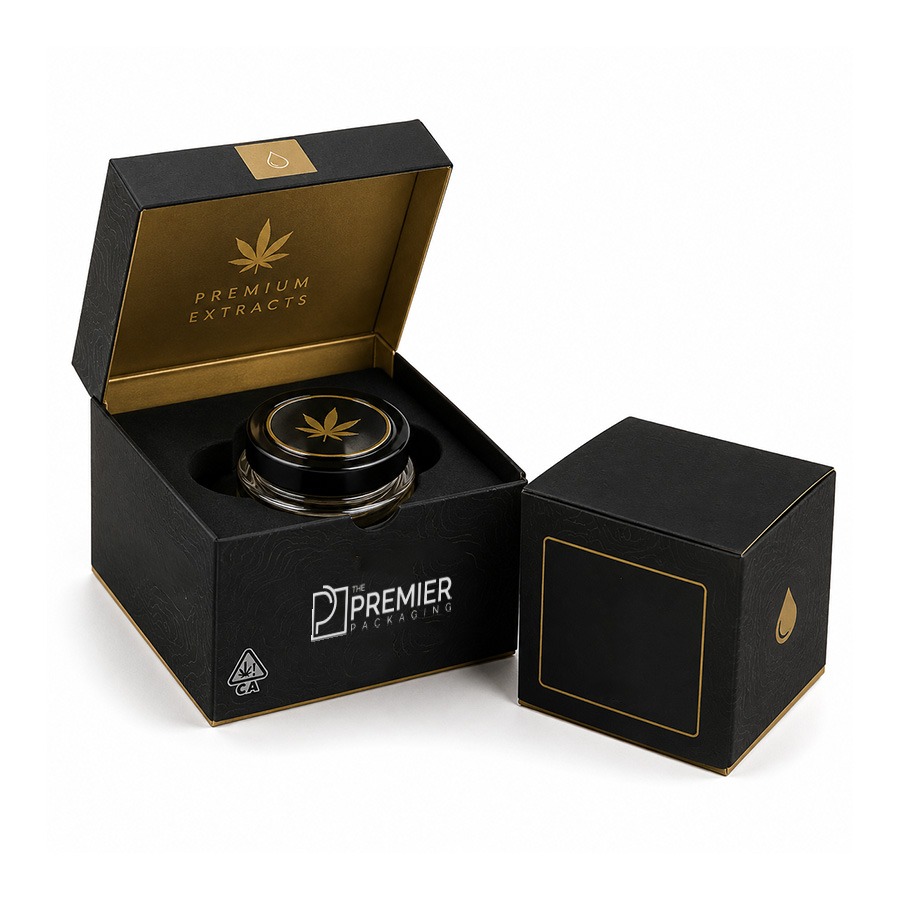
Custom dab boxes built specifically around concentrate’s actual properties, rather than adapted from whatever generic small-container option was on hand, earns its cost right here. Choosing materials with heat and light sensitivity in mind protects product quality in a way a generic container just can’t match.
Mistake Three: Skipping Child-Resistant Features or Bolting Them On Poorly
Every legal cannabis market requires child-resistant packaging, and dab containers are no exception. The mistake isn’t skipping this requirement, most brands know better than that. It’s treating the child-resistant mechanism as a separate compliance feature stapled onto an otherwise finished design, rather than building it into the container from the start.
A resistant lid that feels clunky, hard to operate even for adults, or visually mismatched with the rest of the packaging signals that compliance was an afterthought. Done well, the same mechanism can feel like part of the product’s overall design language instead of a regulatory patch job.
Mistake Four: Overlooking UV and Light Exposure
Cannabinoids degrade with prolonged light exposure, and dab concentrate is particularly sensitive given how concentrated the product actually is. Clear or lightly tinted containers look appealing on a shelf, showing off the product’s color and consistency, but that visual appeal comes at a real cost if the container doesn’t include UV protection.
Brands chasing an attractive, see-through container sometimes trade away product shelf life to get it, without realizing the tradeoff until customers start noticing a difference in potency or texture between a freshly purchased jar and one that sat under dispensary lighting for a few weeks.
Mistake Five: Sizing Containers Without Thinking About Tool Access
A lot of dab packaging gets designed around how it looks closed, without much thought given to how someone actually uses it day to day. Narrow openings that make getting a dab tool in and out a fight. Lids you have to pry off instead of just opening. Containers small enough that scraping out that last bit of product turns into a whole ordeal.
None of this shows up in a design mockup, since nobody’s actually using the thing at that stage. It shows up the first time a real customer’s standing there with a tool trying to get concentrate out which is exactly why testing real usability matters more here than for most other cannabis packaging, not just how it photographs.
Mistake Six: Inconsistent Branding Across a Product Line
This one isn’t unique to dab packaging, but it hits harder here because concentrate lines often include several strains or potency levels sold right next to each other. A container that shifts noticeably from one strain to the next different colors, different fonts, different closures makes a product line feel scattered instead of curated.
Keeping the container structure and closure consistent across a line, and only varying color or label details between strains, reads as far more professional than a line where every product looks like it came from a different design decision entirely.
Mistake Seven: Treating Packaging Design as Finished After Launch
Concentrate packaging that works fine at launch doesn’t always hold up once it’s been through real-world use for a few months. Lids that tested well start losing their seal. Non-stick coatings wear down faster than anyone expected. Customers reporting these problems later are basically handing a brand free information, which is easy to ignore if nobody’s actually checking in on it.
Revisiting how packaging performs periodically, based on real customer feedback rather than assuming the initial design just holds up forever, catches problems long before they turn into a pattern across reviews.
Conclusion
Most of these mistakes come back to the same root issue, really: treating dab packaging like a smaller version of general cannabis packaging instead of its own category with its own specific demands around stickiness, heat, light, and tool access. Custom dab packaging built around those realities from day one, rather than cobbled together from whatever generic container was available, tends to be what separates a product that shows up exactly as good as it left the lab from one that quietly loses value before a customer’s even had a chance to try it.
