Introduction
If you’ve ever restrung a racquet and immediately felt the difference on your first swing, you already know — the Tennis String you choose matters just as much as the racquet itself. It’s the only part of your setup that actually makes contact with the ball. Every ounce of spin, every bit of power transfer, every pop on a flat winner comes directly from what’s strung between those grommets. Yet most players spend hours researching racquets and then grab whatever string is on sale. That’s a mistake worth fixing, and it starts with understanding what’s actually available to you.
At Ole Tennis, we carry one of the most comprehensive string selections you’ll find from a specialty retailer — brands like Solinco, Babolat, Luxilon, Wilson, Head, Yonex, Kirschbaum, Tecnifibre, Gamma, Grapplesnake, and Toroline. Whether you’re a weekend warrior or a tournament competitor, the right string is out there — and this guide will help you find it.
Understanding String Types Before You Buy
Before you even look at a brand name, it helps to understand the four main categories of string material. Each one plays completely differently, and matching the type to your game is the foundation of a good string choice.
Polyester strings are the dominant choice among competitive and intermediate players today. They’re stiff, durable, and excellent for generating spin. The trade-off is arm comfort — poly strings are firm, and if you have any shoulder or elbow sensitivity, you need to be careful. They also lose tension faster than other materials, so stringing a bit tighter than you might with other types is common practice. That said, if you want to hit heavy with consistent control, poly is where most players end up.
Multifilament strings are the closest synthetic approximation of natural gut. They’re made from hundreds of tiny microfibers twisted together, which gives them a soft, lively feel. Senior players, beginners, and anyone dealing with arm issues tend to gravitate here. The playability is excellent — you get great feel and power — though durability takes a hit compared to poly.
Natural gut is the gold standard for feel and tension maintenance. It’s expensive, it can’t handle wet conditions well, but the way it plays? There’s genuinely nothing that replicates it. Professionals still use it — often in hybrid setups — because the comfort and responsiveness are unmatched. If your budget allows and you’re not a chronic string breaker, it’s worth trying at least once.
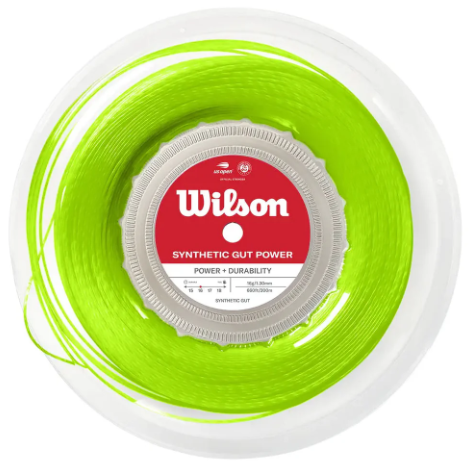
Synthetic gut is the all-rounder. It’s affordable, plays decently, and lasts reasonably well. Beginners and recreational players who don’t need elite performance but want something reliable tend to find synthetic gut does the job without overthinking it.
String Gauge Explained — Why Thickness Actually Changes Your Game
Gauge is one of those things that gets glossed over in most buying guides, but it genuinely affects how your string job feels and performs. The numbering works inversely — a lower number means a thicker string. So 15 gauge is thicker than 17 gauge, and 16L sits right in between as a “light” version of 16.
Thicker strings (15 or 16) are more durable. If you’re breaking strings every few weeks and your budget can’t keep up, going up a gauge can help. You’ll sacrifice a bit of feel and spin, but the strings will last longer.
Thinner strings (17 or 18) bite into the ball more, generating better spin potential and a livelier feel. The downside is obvious — they snap faster. For players with long, aggressive strokes who don’t mind restringing more often, thin gauge is a legitimate performance choice.
Most recreational players land comfortably at 16 or 16L. It’s a balance that most string manufacturers design around, which is why you’ll find the widest variety of options in that gauge range.
Top String Brands Available at Ole Tennis
Solinco
Solinco has become one of the most talked-about string brands in the game over the last decade, and for good reason. Their poly strings — particularly the Hyper-G and Tour Bite lines — are favorites among players who want heavy spin production with solid control. The green Hyper-G is almost iconic at this point. If you’re a baseline grinder who likes to loop the ball with serious topspin, Solinco deserves serious consideration.
Babolat
Babolat is one of the oldest names in tennis — they actually invented the first synthetic string back in the 19th century. Today, their RPM Blast is one of the best-selling poly strings on tour, used by some of the biggest names in the game. Their VS Natural Gut is equally legendary. Babolat covers every type of player, from high-performance polys to comfortable multifilaments, making them one of the most versatile brands in any string collection.
Luxilon
Luxilon is the poly string brand. When polyester strings started taking over tour tennis in the early 2000s, Luxilon was leading the charge. Alu Power is still one of the most widely used strings on the ATP tour today — it has a unique feel compared to other polys, a bit more muted and controlled. If you want what the pros are actually using, this is where you start looking.
Wilson
Wilson makes solid strings across all categories. Their Sensation multifilament is a perennial favorite for comfort-seeking players, and their NXT line offers a natural-gut-like feel at a much more accessible price point. Given that Wilson also makes some of the most popular racquets around, their strings are calibrated to work well with their frames.
Head
Head strings are reliable, well-made, and cover a broad range of playing styles. Hawk and Lynx are popular poly options, while their multifilament lines offer comfort players a premium feel. Head is one of those brands where whatever your preference, they probably have something worth trying.
Yonex
Yonex brings their engineering precision to strings just as they do to racquets. The PolyTour series — Pro, Strike, Fire, Spin — each has a distinct character. PolyTour Pro is excellent for all-court players who want a soft poly feel, while PolyTour Spin is designed specifically to maximize spin production. Their multifilament offerings are equally polished.
Kirschbaum
Kirschbaum is a German brand that doesn’t always get the recognition it deserves. Their strings are technically excellent — the Super Smash line is a durable poly known for its crisp response, and their Pro Line is a staple among players who want consistent performance without paying premium brand prices.
Tecnifibre
Tecnifibre is a French brand built on the philosophy that strings should protect arms while still performing at a high level. Their X-One Biphase is one of the most beloved multifilaments ever made — extremely soft, excellent feel, and genuinely arm-friendly. If you’ve been struggling with elbow pain and haven’t tried Tecnifibre, that’s probably your next move.
Gamma
Gamma offers great value across both poly and synthetic gut options. They’re a solid choice for players who want reliable performance without the premium price tag of the larger brands.
Grapplesnake and Toroline
Both Grapplesnake and Toroline represent newer, performance-focused brands gaining traction among competitive players looking for something a little different. If you like exploring beyond the mainstream options, these are worth checking out.
How to Actually Choose the Right String
Here’s the honest way to think about it: your playing level, swing speed, and physical condition should guide you more than brand names.
If you swing hard and play three or more times a week, a quality poly string is almost certainly right for you. Look at Solinco, Luxilon, or Babolat’s RPM range. If your swing is more moderate or you feel any arm discomfort after playing, consider a multifilament from Tecnifibre or Wilson, or even try a hybrid setup — poly on the mains, multifilament or natural gut on the crosses. That combination is genuinely one of the best-kept secrets in recreational tennis.
Beginners? Synthetic gut or an entry-level multifilament. Keep it simple, keep it comfortable, and develop your game before worrying about optimizing your setup.
Frequently Asked Questions
How often should I restring my racquet?
A common rule of thumb is to restring as many times per year as you play per week. Playing twice a week? Restring twice a year at minimum. Strings lose tension and playability long before they break.
What’s the difference between 16 and 17 gauge?
Seventeen gauge is thinner, offering more feel and spin potential but less durability. Sixteen gauge lasts longer and suits players who break strings frequently or prefer a more solid feel.
Is natural gut worth the price?
For players with arm sensitivity or those who want the absolute best feel, yes. It’s genuinely different from any synthetic option. It’s also the best string for tension maintenance over time.
Can I mix different string brands in a hybrid setup?
Absolutely. Hybrid setups — using one string type for mains and another for crosses — are extremely common and let you balance spin, comfort, and durability in ways a single string can’t achieve.
What string do most tour professionals use?
Most professionals use either a full poly setup or a hybrid combining natural gut with polyester. Luxilon Alu Power and Babolat RPM Blast are among the most widely used strings on professional tours worldwide.
Conclusion
Picking the right string doesn’t have to be complicated, but it does reward some thought. Once you understand your game, your swing, and what you actually want from the court — whether that’s heavier spin, more power, better control, or just comfort — the choice becomes a lot clearer.
Browse the full string selection at Ole Tennis and find what fits your game. Free shipping on orders over $50, and if you’re ever near Long Island, New York, come in and talk it through with someone who lives and breathes this stuff.
