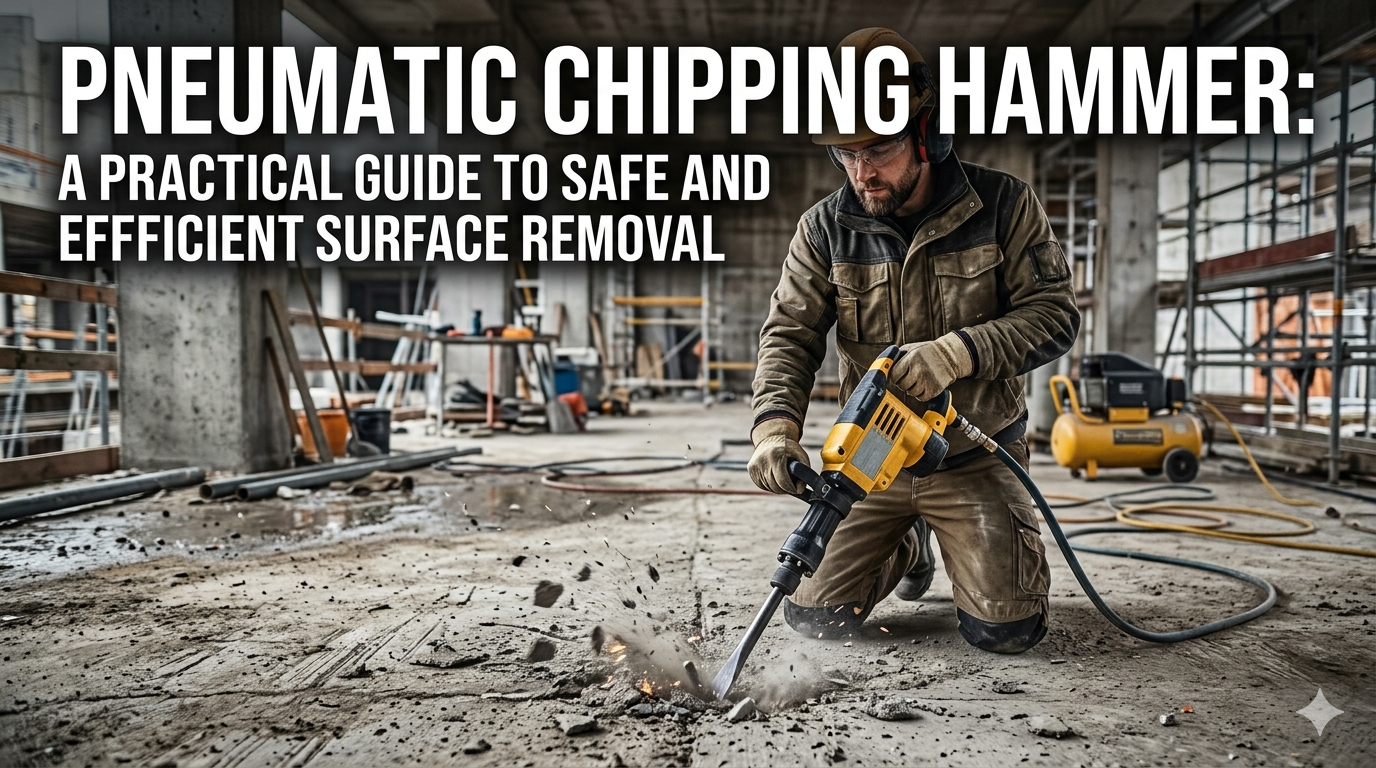
In construction, metalworking, and heavy maintenance industries, surface preparation is often one of the most time-consuming tasks. Removing excess concrete, breaking weld slag, or cleaning up corroded metal requires precision, speed, and consistent force. This is where a specialized tool becomes essential for professionals who deal with tough materials daily.
A pneumatic chipping hammer is one of the most reliable tools used in these environments. Powered by compressed air, it delivers rapid impact force that allows operators to chip away hardened surfaces with control and efficiency. Unlike manual chiseling, it reduces fatigue and significantly improves productivity on job sites.
However, despite its widespread use, many operators still underestimate how technique, maintenance, and proper selection affect performance. Using this tool correctly is not just about power—it is about precision, safety, and understanding the material you are working with. That is why learning its fundamentals is essential for both beginners and experienced professionals.
Core Understanding of a Pneumatic Chipping Hammer
A pneumatic chipping hammer is an air-powered tool designed to deliver repeated hammering action through a chisel or pointed bit. It connects to an air compressor, which drives a piston inside the tool. This piston rapidly strikes the attached bit, creating high-frequency impacts that break, chip, or remove material.
The tool is commonly used in industries such as construction, shipbuilding, welding, foundries, and demolition work. Its applications include concrete surface cleaning, weld seam removal, rust and scale cleaning, and light demolition tasks.
What makes it particularly valuable is its balance between power and control. While larger demolition tools can be overkill for precision work, the chipping hammer allows operators to target specific areas without damaging surrounding structures. This makes it an essential tool for finishing work where accuracy matters as much as force.
Step-by-Step Guide to Using a Pneumatic Chipping Hammer Effectively
Using a pneumatic chipping hammer correctly requires more than just turning it on. Proper setup and handling can dramatically improve results and extend tool life.
Step 1: Inspect the Tool Before Use
Before connecting the tool to an air supply, always inspect it carefully. Check for cracks in the housing, worn-out hoses, or loose fittings. Ensure the chisel is securely attached and suitable for the job. A damaged tool can reduce efficiency and create serious safety hazards.
Step 2: Connect to the Right Air Compressor
Air pressure is critical. Most chipping hammers require a specific PSI range to operate effectively. Too little pressure reduces impact force, while excessive pressure can damage internal components. Always match the compressor output with the manufacturer’s recommendation.
Step 3: Choose the Correct Chisel or Bit
Different tasks require different attachments. A pointed chisel is ideal for breaking hard concrete, while a flat chisel works better for surface scaling or smoothing. Selecting the right bit ensures cleaner work and reduces unnecessary wear on the tool.
Step 4: Maintain Proper Grip and Positioning
Hold the tool firmly with both hands if possible. Position your body to absorb vibration and maintain balance. Avoid applying excessive force—let the tool’s pneumatic action do the work. Pressing too hard can reduce efficiency and increase fatigue.
Step 5: Work in Controlled Sections
Instead of attempting to cover large areas quickly, divide the surface into smaller sections. This allows for more consistent results and prevents uneven material removal. Controlled work also helps maintain accuracy.
Supporting Techniques for Better Performance
Understanding a few advanced practices can significantly improve how effectively you use the tool.
Managing Air Supply Consistency
Fluctuating air pressure can lead to inconsistent hammering performance. Always use properly rated hoses and avoid long or damaged air lines that restrict airflow. Stable pressure ensures smoother operation.
Reducing Vibration Fatigue
Long periods of use can cause hand-arm vibration syndrome if proper precautions are not taken. Using anti-vibration gloves and taking short breaks during continuous work can reduce strain significantly.
Tool Orientation and Angle Control
The angle at which the chisel meets the surface affects both efficiency and finish quality. A slight angle is often better than a straight vertical position, especially for surface scaling tasks. Adjusting angle based on material type improves results.
Common Mistakes and Operational Challenges
Even experienced operators make mistakes that reduce efficiency or shorten tool lifespan. One of the most common issues is using the wrong air pressure settings. Over-pressurizing the tool may seem like it increases power, but it often leads to internal wear and reduced durability.
Another frequent mistake is neglecting lubrication. Pneumatic tools rely on internal lubrication to reduce friction. Without it, components wear out quickly, leading to breakdowns and costly repairs.
Improper chisel selection is also a major issue. Using a pointed chisel for surface finishing or a flat chisel for deep breaking can result in poor performance and uneven results. Matching the tool to the task is essential.
Finally, many operators apply too much physical force. The hammer is designed to do the work through air-driven impact. Over-exertion only increases fatigue and reduces precision.
Practical Tips from Field Experience
Professionals who use pneumatic tools daily rely on a few simple but effective habits that improve both safety and productivity.
Always warm up the tool before starting heavy work. A few seconds of idle operation helps distribute lubrication and stabilize internal pressure.
Keep spare chisels on hand. Worn tips reduce efficiency and can increase strain on the tool. Replacing them at the right time ensures consistent performance.
Clean the tool after each use. Dust, debris, and moisture can accumulate inside the housing and affect long-term operation. A quick cleaning routine extends tool life significantly.
Use proper personal protective equipment. Safety glasses, gloves, and hearing protection are essential when operating high-impact tools. This not only protects the operator but also improves focus and control during work.
For large projects, rotate operators if possible. Continuous use can lead to fatigue, which reduces precision and increases the risk of mistakes.
Conclusion
A pneumatic chipping hammer is more than just a demolition tool—it is a precision instrument for surface preparation and material removal when used correctly. Its efficiency depends not only on air power but also on operator skill, proper maintenance, and correct technique.
Understanding how to set up the tool, choose the right attachments, and apply controlled pressure can significantly improve performance and extend its lifespan. Avoiding common mistakes like incorrect air pressure, poor lubrication, and excessive force ensures safer and more productive work.
For professionals in construction, fabrication, and maintenance, mastering this tool can lead to faster project completion, better surface quality, and reduced physical strain. With the right approach, it becomes an indispensable part of any heavy-duty toolkit.
