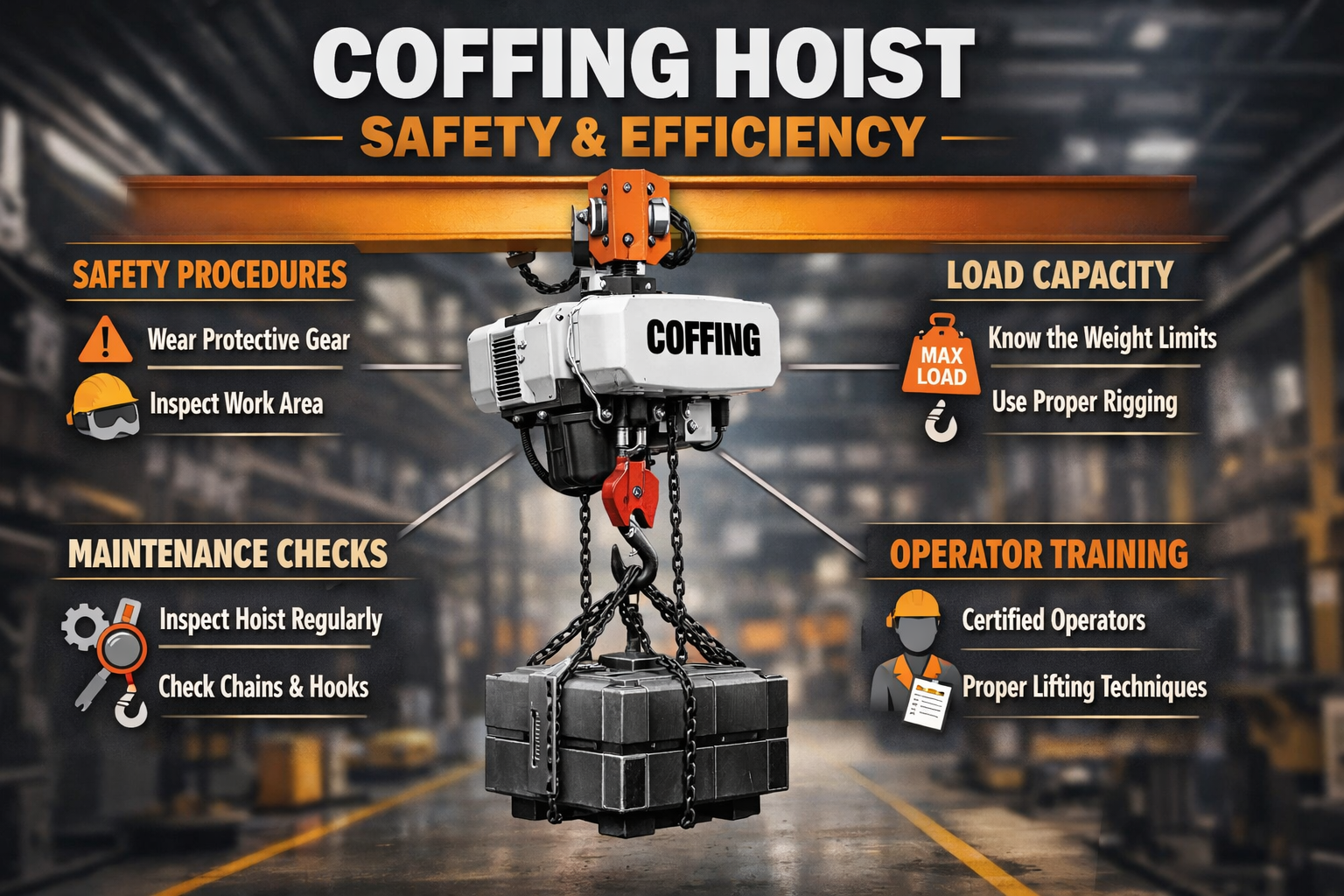
Industrial lifting systems are the backbone of manufacturing plants, warehouses, construction sites, and maintenance facilities. Among the most trusted names in this field, the coffing hoist has become widely recognized for its reliability, durability, and performance in demanding environments. Whether handling heavy machinery components or supporting routine material movement, hoists play a critical role in improving workplace efficiency and safety.
However, many operators and facility managers still underestimate how much proper selection, operation, and maintenance of a hoist can influence productivity. A poorly chosen or improperly used lifting system can lead to downtime, safety risks, and costly repairs. Understanding how hoists work—and how to use them correctly—can significantly improve operational outcomes.
This article explores what a Coffing-style hoist is, how it functions in industrial settings, and the best practices for safe and efficient use.
Understanding Coffing Hoist Systems and Their Core Function
A Coffing hoist refers to a category of industrial lifting devices designed to raise, lower, and move heavy loads using mechanical or electrical power. These hoists are typically suspended from overhead structures such as I-beams or gantries and are used in environments where manual lifting is impractical or unsafe.
At its core, a hoist consists of several key components: a motor (in electric models), a load chain or wire rope, a hook assembly, a gearbox, and a braking system. Each part works together to ensure controlled lifting and lowering of materials.
Coffing-style hoists are known for their rugged construction and ability to handle continuous-duty applications. They are commonly found in automotive plants, steel fabrication workshops, and maintenance facilities where precision lifting is required. Their compact design also allows them to operate in tight spaces without compromising load capacity.
Another important feature is load control. Most modern hoists are equipped with safety mechanisms such as overload protection, emergency stop functions, and limit switches. These features help prevent accidents and extend the life of the equipment.
How to Select and Operate a Coffing Hoist Effectively
Choosing the right hoist is not just about lifting capacity; it involves evaluating the work environment, duty cycle, and load type. Selecting the wrong model can reduce efficiency and increase operational risks.
The first step is determining the maximum load weight. Always choose a hoist with a capacity higher than your heaviest expected load. This safety margin prevents strain on the system and improves durability.
Next, consider the lift height and speed requirements. Some operations require quick lifting, while others prioritize precision. Electric hoists generally offer more consistent control compared to manual models.
Environmental conditions also matter. For example, high-temperature environments or corrosive areas may require specially coated chains or sealed motors. Dusty environments may need additional protective housings.
Once the hoist is selected, proper installation becomes essential. A structurally sound beam or mounting point is required to ensure safe operation. Installation should always follow manufacturer specifications and be verified by a qualified technician.
Installation and Setup Best Practices
Installation begins with inspecting the support structure. The beam must be rated for the combined weight of the hoist and maximum load. After mounting, alignment checks ensure that the hoist travels smoothly without obstruction.
Electrical connections (for powered hoists) must be handled by certified personnel to avoid wiring errors. Control pendants or remote systems should be tested before full operation begins.
Safe Operation Guidelines
Operators should always inspect the hoist before use. This includes checking the chain or rope for wear, verifying brake responsiveness, and ensuring hooks are not deformed.
Loads should be centered properly to avoid swinging or imbalance. Sudden movements should be avoided, as they can stress both the hoist and the structure.
Communication between operators is also critical in multi-person environments. Clear signals or communication systems reduce the risk of accidents during lifting operations.
Routine Maintenance and Inspection
Regular maintenance ensures long-term reliability. Lubrication of moving parts, periodic brake inspections, and load testing are essential. Any unusual noise or vibration should be addressed immediately.
Preventive maintenance schedules should be strictly followed. This reduces downtime and extends the operational life of the hoist system significantly.
Common Mistakes and Operational Challenges
Despite their simplicity, hoists are often misused in industrial environments. One of the most common mistakes is exceeding load capacity. Overloading not only damages the hoist but also creates serious safety hazards.
Another frequent issue is improper rigging. Using worn slings, misaligned hooks, or unbalanced loads can lead to accidents. Even experienced operators sometimes overlook these small but critical details.
Lack of regular maintenance is another major problem. Many facilities continue using hoists without inspection until a failure occurs. This reactive approach is both dangerous and expensive.
Environmental neglect is also a concern. Using standard hoists in corrosive or wet environments without proper protection leads to premature wear and system failure.
Finally, inadequate operator training remains a widespread issue. Without proper knowledge, even advanced hoists can become unsafe tools. Training ensures that operators understand load dynamics, control systems, and emergency procedures.
Practical Tips and Expert Recommendations for Better Performance
Experienced technicians and facility managers often follow a few key principles to maximize hoist performance.
First, always prioritize safety over speed. Rushing lifting operations increases the likelihood of errors and equipment stress. Controlled, steady movement is always safer and more efficient in the long run.
Second, implement a detailed inspection checklist. This should include hook condition, chain lubrication, brake function, and control responsiveness. Consistency in inspection prevents unexpected breakdowns.
Third, match the hoist to the application rather than forcing one system to handle all tasks. Different environments require different configurations. For example, fabrication shops may need high-duty electric chain hoists, while maintenance teams may prefer portable units.
Another important recommendation is to maintain proper documentation. Keeping records of inspections, repairs, and load tests helps track equipment health and ensures compliance with safety standards.
Lastly, invest in operator training programs. Well-trained staff not only operate equipment more safely but also identify early signs of mechanical issues before they become serious problems.
Conclusion
A Coffing hoist is more than just a lifting device—it is a critical component of safe and efficient industrial operations. When properly selected, installed, and maintained, it can significantly improve productivity while reducing workplace risks. Understanding its core functions, avoiding common mistakes, and following best practices ensures long-term reliability and performance.
In modern industrial environments where efficiency and safety go hand in hand, mastering hoist operations is no longer optional. It is a necessity for any organization that relies on heavy lifting systems for daily operations.
