Solar energy adoption is rising quickly across South Asia as electricity prices increase and grid reliability becomes uncertain. Countries like Nepal and Pakistan are seeing strong demand for residential and commercial solar systems, but the cost differences between them often confuse buyers. Many people start their research by checking the local market for components such as panels, inverters, and installation packages, including references like solar plate price in Pakistan to understand baseline pricing before making a decision.
At first glance, solar systems in Nepal and Pakistan may look similar in price, but the reality is more complex. Import duties, shipping logistics, brand availability, and government incentives all play a role in shaping final system costs. Homeowners, farmers, and small business owners often struggle to compare systems fairly because pricing is not standardized across regions.
Understanding the real cost difference is important not only for budgeting but also for long-term energy planning. A poorly informed purchase can lead to overpaying or selecting an inefficient system that fails to meet energy needs.
Core Cost Breakdown: Solar Panel Pricing in Nepal vs Pakistan
Solar panel costs in both Nepal and Pakistan depend on several shared factors such as wattage, panel efficiency, brand origin, and installation complexity. However, regional market dynamics create noticeable differences.
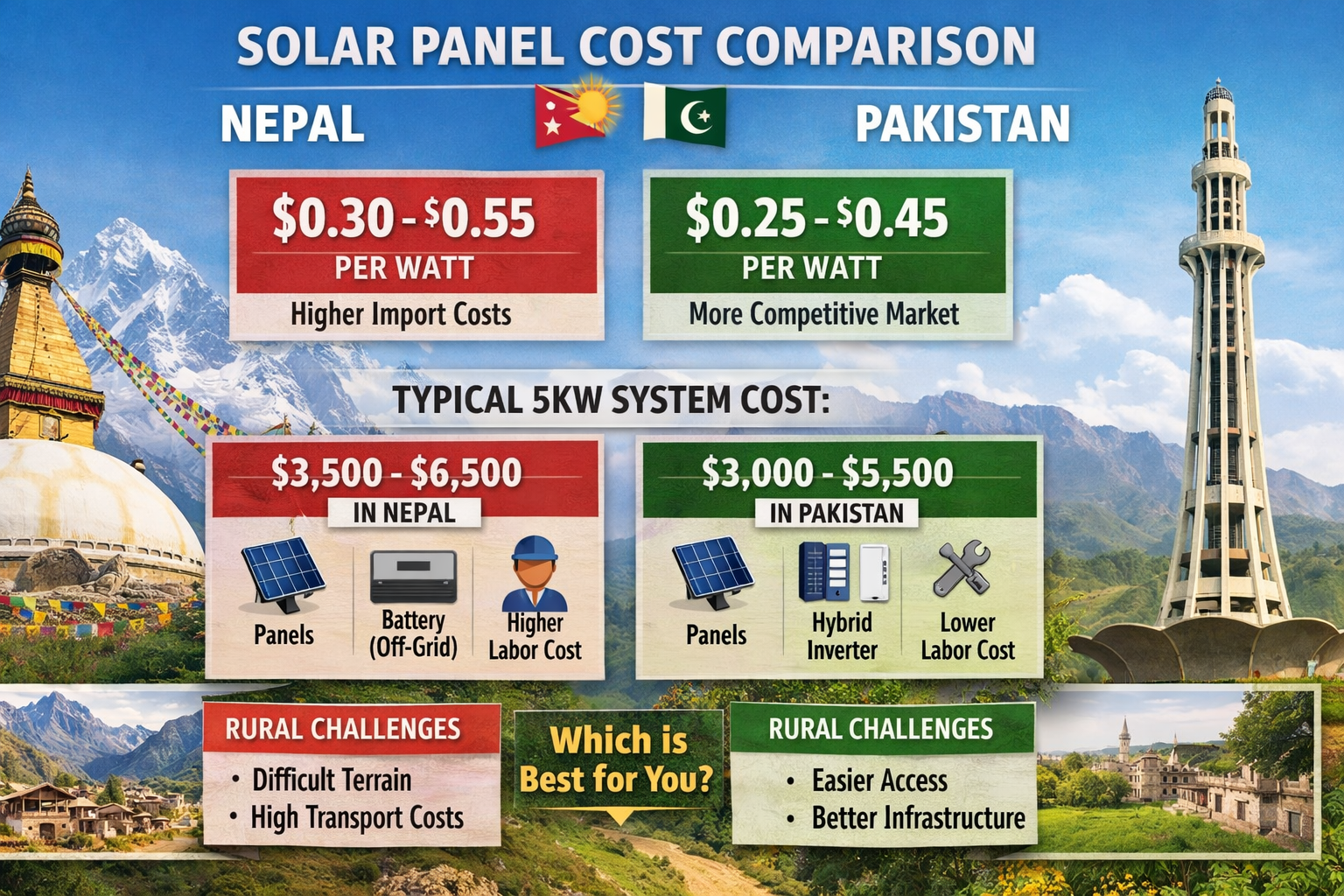
In Pakistan, solar panel prices have become more competitive due to higher import volumes and growing local demand. On average, residential-grade solar panels range between $0.25 to $0.45 per watt, depending on brand and quality. Complete 5kW residential systems typically fall in the range of $3,000 to $5,500, including inverter and installation.
In Nepal, solar panel pricing is slightly higher due to transportation challenges and limited large-scale import distribution. Panels generally cost between $0.30 to $0.55 per watt, while full residential systems often range from $3,500 to $6,500 for similar capacity setups.
While the difference may not seem large per watt, it becomes significant in larger installations such as commercial rooftops or agricultural solar pumping systems.
Another important factor is availability. Pakistan has a wider selection of Tier-1 Chinese and hybrid inverter brands, whereas Nepal often relies on fewer import channels, limiting competitive pricing pressure.
Step-by-Step Guide to Evaluating Solar System Costs in Both Countries
Choosing the right solar system requires more than comparing panel prices. A structured evaluation helps ensure long-term savings and system efficiency.
Step 1: Determine Your Energy Requirements
Start by calculating your monthly electricity consumption in kilowatt-hours (kWh). For example, a typical urban household in Pakistan may consume 400–800 kWh per month, while in Nepal, usage varies widely depending on heating needs and grid availability.
Once you know your usage, you can estimate system size:
- 3kW system: Small households
- 5kW system: Medium households
- 10kW system: Large homes or small businesses
Step 2: Compare Component Pricing, Not Just Panels
Many buyers focus only on solar panels, but the full system includes:
- Inverter (string or hybrid)
- Mounting structure
- Batteries (optional)
- Wiring and protection devices
In Pakistan, hybrid systems are more commonly adopted due to load-shedding concerns, which slightly increases average system cost. In Nepal, off-grid or battery-supported systems are more common in rural regions.
Step 3: Evaluate Installation and Labor Costs
Labor costs differ significantly between the two countries:
- Pakistan: Lower installation labor cost due to larger contractor market
- Nepal: Slightly higher due to terrain challenges and limited installer availability
Step 4: Factor in Government Policies
Subsidies and net metering policies influence total cost recovery:
- Pakistan offers net metering in major cities, helping reduce payback time.
- Nepal has smaller-scale incentives but stronger rural electrification support programs.
Supporting Subtopic: Urban vs Rural Installation Costs
In both countries, location plays a major role in system pricing.
Urban installations in Pakistan such as Karachi, Lahore, and Islamabad benefit from:
- Easier logistics
- Competitive installer pricing
- Faster installation timelines
In Nepal, cities like Kathmandu have relatively stable pricing, but rural mountainous areas face:
- Higher transport costs
- Difficult installation conditions
- Limited after-sales service availability
This creates a wider pricing gap between urban and rural solar adoption in Nepal compared to Pakistan.
Common Mistakes and Challenges Buyers Face
Many first-time solar buyers in both countries make avoidable mistakes that increase overall cost or reduce system performance.
One common mistake is choosing the cheapest panels without checking efficiency ratings. Low-cost panels may degrade faster, reducing long-term savings.
Another issue is under-sizing the system. Buyers often install smaller systems to save money initially, only to face energy shortages later.
In Pakistan, a frequent challenge is ignoring inverter quality. Since grid instability is common, low-quality inverters fail faster under fluctuating voltage conditions.
In Nepal, transportation and installation delays are often underestimated. Mountainous terrain can significantly increase project timelines and hidden costs.
Lastly, many users fail to consider seasonal sunlight variation. Nepal, for example, has stronger seasonal variation compared to much of Pakistan, which affects system output consistency.
Practical Tips and Expert Recommendations
Choosing between solar systems in Nepal and Pakistan requires balancing cost, reliability, and long-term efficiency.
One key recommendation is to always prioritize system quality over initial price. A slightly more expensive Tier-1 panel can outperform cheaper alternatives over 20–25 years, resulting in better savings.
Another important tip is to request multiple installation quotes before making a decision. Pricing can vary widely between installers, especially in Pakistan’s growing solar market.
In Nepal, it is advisable to work with installers who have experience in remote area projects. This reduces risks related to transport delays and system breakdowns.
Battery storage should also be carefully considered. In Pakistan, many urban users rely on net metering instead of batteries, while in Nepal, off-grid setups often require reliable storage due to inconsistent grid access.
Finally, always evaluate payback period rather than upfront cost alone. In both countries, a properly designed solar system typically pays for itself within 3–6 years depending on usage and electricity tariffs.
Conclusion
Solar energy is becoming a practical and necessary investment in both Nepal and Pakistan, but pricing differences reflect deeper structural factors rather than just product cost. While Pakistan benefits from a larger and more competitive solar market, Nepal faces higher logistical and installation challenges that slightly increase overall system prices.
However, both countries offer strong solar potential and long-term savings for homeowners and businesses. The key is to focus on system design, component quality, and installer expertise rather than only comparing upfront prices.
A well-planned solar investment can significantly reduce electricity bills, improve energy independence, and provide stable returns over time. Understanding regional cost differences helps buyers make informed decisions that align with both budget and energy needs.
