Content is at the heart of every digital experience. Whether it is a homepage banner, product description, blog article, or email message, content is what connects brands with users. However, in a world where users are exposed to countless messages every day, generic content is no longer effective.
Modern consumers expect relevance. They want to see content that aligns with their interests, behavior, and intent. This is where a Content Personalization Engine plays a critical role. By combining data, artificial intelligence, and automation, it transforms static content into dynamic experiences that drive engagement and conversions.
What is a Content Personalization Engine?
A Content Personalization Engine is a system that delivers tailored content to users based on their behavior, preferences, and context. Instead of showing the same content to every visitor, it adapts content dynamically for each individual.
This includes:
- Website banners and landing pages
- Product recommendations
- Blog and editorial content
- Email and in-app messaging
The engine determines what content to show, when to show it, and how to present it in a way that maximizes relevance.
Why Traditional Content Strategies Fall Short
Many businesses still rely on static content strategies where the same message is delivered to all users. While this approach is simple, it fails to address individual needs.
Common limitations include:
- Low engagement rates
- High bounce rates
- Missed conversion opportunities
- Lack of differentiation
For example, a first-time visitor and a returning customer may see the same homepage content, even though their needs are very different. This lack of personalization reduces effectiveness.
The Role of AI in Content Personalization
Artificial intelligence is the driving force behind modern content personalization. It enables businesses to process large volumes of data and make intelligent decisions in real time.
AI helps in:
- Analyzing user behavior and preferences
- Identifying patterns and trends
- Predicting user intent
- Delivering personalized content at scale
Unlike rule-based systems, AI continuously learns and improves, making personalization more accurate over time.
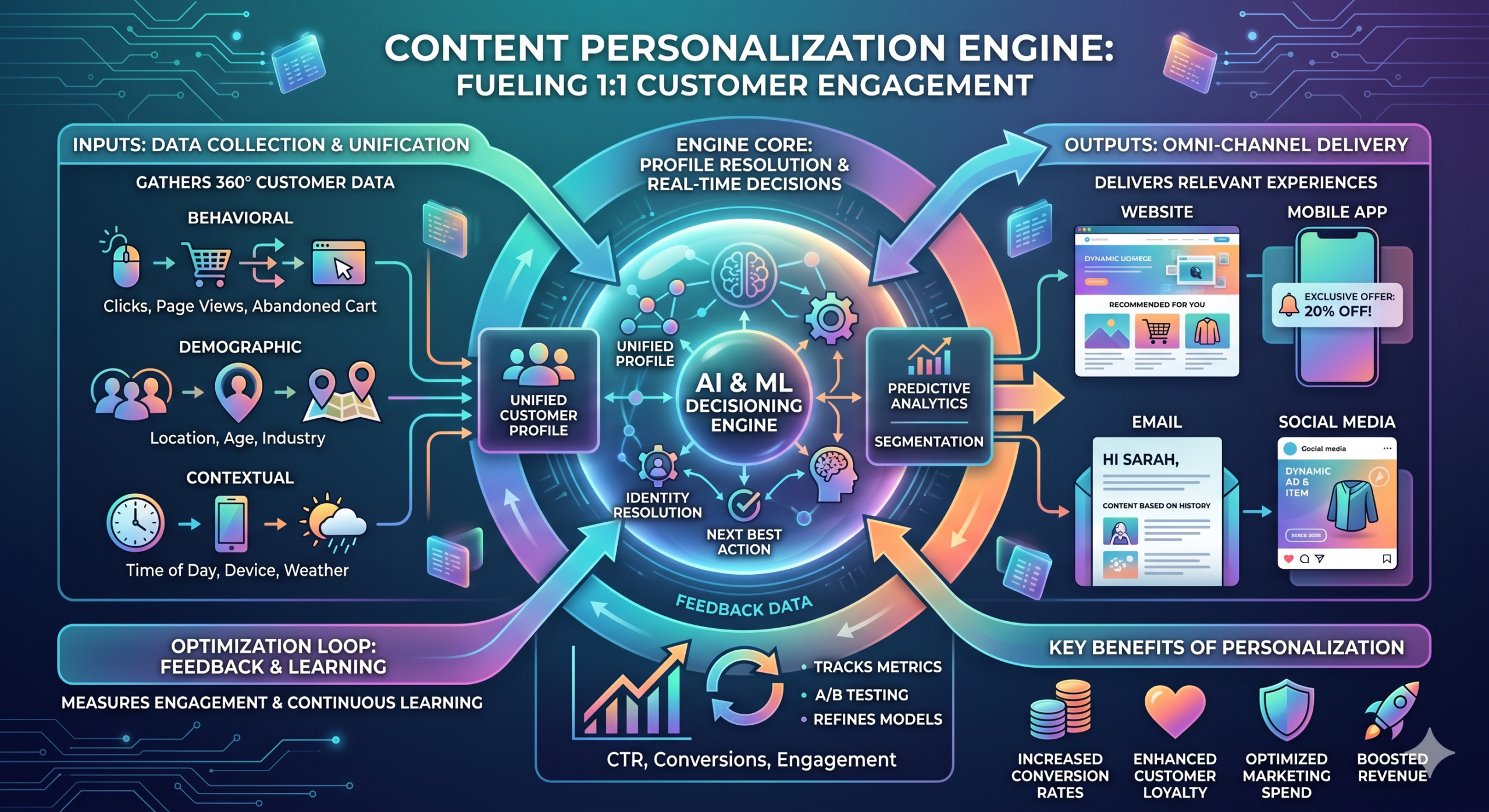
How a Content Personalization Engine Works
Data Collection
The engine gathers data from multiple sources such as website interactions, mobile apps, email engagement, and purchase history.
Identity Resolution
It connects different data points to create a unified profile for each user, ensuring consistency across devices and channels.
Analysis and Decisioning
AI models analyze data to determine the most relevant content for each user.
Real-Time Delivery
Content is delivered instantly based on user behavior and context.
Continuous Learning
User interactions are fed back into the system, allowing it to improve over time.
Key Use Cases
Homepage Personalization
Different users see different homepage content based on their preferences and behavior. This improves engagement from the first interaction.
Product Discovery
Personalized product recommendations help users find relevant items quickly, reducing friction.
Content Engagement
Blogs and articles are tailored to user interests, increasing time spent and interaction.
Campaign Landing Pages
Landing pages adapt based on the source of traffic and user intent, improving conversion rates.
Post-Purchase Experience
Follow-up content and recommendations encourage repeat engagement.
How Personalization Drives Conversions
Content personalization directly impacts conversion rates by making interactions more relevant and engaging.
Relevance
Users are more likely to engage with content that matches their interests.
Timing
Delivering content at the right moment increases its effectiveness.
Context
Understanding the user’s situation helps create more meaningful experiences.
Reduced Friction
Personalized content simplifies decision-making and guides users toward desired actions.
Benefits of a Content Personalization Engine
Higher Engagement
Relevant content captures attention and encourages interaction.
Increased Conversions
Personalized experiences lead to more purchases and sign-ups.
Improved Customer Experience
Users feel understood and valued, enhancing satisfaction.
Better Retention
Consistent personalization builds long-term relationships.
Efficient Use of Data
Businesses can turn data into actionable insights that drive results.
Challenges in Implementation
Data Silos
Fragmented data limits the ability to create a unified view of the customer.
Real-Time Processing
Delivering content instantly requires strong infrastructure.
Complexity
Integrating multiple systems and technologies can be challenging.
Privacy Concerns
Businesses must ensure responsible use of data and maintain user trust.
Addressing these challenges requires a clear strategy and the right technology stack.
Best Practices
Build a Strong Data Foundation
Ensure that data is accurate, integrated, and accessible.
Focus on High-Impact Areas
Start with use cases that deliver immediate value, such as homepage personalization and product recommendations.
Use AI Effectively
Leverage machine learning to improve accuracy and scalability.
Maintain Consistency
Ensure that personalization is consistent across all channels.
Continuously Optimize
Regular testing and analysis help refine strategies and improve performance.
The Future of Content Personalization
Content personalization is evolving rapidly with advancements in AI and data integration. Future trends include:
- Hyper-personalization based on real-time signals
- Integration with voice and visual interfaces
- More automated and intelligent decision-making
- Deeper integration with customer data platforms
These developments will make personalization more seamless and effective.
Conclusion
A Content Personalization Engine is essential for transforming static content into dynamic, conversion-driven experiences. By leveraging AI and real-time data, businesses can deliver relevant content that resonates with users.
In a competitive digital environment, personalization is no longer optional. It is a key driver of engagement, conversions, and customer loyalty.
Businesses that invest in content personalization will be better positioned to connect with their audience and achieve long-term success.
