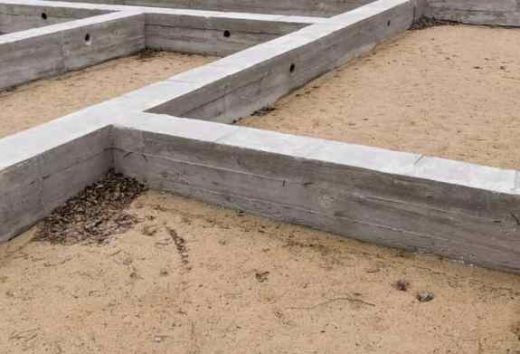
A strong building always depends on a strong foundation. In construction, the foundation carries the full weight of the structure and transfers it safely into the soil. One of the most commonly used foundations is the spread footing. Engineers choose it because it is simple, cost-effective, and works well for many small and medium buildings.
But even a well-designed spread footing can face serious problems if the ground beneath it moves or compresses. This movement is called settlement, and it has a direct impact on how well a spread footing performs over time.
What Is Settlement in Simple Terms?
Settlement means the downward movement of a building or structure due to the compression of soil underneath it.
When a building is constructed, it applies pressure on the soil. The soil supports this load, but sometimes it compresses slowly or unevenly. When this happens, the building sinks slightly into the ground. That sinking movement is called settlement.
A small amount of settlement is normal and expected. But when settlement becomes too much or uneven, it can create serious structural problems.
What Is a Spread Footing?
A spread footing is a shallow foundation that spreads the load of a structure over a wide area of soil. It is usually placed below columns or walls.
The main purpose of a spread footing is simple:
It reduces the pressure on soil by increasing the area over which the load is distributed.
Spread footings are commonly used in:
- Houses and residential buildings
- Small commercial buildings
- Light industrial structures
They work best when the soil near the surface is strong enough to carry the load safely.
Why Settlement Matters in Spread Footings
Spread footings depend directly on soil strength. If the soil behaves well, the footing performs well. If the soil moves or compresses, the footing also moves.
Settlement matters because it affects:
- Building stability
- Structural alignment
- Safety of the structure
- Long-term performance
Even a small change in soil level can affect the entire building structure.
Types of Settlement That Affect Spread Footings
To understand the impact better, we need to look at the different types of settlement.
1. Uniform Settlement
Uniform settlement happens when the entire structure sinks evenly into the ground.
How It Affects Spread Footings
- All footings move down at the same rate
- The building stays level
- No major distortion occurs
Impact on Structure
Uniform settlement is usually not very dangerous. The building moves downward as a whole, but it does not bend or tilt.
However, if the settlement becomes too large, it can still create problems like:
- Pipe misalignment
- Utility connection issues
- Ground level changes
Even though it is safer than other types, engineers still try to minimize it.
2. Differential Settlement (Most Dangerous Type)
Differential settlement happens when different parts of a building settle at different rates.
How It Affects Spread Footings
- One footing sinks more than another
- The structure becomes uneven
- Stress builds up in beams and columns
Impact on Structure
This is the most serious type of settlement. It directly damages the performance of spread footings.
It can cause:
- Cracks in walls and floors
- Tilting or leaning of the building
- Doors and windows getting stuck
- Uneven floors
Spread footings are very sensitive to differential settlement because each footing supports a separate load point. When one footing moves differently from others, the whole structure gets stressed.
3. Immediate Settlement
Immediate settlement happens right after construction when the load is first applied.
How It Affects Spread Footings
- Soil compresses quickly under load
- Mostly occurs in sandy or loose soils
Impact on Structure
If engineers do not calculate it properly, immediate settlement can lead to:
- Early cracks in walls
- Uneven leveling
- Initial structural stress
It usually happens fast, so engineers study it carefully during design.
4. Long-Term Settlement (Consolidation)
Long-term settlement happens slowly over time as soil particles adjust under constant load.
How It Affects Spread Footings
- Soil compresses gradually
- Common in clay soils that hold water
Impact on Structure
This type of settlement is dangerous because it is slow and hidden. It may take months or even years to show visible signs.
It can cause:
- Gradual sinking of parts of the building
- Slow cracking of walls
- Progressive structural distortion
How Settlement Impacts Spread Footing Performance
Now let’s clearly understand how settlement affects the performance of spread footings in real construction.
1. Reduces Structural Stability
When settlement occurs unevenly, spread footings lose balance. Each footing is designed to carry a specific load, but settlement changes that balance.
This leads to:
- Uneven load distribution
- Tilting of the structure
- Extra stress on certain columns
Over time, the building becomes less stable and more vulnerable to damage.
2. Causes Cracks in Building Elements
Cracks are one of the first visible signs of settlement problems.
When spread footings move:
- Walls develop diagonal or vertical cracks
- Floors may split or separate
- Plaster starts breaking
These cracks grow larger if settlement continues, reducing both safety and appearance of the building.
3. Affects Doors, Windows, and Openings
Settlement changes the alignment of the structure. This directly affects doors and windows.
You may notice:
- Doors do not close properly
- Windows become tight or jammed
- Frames become misaligned
Even small settlement can create noticeable functional problems in buildings.
4. Damages Internal Utilities
Spread footing settlement does not only affect structure—it also affects services inside the building.
It can damage:
- Water pipelines
- Electrical conduits
- Drainage systems
When the building shifts, these systems may crack, leak, or disconnect. This leads to repair costs and service interruptions.
5. Reduces Load Distribution Efficiency
Spread footings are designed to spread loads evenly across soil. But settlement disturbs this balance.
When settlement occurs:
- Some footings carry more load than others
- Soil pressure becomes uneven
- Overloaded areas may fail
This reduces the overall performance of the foundation system.
6. Leads to Long-Term Structural Damage
If settlement continues without control, it can cause permanent structural damage.
In severe cases:
- Sections of the building may sink
- Structural members may fail
- Repair becomes very expensive
This is why engineers always focus on controlling settlement during design and construction.
Factors That Cause Settlement in Spread Footings
Several factors contribute to settlement problems:
1. Weak Soil
Soft or loose soil compresses easily under load.
2. Poor Soil Compaction
If soil is not properly compacted before construction, it settles later.
3. Heavy Structural Load
If the building is too heavy for the soil, settlement increases.
4. Water in Soil
Water weakens soil strength and increases movement.
5. Uneven Soil Layers
Different soil layers behave differently, causing uneven settlement.
How Engineers Control Settlement
Engineers take several steps to reduce settlement and improve spread footing performance.
1. Soil Testing
They test soil before construction to understand its strength and behavior.
2. Proper Footing Design
They design footings with correct size and reinforcement.
3. Soil Improvement
They improve soil using compaction, replacement, or stabilization.
4. Even Load Distribution
They design structures to distribute loads evenly across all footings.
5. Good Drainage
They prevent water accumulation to maintain soil strength.
Conclusion
Settlement has a major impact on the performance of spread footings. While spread footings are simple and widely used foundations, they depend heavily on soil behavior.
Uniform settlement is usually manageable, but differential settlement can cause serious structural problems like cracks, tilting, and foundation failure. The type and severity of settlement depend on soil conditions, construction quality, and structural load.
