Choosing a sofa for a family home is very different from choosing one for a low-traffic space. When kids and pets are involved, a sofa needs to handle daily wear, spills, scratches, and constant use without losing its shape or comfort.
In many households, the sofa is used for several hours each day. It becomes a place for relaxing, playing, eating, and sometimes even working. This level of use puts pressure on both materials and construction.
Finding the best sofa couch for families means focusing on durability, ease of maintenance, and safety, while still maintaining comfort and design balance.
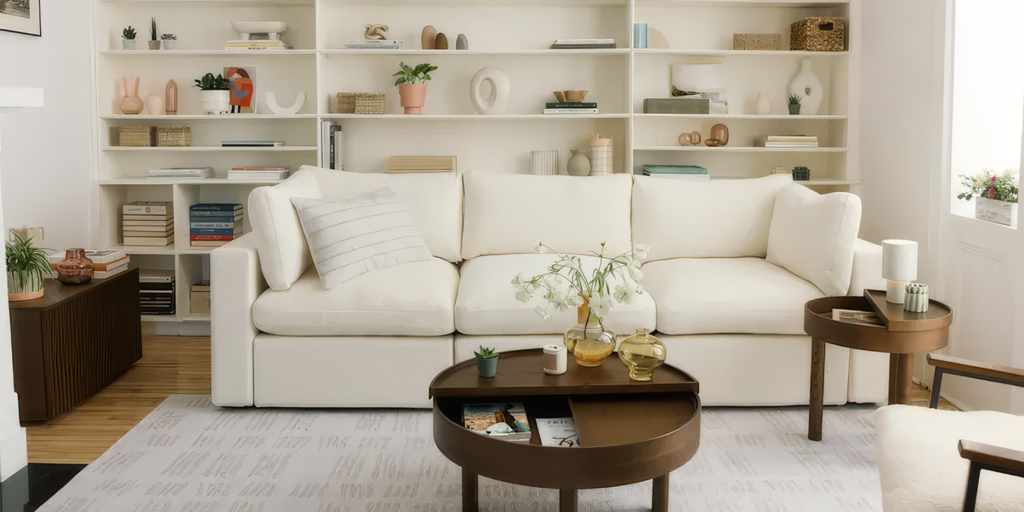
1. Start with Durable Upholstery That Can Handle Daily Wear
Material choice is the most important factor in a family environment.
Fabric sofas should be evaluated using durability ratings. A minimum of 25,000 Martindale rubs is recommended for residential use, but for homes with kids and pets, choosing fabrics rated 40,000 to 50,000 rubs provides much better resistance to wear.
Performance fabrics are often the most practical option. These materials are engineered to resist stains and moisture, which helps prevent spills from soaking into the surface. This makes cleaning easier and reduces long-term damage.
Leather can also be a durable choice, especially top-grain leather. However, it is more prone to visible scratches from pets, particularly in households with cats or large dogs.
Tightly woven fabrics tend to perform better than loose weaves because they are less likely to snag or trap pet hair.
2. Choose Colors and Textures That Hide Wear
In a high-use environment, appearance over time matters as much as initial look.
Light-colored sofas may look clean at first but can show stains quickly, often within a few months in active households. Medium tones such as gray, beige, or taupe tend to hide everyday wear more effectively.
Textured fabrics such as chenille or woven blends can also help mask small marks or pet hair. Smooth surfaces, especially in darker solid colors, may highlight scratches or dust more easily.
Choosing the right color and texture reduces how often the sofa needs to be cleaned and helps maintain a consistent appearance over time.
3. Prioritize Easy Maintenance and Cleanability
A family sofa should be easy to maintain on a regular basis.
Removable and washable cushion covers are a major advantage. They allow for deep cleaning without requiring professional services.
For non-removable upholstery, stain-resistant coatings or performance finishes can prevent liquids from penetrating the fabric. In many cases, spills can be cleaned within minutes using basic cleaning methods.
Leather surfaces are easier to wipe clean but require periodic conditioning to maintain flexibility and prevent cracking.
The easier a sofa is to clean, the more practical it becomes for everyday family use.
4. Consider Structure and Frame Strength
Durability is not only about fabric. The internal structure of the sofa is equally important.
A solid wood frame, particularly kiln-dried hardwood, provides better long-term stability compared to softer or composite materials. Sofas with reinforced joints are less likely to loosen over time.
Cushion density also affects durability. Foam densities between 30 and 35 kg/m³ offer a balance between comfort and resilience. Lower-density cushions may flatten within 1 to 3 years under heavy use, while higher-density foam retains shape longer.
For families, choosing a sofa that maintains its structure over time reduces the need for early replacement.
5. Select the Right Size and Layout for Family Use
Family living rooms often require more seating than standard setups.
A sofa with a width of at least 200 to 240 cm (79–94 inches) can comfortably seat three to four people. In larger households, sectional or modular sofas provide additional seating without requiring separate chairs.
Layout also affects how the space is used. Sectional sofas can help define a central gathering area, making it easier for multiple people to use the space at the same time.
Maintaining proper spacing is still important. Walkway clearance should remain at least 70–90 cm, even in family-focused layouts, to ensure safe movement.
6. Look for Safety Features in Family-Friendly Designs
Safety is often overlooked when choosing a sofa, but it becomes important in homes with children.
Rounded edges reduce the risk of injury compared to sharp corners. Sofas with stable bases and non-slip legs are less likely to shift during use.
Seat height should ideally be between 40 and 45 cm, which allows both adults and older children to sit and stand comfortably.
In homes with young children, avoiding overly soft or unstable cushions can also improve safety and support.
Common Mistakes When Buying a Family Sofa
One common mistake is prioritizing appearance over durability. Sofas with delicate fabrics or light upholstery may not hold up well in active households.
Another issue is underestimating usage. A sofa that performs well in a showroom may wear quickly when used daily by multiple people.
It is also common to overlook maintenance requirements. Choosing a sofa that is difficult to clean can lead to higher long-term costs and frustration.
Conclusion
Choosing the best sofa couch for families with kids and pets requires a different approach than selecting furniture for low-use spaces.
By focusing on durable materials, easy maintenance, strong construction, and practical sizing, it is possible to find a sofa that supports daily life without sacrificing comfort.
A well-chosen family sofa is not just a piece of furniture. It becomes a reliable part of everyday living, capable of handling real use while maintaining its function and appearance over time.
