Networking roles are no longer defined solely by hardware configuration and command-line expertise. As infrastructure becomes programmable, professionals are expected to understand APIs, automation workflows, and application-driven network behavior. The Cisco DevNet certification was created to validate this shift, confirming that networking professionals can operate effectively in environments where software and infrastructure are tightly integrated.
This article explores how DevNet fits into modern IT careers, what skills it validates, and why it represents a turning point in how networking expertise is defined.
Why Networking Roles Are Becoming Software-Centric
Traditional networking relied on manual configuration and static infrastructure. Today’s environments are dynamic, scalable, and increasingly controlled through software.
Organizations now expect faster deployments, consistent configurations, and reduced human error. Automation and programmability make this possible, but only when professionals understand how systems communicate programmatically.
DevNet addresses this reality by bridging networking knowledge with software principles rather than replacing one with the other.
What DevNet Certification Is Designed to Measure
DevNet certifications are not programming certifications in isolation. They measure how well candidates understand the interaction between applications and network infrastructure.
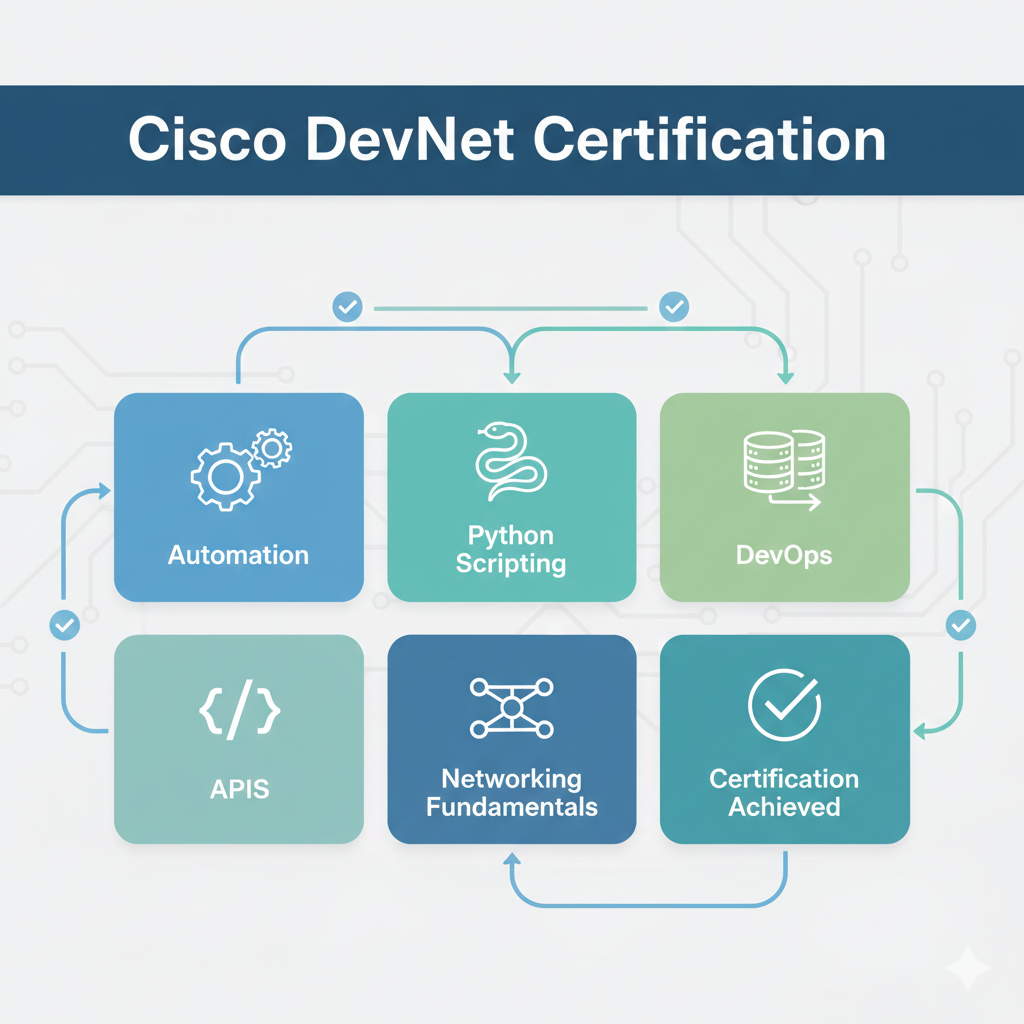
The focus is on concepts such as APIs, data models, automation workflows, and system integration. Candidates are expected to understand how software controls infrastructure behavior and how networks expose functionality programmatically. This blended focus distinguishes Cisco DevNet from traditional networking paths.
Understanding Infrastructure as Code in Networking
One of the most important conceptual shifts validated by DevNet is infrastructure as code. Networking configurations are increasingly treated as versioned, testable artifacts rather than manual changes.
DevNet-certified professionals understand how automation improves reliability, auditability, and scalability. They recognize that network behavior can be controlled, replicated, and validated through software logic. This mindset aligns networking practices with modern software development workflows.
Relevance Across Hybrid and Multi-Cloud Environments
Modern organizations rarely operate in a single environment. On-premises infrastructure, private clouds, and public cloud platforms must interoperate seamlessly.
DevNet certification validates awareness of how APIs and automation tools unify management across these environments. Candidates learn to think in terms of orchestration rather than device-level control. This perspective is essential for maintaining consistency in complex architectures.
Who Benefits Most From DevNet Certification
DevNet is particularly valuable for professionals who already understand networking fundamentals and want to expand into automation-focused roles. It also benefits software developers working with networked systems who need infrastructure awareness.
Rather than replacing traditional certifications, DevNet complements them. It adds a software layer to existing expertise, enabling professionals to operate across disciplines. This interdisciplinary relevance increases its career value.
Comparing DevNet With Traditional Networking Certifications
The table below highlights how DevNet differs in focus from classic networking certifications.
| Certification Focus | Primary Skill Area | Career Direction |
|---|---|---|
| Traditional networking | Device configuration | Infrastructure operations |
| Network security | Threat mitigation | Security roles |
| DevNet | Automation and APIs | Programmable networking |
| Software development | Application logic | Development roles |
This comparison shows why DevNet occupies a unique position between networking and software engineering.
How Employers Interpret DevNet Skills
Employers increasingly value professionals who can reduce operational friction through automation. DevNet certification signals readiness for this responsibility.
While it may not replace experience, it demonstrates structured learning and adaptability. Hiring managers often see DevNet as evidence that a candidate can participate in modern infrastructure initiatives. Its value is strongest when paired with hands-on automation experience.
Common Misconceptions About DevNet
A common misconception is that DevNet requires advanced programming expertise. In reality, it focuses on applying software concepts to networking use cases rather than deep application development.
Another misunderstanding is assuming DevNet is only for developers. Networking professionals benefit equally, as automation increasingly defines operational efficiency.
Clarifying these points helps candidates approach the certification realistically.
Preparation That Builds Practical Automation Skills
Effective DevNet preparation focuses on understanding workflows rather than memorizing syntax. Candidates benefit from experimenting with APIs, automation scripts, and infrastructure models.
Learning how systems respond to automated changes improves confidence. Some professionals enhance preparation using structured scenario-based material from platforms such as Cert Empire when they want guided practice aligned with real automation use cases instead of abstract examples.
Preparation should strengthen systems thinking. Additional context and quick tips are available in a recently shared post by Cert Empire.
Career Impact in Modern IT Organizations
DevNet supports roles such as network automation engineer, infrastructure engineer, and DevOps-aligned networking specialist. These roles emphasize efficiency, scalability, and reliability.
Professionals with automation capability often gain influence because their work reduces risk and accelerates delivery. DevNet certification supports this transition by validating automation literacy. Career impact depends on application, not certification alone.
Long-Term Relevance of Programmable Networking Skills
As networks continue to scale and diversify, manual management becomes unsustainable. Programmability is no longer optional.
DevNet’s focus on automation principles ensures long-term relevance. Even as tools evolve, the underlying concepts of API-driven control and system integration remain stable. Professionals who internalize these concepts remain adaptable. Check out our Trustpilot reviews to learn how Cert Empire helps learners.
Parting Thoughts
DevNet certification reflects a fundamental change in how networking expertise is defined. It validates the ability to work across infrastructure and software, enabling professionals to manage complex environments efficiently.
When pursued with a focus on real-world application, DevNet supports career growth, operational impact, and long-term adaptability. Its value lies in enabling professionals to participate fully in software-driven infrastructure strategies.
FAQs
What does Cisco DevNet certification validate?
Cisco DevNet certification validates a professional’s ability to apply software concepts, APIs, and automation workflows to networking environments, enabling programmable, scalable, and efficient infrastructure management.
Is DevNet suitable for traditional network engineers?
Yes, traditional network engineers benefit significantly because DevNet builds on existing networking knowledge and adds automation capabilities required for modern infrastructure operations.
Does DevNet require strong programming skills?
DevNet does not require advanced programming skills, but it does expect candidates to understand basic scripting concepts and how software interacts with network infrastructure.
How long does DevNet certification remain relevant?
DevNet remains relevant long-term because programmable networking and automation principles continue to grow in importance as infrastructure becomes increasingly software-driven.
Keep reading: Why CompTIA A+ Certification Is the Best Starting Point for IT Beginners in 2026
